Seoul 3-Day Itinerary: The Perfect First-Timer's Guide
Seoul 3-Day Itinerary: The Perfect First-Timer's Guide
Last updated: March 2026
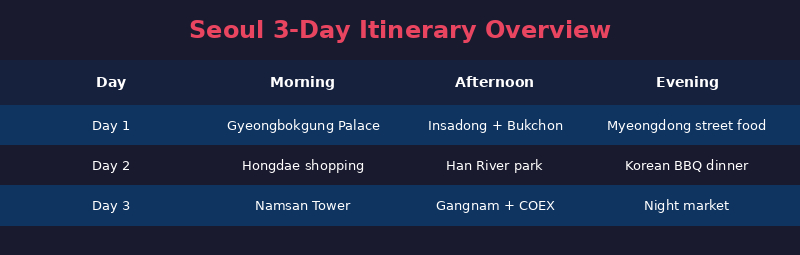
Three days in Seoul is enough to fall completely in love with the city — but only if you plan it right. I've walked these routes dozens of times, tweaking the order, testing the transport connections, and eating at far too many restaurants along the way. This is the itinerary I'd hand to a friend visiting Seoul for the very first time.
This 3-day Seoul itinerary covers the essential palaces, neighborhoods, street food, nightlife, and local experiences — all organized so you're never backtracking across the city. Each day flows geographically, saving you time and subway transfers.
Quick budget estimate: Plan for roughly ₩80,000–₩120,000 ($55–$85 USD) per person per day, covering meals, transport, and entrance fees. That's comfortable mid-range — you can absolutely do it cheaper.
Before you dive in, make sure you've sorted your SIM card or portable WiFi situation. You'll be relying on Naver Map heavily, and it doesn't work well offline.
Before You Go: Essential Prep
A few things to lock in before Day 1:
- Transport: Get a T-money card at any convenience store (₩2,500 / $1.70 for the card, then load it with ₩20,000–₩30,000 for three days). Our Seoul subway guide breaks down exactly how to navigate the metro system.
- Accommodation: Stay in Myeongdong, Hongdae, or Jongno — all are central and well-connected. Check our where to stay in Seoul guide for neighborhood-by-neighborhood recommendations.
- Passes: A Klook pass can save you 30–40% on palace entries, the N Seoul Tower, and the airport express. Worth it for a 3-day trip.
- Cash vs. card: Most places accept card, but market stalls and small street food vendors are cash-only. Carry ₩30,000–₩50,000 in cash as backup.
Day 1: Historic Seoul — Palaces, Bukchon, and Insadong
Day 1 covers northern Seoul — the traditional heart of the city. You'll be on your feet a lot today, so wear comfortable shoes.
8:30 AM — Breakfast at Tosokchon Samgyetang
Start your Seoul trip the way locals have for decades: with a bowl of samgyetang (ginseng chicken soup) at Tosokchon, a 5-minute walk from Gyeongbokgung Station (Exit 2). A whole young chicken stuffed with ginseng, rice, and jujubes, simmered until the meat falls off the bone. It's hearty, it's restorative, and it costs ₩19,000 ($13 USD). Expect a short queue — it moves fast.
9:30 AM — Gyeongbokgung Palace
Walk straight from breakfast to the main gate of Gyeongbokgung, Seoul's largest and most iconic palace. Admission is ₩3,000 ($2 USD) — or free if you're wearing hanbok (traditional Korean clothing). Hanbok rental shops line the streets near the palace and charge ₩15,000–₩25,000 ($10–$17 USD) for a 2-hour rental. It's genuinely fun, not just a tourist gimmick, and you'll get incredible photos.
Don't miss the Royal Guard Changing Ceremony at 10:00 AM and 2:00 PM at Gwanghwamun Gate. Arrive 10 minutes early for a good spot.
Allow 1.5–2 hours for the full palace grounds, including the National Folk Museum inside the complex (free with palace ticket).
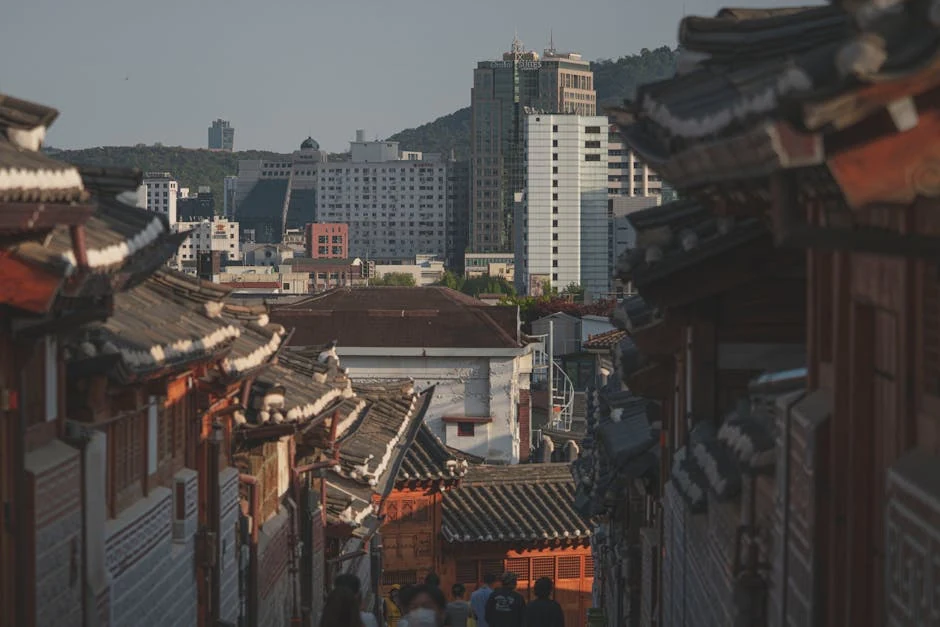
11:30 AM — Bukchon Hanok Village
Walk northeast from Gyeongbokgung (15 minutes) into Bukchon Hanok Village. This hillside neighborhood is filled with traditional Korean houses (hanok) that are still lived in today. The most photographed spot is the row of hanok along Bukchon 8-gil — you'll know it when you see it.
Important: This is a residential area. Keep your voice down, stay on designated paths, and respect the "quiet zone" signs. Residents have been vocal about noisy tourists, and there are now volunteer monitors in the area.
12:30 PM — Lunch in Insadong
Walk downhill from Bukchon into Insadong (10 minutes). This is Seoul's traditional arts and culture street. For lunch, try Jilsiru Tteok Cafe for Korean rice cake sets (₩12,000–₩18,000 / $8–$12 USD) or grab a proper Korean set meal (hanjeongsik) at any of the small restaurants along the main alley for ₩15,000–₩25,000 ($10–$17 USD).
After lunch, browse the Ssamzigil complex — a spiraling open-air mall with independent Korean craft shops and quirky souvenirs.
2:30 PM — Changdeokgung Palace & Secret Garden
Take the short walk (10 minutes) from Insadong to Changdeokgung Palace. This is often considered the most beautiful of Seoul's palaces, and the rear garden (Huwon, commonly called the Secret Garden) is the highlight. The Secret Garden tour is guided and runs at set times — book in advance on the palace website, especially in spring and autumn. Palace entry is ₩3,000, Secret Garden tour is an additional ₩5,000 ($3.50 USD).
4:30 PM — Ikseon-dong Hanok Alley
A 10-minute walk south brings you to Ikseon-dong, Seoul's trendiest hanok cafe district. Think century-old traditional houses converted into wine bars, dessert cafes, and vintage shops. Grab a coffee, wander the narrow alleys, and soak up the atmosphere. This neighborhood has exploded in popularity since 2023 — weekday afternoons are the sweet spot before the evening crowds arrive.
6:30 PM — Dinner: Korean BBQ in Jongno
You can't do Seoul without Korean BBQ, and Jongno 3-ga is one of the best areas for it. Yukjeon Hoekwan has been serving bulgogi since 1932 (₩18,000 / $12 USD per serving), or for a full grilling experience, try any of the samgyeopsal (pork belly) joints along the alley — expect to pay ₩14,000–₩18,000 ($10–$13 USD) per person. Read up on Korean BBQ etiquette before you go — things like who grills, who pours drinks, and how to use the lettuce wraps properly.
8:30 PM — Cheonggyecheon Stream Night Walk
Walk off dinner along Cheonggyecheon Stream, a beautifully lit urban waterway that runs through the center of the city. It's especially lovely after dark when the bridges are illuminated. Follow it westward for 20–30 minutes toward Gwanghwamun, then take the subway back to your accommodation.
Day 1 estimated budget: ₩85,000–₩110,000 ($60–$75 USD) including meals, palace entries, hanbok rental, and transport.
Day 2: Modern Seoul — Myeongdong, Namsan, Gangnam, and Nightlife
Day 2 swings to the modern, commercial side of Seoul. Today is more about shopping, city views, and experiencing Seoul's energy.
9:00 AM — Breakfast at Isaac Toast (Myeongdong)
Isaac Toast is a Korean chain that does pressed egg-and-cheese toasts that are unreasonably delicious for the price (₩3,500–₩5,500 / $2.50–$4 USD). Grab one from the Myeongdong branch and eat it walking — there's a lot to see today.
9:30 AM — Myeongdong Shopping
Myeongdong is Seoul's beauty and skincare capital. Even if you're not a big shopper, it's worth experiencing the sheer density of K-beauty stores — Olive Young, Innisfree, Etude, Sulwhasoo. Most stores offer samples, and prices are genuinely lower than what you'd pay overseas. Budget 1–1.5 hours.
11:00 AM — Namsan Tower (N Seoul Tower)
From Myeongdong, walk to the Namsan Cable Car station (10 minutes uphill). The cable car costs ₩12,000 round trip ($8 USD), and the tower observation deck is ₩16,000 ($11 USD). On a clear day, you can see all of Seoul and the mountains ringing the city. If you have a Klook pass, the tower and cable car are often included.
Alternatively, walk up the Namsan hiking trail from the base — it takes about 30–40 minutes and the path is well-paved.
12:30 PM — Lunch: Myeongdong Kyoja
Come back down to Myeongdong for lunch at Myeongdong Kyoja, a legendary noodle spot that's been serving the same handmade kalguksu (knife-cut noodles) for over 50 years. One bowl is ₩12,000 ($8 USD). Add mandu (dumplings) for ₩12,000. Simple, satisfying, and there's a reason there's always a line.
2:00 PM — Gangnam District
Take Subway Line 4 from Myeongdong to Gangnam (about 25 minutes). Yes, that Gangnam. The COEX Mall underground complex is worth exploring — it houses the Starfield Library, a stunning open-plan library with floor-to-ceiling bookshelves that's become one of Seoul's most Instagrammed spots. Free entry.
If you're into K-pop, the SM Entertainment building and various idol-themed cafes are in this area. The Gangnam Tourist Information Center near Exit 5 has free K-pop photo booths.
4:30 PM — Bongeunsa Temple
Right across from COEX, Bongeunsa is a 1,200-year-old Buddhist temple that somehow survives amid Gangnam's glass towers. It's free to enter and offers a peaceful contrast to the surrounding commercial frenzy. The temple stay program (overnight) is popular but needs advance booking.
6:00 PM — Dinner: Street Food in Hongdae
Take Line 2 from Gangnam to Hongdae (about 30 minutes). The area around Hongik University is Seoul's youth culture hub — buskers, indie shops, and an overwhelming amount of street food. Check out our Korean street food guide for what to order, but the highlights: tteokbokki (₩4,000 / $3), hotteok (₩2,000 / $1.40), eomuk fish cake skewers (₩1,000 / $0.70), and dakgangjeong fried chicken (₩6,000 / $4).
8:00 PM — Hongdae Nightlife
Hongdae comes alive after dark. Options include:
- Busking performances — Free nightly shows near the Hongdae playground
- Noraebang (karaoke rooms) — ₩15,000–₩20,000 ($10–$14) per hour for a private room
- Craft beer bars — Magpie Brewing, Craftworks Taphouse
- Clubs — NB2, Cocoon, and dozens more along the main strip
Day 2 estimated budget: ₩90,000–₩130,000 ($62–$90 USD) including meals, Namsan Tower, transport, and a couple of drinks.
Day 3: Markets, Local Life, and the Han River
Day 3 dials down the pace. It's about markets, food, and soaking up everyday Seoul before you leave.
8:00 AM — Gwangjang Market Breakfast
Take the subway to Jongno 5-ga Station (Exit 8) and enter Gwangjang Market, one of Seoul's oldest and best traditional markets. Head straight to the food stalls in the center. Order:
- Bindaetteok (mung bean pancake) — ₩5,000 ($3.50)
- Mayak gimbap ("addictive" mini rice rolls) — ₩4,000 ($2.80) for a plate
- Yukhoe (Korean beef tartare) — ₩15,000 ($10) if you're adventurous
This is peak Seoul food culture. Sit at the counter, elbow-to-elbow with locals, and just point at whatever looks good.
10:00 AM — Dongdaemun Design Plaza (DDP)
Walk 10 minutes south to the DDP, Zaha Hadid's neo-futuristic landmark. The building itself is the attraction — that smooth, silver, alien-looking facade is even more striking in person. There are usually free exhibitions inside. The LED Rose Garden outside is best at night, but the architecture is impressive any time.
11:00 AM — Naksan Park & Seoul City Wall
From DDP, take a short cab or walk (20 minutes) northeast to Naksan Park. This section of the old Seoul Fortress Wall offers panoramic views over the city without the crowds of Namsan. The walk along the wall from Naksan to Hyehwa takes about 40 minutes and is one of the most underrated experiences in Seoul.
12:30 PM — Lunch in Hyehwa (Daehangno)
The Hyehwa neighborhood is Seoul's theater district and a great student area with affordable eats. Try Bongchu Jjimdak for braised chicken (₩28,000 / $19 for a serving that feeds 2–3 people) or grab kimbap and tteokbokki from any of the casual spots near the station for under ₩10,000 ($7).
2:00 PM — Itaewon & Yongsan
Take Line 4 to Itaewon (15 minutes). The neighborhood has evolved significantly — it's now home to excellent independent cafes, international restaurants, and vintage shopping. Walk through the Haebangchon (HBC) hillside area above Itaewon for a more local, less touristy vibe.
The National Museum of Korea in nearby Yongsan is free and genuinely world-class. Even an hour here gives you a solid grounding in 5,000 years of Korean history. It's one of the largest museums in Asia.
4:30 PM — Han River at Yeouido Hangang Park
Take Line 1 to Yeouinaru Station and walk to Yeouido Hangang Park. This is where Seoulites come to unwind — cycling, picnicking, and doing the very Korean thing of ordering chimaek (chicken and beer) delivered directly to your spot on the riverside. Yes, you can order delivery to a park bench via apps like Baemin or Coupang Eats.
Buy a chimaek set from a nearby convenience store or order delivery: ₩20,000–₩25,000 ($14–$17) for fried chicken and a couple of beers for two people.
7:00 PM — Final Dinner: Noryangjin Fish Market
For your last Seoul meal, go big. Take Line 1 to Noryangjin Station and cross into the fish market. Pick your seafood from the ground floor vendors — they'll prepare it upstairs. A raw fish platter (hoe) for two costs ₩30,000–₩50,000 ($21–$35) depending on what you choose. It's theatrical, delicious, and a perfect farewell to Seoul.
Alternatively, if raw fish isn't your thing, head back to any of the BBQ spots from Day 1 for a greatest-hits repeat dinner.
Day 3 estimated budget: ₩75,000–₩110,000 ($52–$75 USD) including meals, transport, and Han River snacks.
3-Day Seoul Budget Summary
| Category | 3-Day Total (KRW) | 3-Day Total (USD) |
|---|---|---|
| Meals | ₩150,000–₩220,000 | $103–$151 |
| Transport (T-money) | ₩20,000–₩30,000 | $14–$21 |
| Attractions & entries | ₩30,000–₩50,000 | $21–$34 |
| Hanbok rental | ₩15,000–₩25,000 | $10–$17 |
| Nightlife / extras | ₩30,000–₩50,000 | $21–$34 |
| Total per person | ₩245,000–₩375,000 | $169–$257 |
This doesn't include accommodation or airport transfers. Budget hotels and guesthouses in Seoul run ₩50,000–₩80,000 ($34–$55) per night; mid-range hotels are ₩100,000–₩180,000 ($69–$124).
Practical Tips for Your 3 Days in Seoul
- Best subway app: Naver Map (not Google Maps — Google is unreliable for Korean transit).
- Tipping: Don't tip. It's not customary and can cause confusion.
- Convenience stores: CU, GS25, and 7-Eleven are everywhere and stock surprisingly good ready meals, snacks, and drinks for ₩2,000–₩5,000 ($1.40–$3.50).
- Free WiFi: Available in all subway stations, most cafes, and many public areas. But a pocket WiFi or local SIM is still worth it for navigation between stops.
- Palaces close on different days: Gyeongbokgung is closed Tuesday, Changdeokgung on Monday. Plan accordingly.
Frequently Asked Questions
Is 3 days enough for Seoul?
Three days covers the essential highlights comfortably. You'll see the major palaces, eat incredible food, explore key neighborhoods, and get a genuine feel for the city. If you have more time, consider day trips to the DMZ, Suwon, or Busan via KTX. But three days is a solid, satisfying introduction.
What's the best area to stay in Seoul for 3 days?
Myeongdong for convenience and shopping access, Hongdae for nightlife and youth culture, or Jongno for proximity to palaces and traditional Seoul. All three are on major subway lines. See our full Seoul accommodation guide for detailed pros and cons of each area.
How much money do I need per day in Seoul?
Budget travelers can manage on ₩60,000–₩80,000 ($41–$55) per day. Mid-range is ₩80,000–₩120,000 ($55–$83). This covers food, transport, and activities — not accommodation. Seoul is significantly cheaper than Tokyo or Singapore for daily expenses.
Do I need to speak Korean to get around Seoul?
No. Subway signage is in English, most tourist-area restaurants have English menus or picture menus, and younger Koreans generally speak some English. Learning a few basics — annyeonghaseyo (hello), kamsahamnida (thank you), juseyo (please give me) — goes a very long way and is appreciated.
Is the Seoul subway easy to use?
Extremely easy. It's one of the best metro systems in the world — clean, punctual, well-signed in English, and cheap (₩1,250 / $0.85 base fare). Our complete subway guide walks you through everything from buying a T-money card to navigating transfers.
Should I buy a Klook pass for Seoul?
If you're visiting two or more paid attractions (palaces, N Seoul Tower, Lotte World, etc.), a multi-attraction pass almost always saves money. Check our Klook pass comparison to see which bundle fits your itinerary.
What should I know before visiting Seoul for the first time?
Read our essential Korea tips for first-timers — it covers cultural norms, etiquette, scams to avoid, and practical details that most guides miss.