Where to Stay for the Jeju Fire Festival 2027 (Saebyeol Oreum Guide)
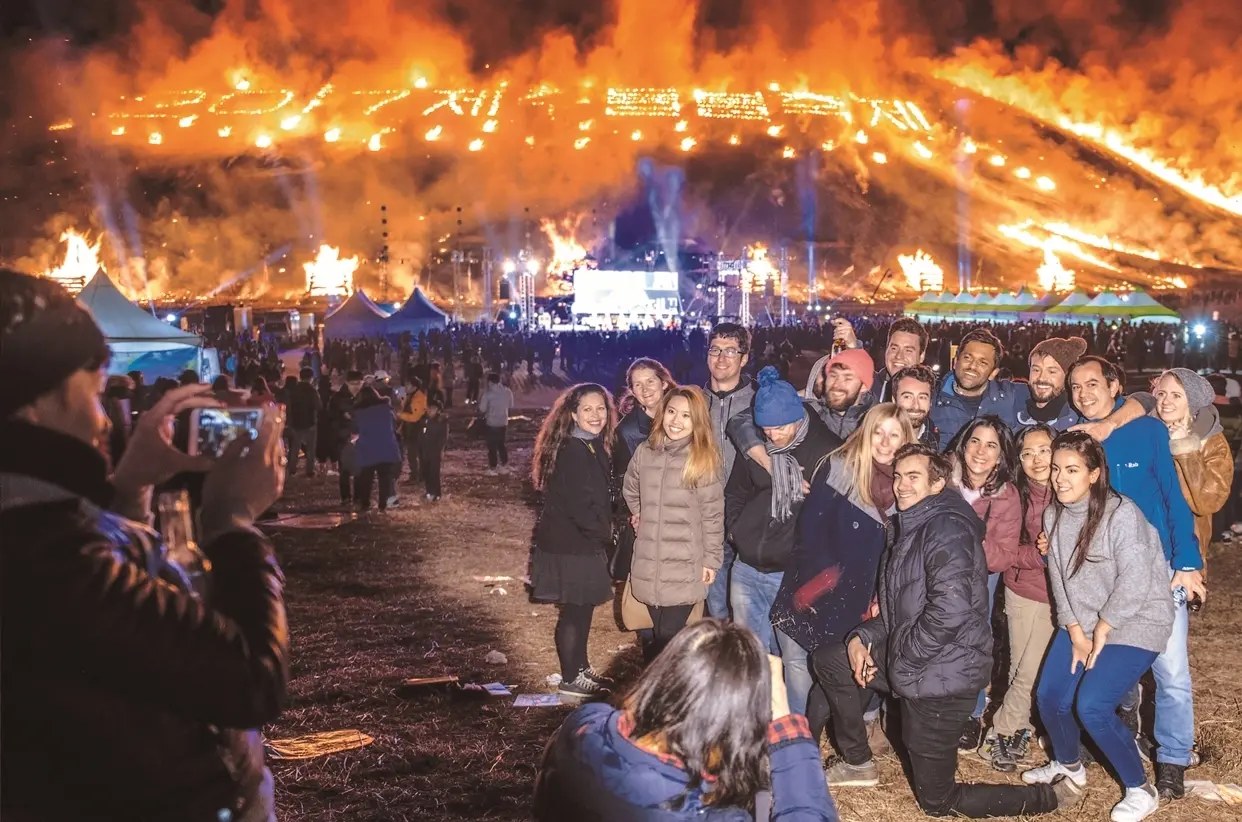
The Jeju Fire Festival is one of the most spectacular events in Korea — a 519-metre volcanic cone deliberately set ablaze after dark, with drone shows and fireworks played against the flames. Staying in the right location means the difference between an easy walk or drive to Saebyeol Oreum and a stressful festival-night scramble. This guide tells you where to base yourself, how far you are from the festival in each area, and how to book in English.
This guide covers where to base yourself first, then how to get to Jeju and how to book it.
Quick Answer: Where to Stay for the Jeju Fire Festival
- Best area: Jeju City (north coast) — widest accommodation range, easy access to the airport, 30–40 min drive to Saebyeol Oreum
- Closest to the festival: Aewol / Hallim (west coast) — 20 min drive to Saebyeol Oreum, fewer hotel options but genuinely convenient on burn night
- Most immersive: Near Saebyeol Oreum (rural pensions) — a handful of guesthouses within a short walk of the cone; books out early, no English platforms
- Backup if sold out: Seogwipo (south coast) — beautiful area but 50–60 min to the festival site; better as a Jeju holiday base than a festival base
- How to book in English: Trip.com has the widest Jeju City inventory in English. Booking.com is the alternative, especially for Aewol and Hallim area properties.
- Festival dates: March 2027 — historically the first or second weekend of March; official dates from Jeju City in December 2026
- Book now: Jeju City books out 6–8 weeks before the festival; Aewol/Hallim pensions are even tighter
- From Seoul: Fly Gimpo (GMP) to Jeju — about 50 min; or Incheon (ICN) to Jeju — about 1h 10 min
- Car rental: Essential on Jeju — public transport does not reach Saebyeol Oreum reliably on festival night
- Prices checked: May 2026
Best Areas to Stay (Compared)
| Area | Distance to Festival | Price Range | English Booking | Best For |
|---|---|---|---|---|
| Jeju City | 30–40 min drive to Saebyeol Oreum | about ₩80,000–200,000/night | Excellent — Trip.com, Booking.com | Best overall base, airport proximity, widest choice |
| Aewol / Hallim | ~20 min drive to Saebyeol Oreum | about ₩70,000–160,000/night | Good — Booking.com, Trip.com | Closest practical base, west coast scenery |
| Near Saebyeol Oreum | Walking distance / 5 min drive | about ₩80,000–130,000/night | Limited — Korean platforms only | Maximum immersion, advance booking essential |
| Seogwipo | 50–60 min drive to Saebyeol Oreum | about ₩90,000–250,000/night | Good — Trip.com, Booking.com | Backup option, good for general Jeju holiday |
What the table does not show: Jeju is an island you need to drive around. Without a rental car, festival access is genuinely difficult — especially on burn night, when shuttle buses fill fast and taxis near Saebyeol Oreum are scarce after the fire ends. Renting a car from Jeju Airport and basing in Jeju City or Aewol/Hallim gives you the most control. The extra 15–20 minutes of driving between Jeju City and Aewol is worth the trade for wider accommodation options if you are booking late.
Book Hotels for the Jeju Fire Festival
Area-by-Area Guide
Jeju City: Best Overall Base for the Festival
Jeju City is the island's main urban centre, on the north coast, and the arrival point for most international visitors flying into Jeju International Airport (CJU). It has the widest range of hotels, guesthouses, and serviced apartments on the island — from international business hotels to budget guesthouses in the old downtown. Saebyeol Oreum is 30–40 minutes by car heading west along the coast road or through the inland highway.
Pros:
- Closest to Jeju Airport — easy first and last night logistics
- Widest accommodation range in English-friendly booking platforms
- Good food and nightlife in Jeju City's Sanji district and Central Market area
- Easy access to Manjanggul Lava Tube, Seongsan Ilchulbong, and north coast sights
- Rental car companies located at and near the airport for easy pickup
Cons:
- 30–40 min drive to Saebyeol Oreum — not a problem with a car, awkward without one
- Less atmospheric than staying on the west coast near the festival site
- Festival week sees hotel demand spike across the whole island — book early regardless of area
Search Jeju City hotels on Trip.com, or compare on Booking.com.
Aewol / Hallim: Closest Practical Base to Saebyeol Oreum
Aewol-eup is the administrative township where Saebyeol Oreum sits — staying in Aewol town or in Hallim (10 minutes further south along the west coast) puts you 20 minutes by car from the festival site. The accommodation here is mostly pensions (pension-style guesthouses, a Korean accommodation format between a hotel and a B&B), small boutique hotels, and a handful of larger resorts. Aewol and Hallim have become increasingly popular with Koreans and international visitors drawn to the café culture, Hallim Park, and the west coast's volcanic landscape.
Pros:
- Closest major accommodation cluster to Saebyeol Oreum — 20 min on festival night
- Aewol's café street (Aewol Handam Coast Road) is one of Jeju's most scenic — a bonus to the festival trip
- Hallim Park is walkable from Hallim accommodation — good day-before activity
- West coast sunsets and the Hallim coast road are excellent for a post-festival drive
Cons:
- Smaller accommodation inventory than Jeju City — options fill faster
- Fewer restaurant choices compared to Jeju City, especially late at night after the festival
- Some pensions require booking via Korean apps — English platforms have limited coverage in this area
Search Aewol and Hallim accommodation on Booking.com, or try Trip.com and filter by map location near Hallim.
Near Saebyeol Oreum: Maximum Immersion (Very Limited)
A small number of rural pensions and agricultural guesthouses sit within 1–5 km of Saebyeol Oreum in the farming area of Bongseong-ri and surrounding villages. Staying here means you are essentially walking distance from the fire — you can walk up the oreum before the festival opens, see the burn from a close position, and be back at your pension in minutes. This is the most atmospheric option and the hardest to book.
Pros:
- Walk to the burn — no car logistics on festival night
- Rural Jeju atmosphere — horse farms, oreum hiking, no tourist crowds for the rest of the week
- Waking up with Saebyeol Oreum outside your window before or after the burn is genuinely memorable
Cons:
- Very limited inventory — only a handful of pensions in this area, most booked via Korean platforms (Naver, Yanolja)
- No English-platform availability in most cases — requires Korean-language booking or phone call
- No restaurants or convenience stores nearby — you need a car for food
- Books out months in advance among Korean festival-goers
If you want to attempt this, search Korean platform Naver Travel or Yanolja using the search term "새별오름 근처 펜션" (pensions near Saebyeol Oreum). International visitors who do not speak Korean will find this difficult to secure.
Seogwipo: Beautiful Backup, Not a Festival Base
Seogwipo sits on Jeju's south coast, about 50–60 minutes from Saebyeol Oreum by car. It is one of Jeju's most scenic areas — Cheonjiyeon and Jeongbang waterfalls, the Olle coastal trail, Seogwipo's own café scene, and Jungmun Resort. If you cannot find accommodation in Jeju City or Aewol for festival dates, Seogwipo is a workable fallback — the drive is long but manageable if you have a car. If you are combining the Fire Festival with a broader Jeju trip, Seogwipo makes an excellent second-night or post-festival base.
Search Seogwipo accommodation on Trip.com, or compare on Booking.com. See our complete Jeju accommodation guide for a deeper breakdown of all areas.
Getting to Jeju from Seoul
Jeju is an island — you cannot get there by train or bus from Seoul. The two options are flying or taking an overnight ferry. For the Fire Festival, flying is the only practical choice for most visitors.
By plane (recommended):
- Gimpo Airport (GMP) → Jeju (CJU): About 50 minutes. Gimpo is the domestic airport in western Seoul, closer to most central accommodation than Incheon. Korean Air, Asiana, Jeju Air, and T'way all fly this route — it is one of the busiest domestic air corridors in the world, with flights roughly every 30–60 minutes during peak hours.
- Incheon Airport (ICN) → Jeju (CJU): About 1 hour 10 minutes. Useful if you are arriving from an international connection without clearing customs in Seoul first. Also serves some international visitors flying into Korea specifically for the festival.
- Cost: about ₩60,000–150,000 one way depending on airline and how far in advance you book. Festival weekend flights go quickly — book at least 6–8 weeks ahead.
- Booking: Naver Flight (Korean) often has the best domestic prices. Skyscanner or Google Flights work for foreign card bookings. Jeju Air and T'way are the budget options; Korean Air and Asiana are the full-service carriers.
By overnight ferry (not practical for most):
- Ferries depart from Mokpo, Wando, and Busan to Jeju Outer Port. Journey time: approximately 5–13 hours depending on the port. The ferry is used by Koreans transporting cars to the island or taking a slow trip. For international visitors coming specifically for a March festival weekend, the timing is difficult to make work.
Car rental on Jeju (essential): Public transport on Jeju is unreliable for reaching Saebyeol Oreum, particularly on festival night when shuttle buses are overwhelmed and taxis are scarce after the event ends. Renting a car from Jeju Airport is the single most important logistical decision for this trip. Pick up on arrival day, return before your departure flight. Rental companies — Lotte Rent-a-Car, SK Rent-a-Car, Jeju Rent-a-Car — have desks at the airport and generally accept foreign driving licences with an international permit (IDP). Book your car at the same time as your accommodation. See our Jeju Island travel guide for practical driving tips.
Getting to Saebyeol Oreum on Festival Night
Saebyeol Oreum is in Aewol-eup, central-west Jeju Island. The oreum burn takes place after dark — gates open in the late afternoon and the fire is lit around 7:30pm. Getting there and back requires planning.
By rental car: Drive to the official festival parking areas near Saebyeol Oreum. Free parking is typically available in surrounding fields. Arrive by 5–6pm to park easily — by 7pm the approach roads are congested. After the burn ends (~9–10pm), the exit is slow. Having a car is still the most reliable option.
By shuttle bus: Jeju City operates festival shuttle buses from Jeju Bus Terminal to the festival site during the main weekend. Buy tickets on the day at the terminal — they sell out. Check Jeju City's official festival announcements for 2027 shuttle routes and schedules.
By taxi: Taxis reach Saebyeol Oreum without difficulty. Getting a taxi home after the event is significantly harder — many drivers do not go to the area at night, and ride-sharing apps (Kakao T) are unreliable near the oreum post-event. Do not rely on taxis for the return journey unless you book in advance.
How to Book Accommodation in English
Jeju has a broad hotel inventory compared to smaller Korean regional cities, but festival weekend demand is real — especially in Aewol and Hallim. Here is the process:
- Go to Trip.com and search Jeju Island, Korea
- Filter by Free cancellation — useful because 2027 festival dates will not be confirmed until December 2026
- Use the map view: for festival access, look for properties in Jeju City centre or Aewol/Hallim area
- Check that the property accepts foreign cards — most on Trip.com do, but confirm the payment screen
- If Trip.com inventory is thin for Aewol/Hallim, run the same search on Booking.com — it has better regional pension coverage
- If Jeju City and Aewol are both sold out, search Seogwipo or Jungmun Resort area as the backup
Note on pensions: Many Jeju pensions (a popular Korean accommodation type, particularly in rural and coastal areas) require a Korean phone number for direct booking. Using Trip.com or Booking.com bypasses this — both support English checkout, accept foreign payment cards, and send booking confirmations you can show on arrival.
About the Jeju Fire Festival
The Jeju Fire Festival (제주들불축제) is held annually at Saebyeol Oreum (새별오름) in Aewol-eup, organised by Jeju City. It is rooted in the traditional Jeju practice of burning grassland (deulbul, 들불) in early spring to clear fields and renew pastureland — historically tied to Jeongwol Daeboreum (the first full moon of the lunar year) but now scheduled in early-to-mid March for practical accessibility.
- Location: Saebyeol Oreum volcanic cone, Aewol-eup, Jeju Island (새별오름)
- Festival duration: Approximately 3–6 days; the oreum burn is on the main Saturday night
- 2027 dates: First or second weekend of March 2027 — official dates from Jeju City in December 2026
- Main event: The oreum burn — the 519m volcanic cone is set alight after dark, watched from a prepared viewing field below. Fireworks and drone shows typically run simultaneously.
- Other events: Jeju traditional drum (풍물) performances, shamanic blessing ritual, deulbul torch parade, family games, food stalls (Jeju black pork barbecue, hallabong orange products, Jeju seafood)
- Entry: Festival grounds are free to enter; no ticketing required for the main event
- Official source: Jeju City Tourism (jejusi.go.kr) and Visit Jeju (visitjeju.net)
Tip: The oreum burn night (Saturday) is the only night that matters for this festival. If your schedule only allows one night on Jeju, make it the main burn night. Arriving Friday afternoon gives you time to hike Saebyeol Oreum before the cone is off-limits for the fire preparation — a 30-minute walk up rewards you with 360° views of central Jeju and a very different perspective before you watch it burn on Saturday. See our Jeju oreum hiking guide for details.
For a full overview of the festival — what happens, how to get there, and what to expect — see our Jeju Fire Festival guide.
Tips for Festival Accommodation
Book flights before accommodation. Festival weekend flights from Gimpo to Jeju fill faster than hotels. If you have not confirmed your flight dates, do that first. Festival-weekend flights in March can sell out 2–3 months ahead.
Book accommodation 8–10 weeks ahead. Jeju has more hotel inventory than a small Korean regional city, but festival demand is strong — particularly for Aewol and Hallim, which have a limited number of properties. Jeju City gives you more buffer time but still benefits from early booking.
Rent a car at the same time as you book accommodation. Car availability on Jeju during festival weekend is limited. The major rental companies (Lotte, SK, Jeju Rent-a-Car) at the airport are popular and book up. Confirm your pick-up and drop-off times and check that your licence is accepted.
Stay at least two nights on Jeju. Flying in and out in one day for the fire festival is possible but exhausting and misses the point of visiting one of Korea's most beautiful destinations. Two nights minimum — one before the burn to explore the island, one after — makes for a proper trip. See our Jeju 3-day itinerary for ideas.
Book free-cancellation rates until official 2027 dates are confirmed. Jeju City typically announces the exact festival dates in November or December of the preceding year. If you are booking well in advance (which you should), use free-cancellation options — they protect you if you need to adjust a day either way once the official schedule is released.
Jeju City food scene is underrated. After the burn, heading back to Jeju City for late-night black pork (흑돼지) at one of the restaurants in the Yeon-dong restaurant strip or near Dongmun Market is a solid plan. Jeju City has better late-night food options than Aewol or Hallim, which close earlier. See our Jeju food guide for what to eat and where.
FAQ
Do I need a car to attend the Jeju Fire Festival?
Yes, in practice. While official shuttle buses run from Jeju Bus Terminal on the main burn weekend, they sell out and the return journey after the fire ends is unreliable. A rental car gives you control over your schedule and makes every other part of a Jeju trip better. Pick up at Jeju Airport on arrival; every major Korean rental company has a desk there.
Can I do the Jeju Fire Festival as a day trip from Seoul?
No — Jeju requires a flight. A day trip would mean a very early morning flight from Gimpo, the festival itself, and a late-night return flight, which is unlikely to be available after the event ends. The trip requires at least one overnight on Jeju; two nights is strongly recommended. See our Jeju travel guide for planning a longer stay.
Is Jeju City or Aewol better for the festival?
Jeju City is better if you are booking late or want the most options. Aewol is better if you prioritise being close to the festival and are comfortable with a smaller, pension-style accommodation scene. If you are booking 8+ weeks ahead, aim for Aewol or Hallim. If you are booking 4–6 weeks ahead, start with Jeju City.
When are the exact 2027 Jeju Fire Festival dates?
The 2027 festival dates will be announced by Jeju City in late 2026 (typically December). Historically the festival falls on the first or second weekend of March. The 2026 edition ran March 9–14, with the oreum burn on the main Saturday night. Plan for early-to-mid March 2027 and use free-cancellation bookings until the exact dates are confirmed.
Are there English-friendly hotels in Aewol and Hallim?
Some, but the selection is smaller than Jeju City. Booking.com has the best English-platform coverage for the west coast Jeju area. Trip.com is stronger for Jeju City inventory. If you cannot find something on either, the properties in that area may require booking through Korean platforms (Naver, Yanolja) — doable with Google Translate but not seamless.
What is there to do in Jeju beyond the fire festival?
Jeju has more to see than most visitors expect. Highlights near the festival area include hiking Hallasan (Korea's highest mountain), the Manjanggul Lava Tube, Hyeopjae Beach, and Hallim Park. For beaches, our Jeju beaches guide covers the best options by area. The island's café scene — especially along the Aewol Handam coast road — is also worth building into your itinerary.
Our Recommendation
For most visitors: Base in Jeju City. Book a hotel or guesthouse near Jeju Airport or in the central Yeon-dong / Nohyeong-dong area. Rent a car at the airport on arrival. Drive to Saebyeol Oreum on the main burn night (allow 40 min), arrive by 6pm to park, watch the fire, and drive back. This is the most reliable festival-night logistics and gives you the most accommodation flexibility. Search available rooms on Trip.com — book early, festival weekend rooms in Jeju City go quickly.
If you want to be closer to the festival: Aim for Aewol or Hallim on the west coast. The drive to Saebyeol Oreum is 20 minutes instead of 40. The accommodation scene is smaller but the area is beautiful — Aewol's café coast road and Hallim Park are genuinely worth the base. Search Booking.com for Aewol — it has better west coast coverage than Trip.com.
If everything is sold out: Seogwipo is the backup. It is 50–60 minutes from the festival, which is doable with a car. Seogwipo itself is a beautiful base for the rest of Jeju — Cheonjiyeon Waterfall, the Olle trail, and Jungmun Beach are all here. Not ideal as a festival base, but it works.
Book Your Jeju Fire Festival Stay
This article contains affiliate links to Trip.com and Booking.com (via Awin). If you book through these links, Korea Insider may earn a small commission at no extra cost to you. We only link to platforms that offer English checkout and accept foreign payment cards.
Planning more of your Korea trip? See our Korea Festival Calendar for the full year of major festivals across the country.