25 Free Things to Do in Seoul — No Ticket Required (2026)
Last updated: March 2026
Seoul is one of those rare cities where the best experiences are often free. World-class museums with no admission fee, royal palaces you can enter for nothing, mountain trails with skyline views, and entire neighborhoods that function as open-air galleries. You could spend a full week here without paying a single entry fee and still feel like you saw the real Seoul.
This guide covers 25 of the best free things to do in Seoul in 2026, organized by category so you can build your days around what's nearby. If you're traveling on a budget, pair this with our Korea on ₩50,000/Day guide for the full picture.
Palaces & History
Seoul's Joseon-era palaces are the city's crown jewels, and most of them are free — or close to it. The trick? Wear hanbok (traditional Korean clothing) and admission is completely free at every palace. Rental shops are clustered around Gyeongbokgung and Anguk Station, starting around ₩15,000 for two hours.
1. Gyeongbokgung Palace
The grandest of Seoul's five palaces, built in 1395. Standard admission is ₩3,000 ($2 USD), but it's free with hanbok. The royal guard changing ceremony at Gwanghwamun Gate (10:00 AM and 2:00 PM, except Tuesdays) is free to watch and genuinely impressive — arrive 10 minutes early for a front-row spot. Two free museums sit inside the grounds: the National Palace Museum and National Folk Museum.
Nearest station: Gyeongbokgung (Line 3, Exit 5). Best time: Early morning before tour groups arrive, or late afternoon for golden-hour photos against the mountains.
2. Changgyeonggung Palace
The quietest and most underrated of Seoul's palaces. Standard admission is ₩1,000, but again, free with hanbok. The botanical garden here — Korea's first Western-style greenhouse — is a hidden highlight. Far fewer tourists than Gyeongbokgung, which makes it better for photos and peaceful wandering.
Nearest station: Hyehwa (Line 4, Exit 4). Insider tip: The palace connects directly to Changdeokgung's rear garden, so you can visit both in one walk.
3. Deoksugung Palace
The most accessible palace — right next to City Hall in central Seoul. Free with hanbok, otherwise ₩1,000. The guard ceremony at Daehanmun Gate runs three times daily (11:00 AM, 2:00 PM, 3:30 PM, except Mondays) and is shorter but more intimate than Gyeongbokgung's version. The Jeongdong-gil stone wall path beside the palace is one of Seoul's most atmospheric walks.
Nearest station: City Hall (Lines 1/2, Exit 2). Best time: Autumn, when the palace grounds turn golden.
4. War Memorial of Korea
Completely free and arguably one of the best military museums in Asia. The indoor exhibitions cover Korean history from ancient warfare through the Korean War with incredible detail, and the outdoor display features tanks, aircraft, and a full-size naval vessel you can walk through. Budget at least two hours — many visitors end up spending half a day.
Nearest station: Samgakji (Lines 4/6, Exit 12). Insider tip: The Korean War room on the second floor is emotionally powerful and beautifully curated. Don't skip it.
5. National Museum of Korea
One of the top six most-visited museums in the world, and it's free. The permanent collection spans 5,000 years of Korean history — from Neolithic pottery to Joseon-era royal garments — across three massive floors. The museum building itself is stunning, set against Yongsan Family Park where you can picnic afterward.
Nearest station: Ichon (Lines 4/Gyeongui-Jungang, Exit 2). Best time: Weekday mornings are quietest. Allow 2–3 hours minimum.
Parks & Nature
Seoul is 70% mountains, which means incredible free hiking is never more than a subway ride away. The city also has some of the best-maintained urban parks in Asia.
6. Bukhansan National Park
A proper mountain national park inside a city of 10 million people. Multiple trails range from easy forest walks to serious granite-peak scrambles with panoramic Seoul views. The Bukhansanseong Trail is the most popular — moderately difficult, about 3–4 hours round trip, with fortress wall ruins along the ridgeline. Completely free, no reservation needed (though they do cap daily visitors on peak weekends).
Nearest station: Gupabal (Line 3) for the main entrance. Best time: Weekday mornings in spring or autumn. Bring proper shoes — the granite gets slippery.
7. Namsan Park
The hike up Namsan is free and gives you one of the best views in Seoul — the panoramic city skyline framed by the iconic N Seoul Tower. The walk from Myeongdong takes about 30–40 minutes via the Namsan Stairs or forest trail. The observation deck inside N Seoul Tower costs ₩21,000, but honestly, the view from the base is nearly as good and completely free.
Nearest station: Myeongdong (Line 4, Exit 3) or Chungmuro (Lines 3/4). Insider tip: Go at sunset for the city lights transition — it's spectacular and costs nothing.
8. Han River Parks
Eleven connected riverside parks stretch along both banks of the Han River, and they're all free. Rent a bike from the automated stations (₩1,000/hour with T-money card), spread a mat and picnic, use the free outdoor fitness equipment, or just walk. Yeouido Hangang Park and Banpo Hangang Park (home to the Banpo Bridge Rainbow Fountain) are the most popular sections.
Nearest stations: Yeouinaru (Line 5) for Yeouido, Express Bus Terminal (Lines 3/7/9) for Banpo. Best time: Summer evenings — grab fried chicken and beer from a nearby convenience store and join the locals.
9. Seoul Forest
Seongsu-dong's answer to Central Park. This 350,000-square-meter green space has deer enclosures, butterfly gardens, walking trails, and wide lawns perfect for lounging. It's free, family-friendly, and less crowded than the Han River parks. The surrounding Seongsu neighborhood is one of Seoul's trendiest areas for cafes and converted warehouse shops, so combine the two.
Nearest station: Seoul Forest (Bundang Line, Exit 3). Best time: Weekend afternoons, paired with a Seongsu-dong cafe crawl.
10. Cheonggyecheon Stream
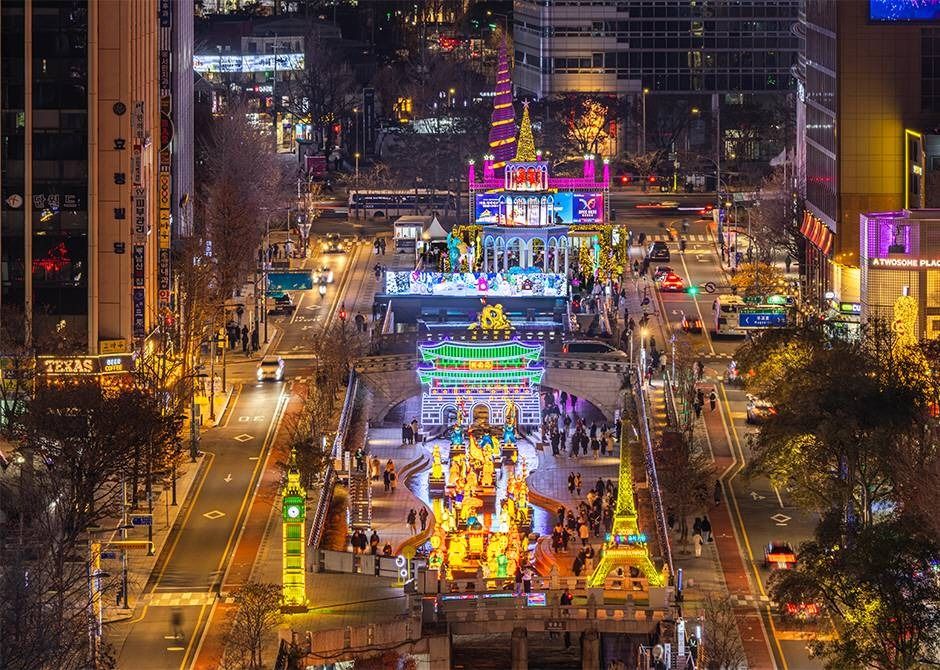
An 11-kilometer restored stream running through the center of Seoul, from Gwanghwamun all the way east to the Jungnang River. What used to be an elevated highway is now a sunken walking path lined with stepping stones, small waterfalls, and public art. Walk as much or as little as you want. It's especially nice at night when the installations are lit up.
Nearest station: Gwanghwamun (Line 5, Exit 5) for the starting point. Insider tip: Start at the Cheonggye Plaza spring fountain and walk east toward Dongdaemun — the crowds thin out after the first kilometer.
11. Seoul City Wall Trail
Sections of Seoul's 600-year-old fortress wall still stand, and you can walk along them for free. The trail covers 18.6 km around the old city boundary, broken into manageable sections. The Naksan section (near Ihwa Mural Village) is the easiest and most scenic for casual walkers, offering sweeping views of Dongdaemun and the northern neighborhoods. The Inwangsan section is more dramatic, with shamanic shrines and rocky ridgeline views.
Nearest station: Hyehwa (Line 4) for Naksan, Dongnimmun (Line 3) for Inwangsan. Best time: Clear mornings for the mountain sections.
Neighborhoods & Walking
Some of Seoul's best experiences are simply walking through its neighborhoods. No ticket, no plan — just wandering.
12. Bukchon Hanok Village
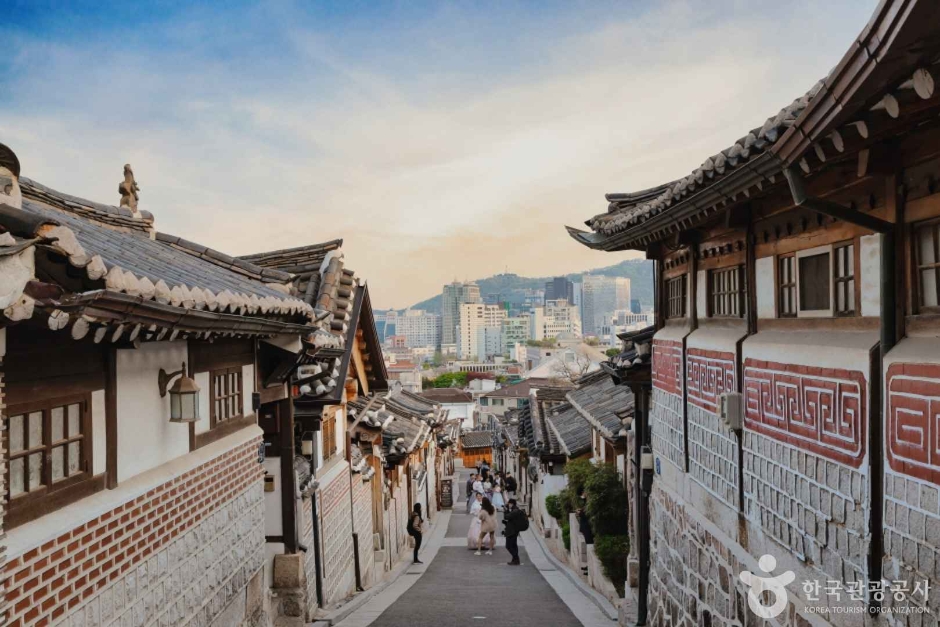
A cluster of 600-year-old traditional hanok houses on the hillside between Gyeongbokgung and Changdeokgung palaces. The narrow alleyways and curved tile rooftops make for incredible photos, especially from the famous "Instagram viewpoint" at Bukchon 8-gil. It's a real residential neighborhood, so keep noise down and respect the privacy signs — residents live here full-time.
Nearest station: Anguk (Line 3, Exit 2). Best time: Early morning (before 9 AM) to avoid tour groups. Check our Bukchon Hanok Village guide for local tips.
13. Ikseon-dong
Seoul's most charming hanok alley district — smaller and less touristy than Bukchon, with a better cafe and food scene. Renovated hanok buildings house coffee shops, vintage stores, wine bars, and tiny restaurants. The narrow lanes feel like stepping into a different era. Browsing is free; spending money on the excellent food is hard to resist but technically optional.
Nearest station: Jongno 3-ga (Lines 1/3/5, Exit 4). Insider tip: Visit on a weekday afternoon. Weekends get packed.
14. Hongdae
Seoul's university arts district is a free entertainment zone, especially on weekends. Street performers, buskers, breakdancers, and indie musicians set up in the main pedestrian area near the playground (Hongdae Noriteo). The murals and street art change constantly. Even just people-watching from a bench is worth an hour. The energy peaks between 4 PM and 10 PM on Saturdays.
Nearest station: Hongik University (Line 2/AREX, Exit 9). Best time: Saturday evening for the full street performance lineup.
15. Yeonnam-dong
The Gyeongui Line Forest Park — a converted old railway track — runs through Yeonnam-dong and is one of Seoul's best free walks. The linear park is lined with indie cafes, bakeries, and small shops. The neighborhood itself has a relaxed, creative vibe that feels worlds away from the Gangnam side. Window-shopping and park-sitting are entirely free.
Nearest station: Hongik University (Line 2, Exit 3). Insider tip: Walk the forest park from Yeonnam-dong south toward Mapo — it's about 6 km total and connects several interesting neighborhoods.
16. Ihwa Mural Village
A hilltop neighborhood near Naksan Park where artists transformed aging house walls into an open-air gallery. The murals range from whimsical to stunning, and the elevated position gives you panoramic views over Dongdaemun and central Seoul. Some of the most famous murals have been painted over by residents tired of tourists, but new ones keep appearing. Combine this with the Naksan section of the City Wall Trail.
Nearest station: Hyehwa (Line 4, Exit 2). Best time: Late afternoon for the best light on the murals and sunset views.
Markets (Free to Browse)
Seoul's traditional markets are free to enter and endlessly entertaining to explore — even if you don't buy anything (though you will).
17. Gwangjang Market
Korea's oldest and most famous traditional market, featured on Netflix's "Street Food." The food stall section is legendary — bindaetteok (mung bean pancakes), mayak gimbap (addictive mini rice rolls), and raw beef yukhoe. Browsing the market, watching vendors cook, and soaking in the atmosphere is free. Eating costs ₩3,000–₩8,000 per dish, which barely counts as spending money.
Nearest station: Jongno 5-ga (Line 1, Exit 8). Best time: Late morning before the lunch rush. See our Traditional Markets Seoul guide for the full rundown.
18. Namdaemun Market
Seoul's largest traditional market — 10,000+ shops spread across a sprawling maze of alleys near Seoul Station. Everything from kitchenware to traditional handicrafts to children's clothing. The food alleys serve some of the cheapest and most honest Korean food in the city. Free to wander, and the sheer scale of it is genuinely impressive.
Nearest station: Hoehyeon (Line 4, Exit 5). Insider tip: The imported goods and camping equipment section in the basement levels is surprisingly good for random finds.
19. Mangwon Market
A local favorite in the Mangwon-dong/Hapjeong area that's far less touristy than Gwangjang or Namdaemun. This is where neighborhood residents actually shop for groceries, and the street food stalls are excellent — especially the tteokbokki and hotteok. The surrounding Mangwon-dong neighborhood is walkable and has a laid-back residential charm.
Nearest station: Mangwon (Line 6, Exit 2). Best time: Weekend afternoons when the market is busiest and the energy is best.
Culture & Art
20. Starfield Library at COEX Mall
Two massive floor-to-ceiling bookshelves in the middle of a shopping mall — it sounds gimmicky, but it's genuinely beautiful. The 13-meter-tall shelves hold 50,000+ books, and the open seating areas are free for anyone to sit, read, and study. It's become one of Seoul's most photographed spaces. The COEX Mall itself is underground and worth exploring even if you don't buy anything.
Nearest station: Samseong (Line 2, Exit 5/6). Best time: Weekday mornings for photos without crowds.
21. DDP (Dongdaemun Design Plaza)
Zaha Hadid's futuristic silver spaceship of a building is free to walk around and photograph from outside — and the ground-floor exhibitions and design markets are often free to enter. The building is most impressive at night when the LED rose garden lights up. Even if there's no free exhibition running, the architecture alone is worth the detour.
Nearest station: Dongdaemun History & Culture Park (Lines 2/4/5, Exit 1). Insider tip: The nighttime photo opportunities here are some of the best in Seoul.
22. Jogyesa Temple
Seoul's chief Buddhist temple and the headquarters of Korean Zen Buddhism. Free to enter, free to explore, and often running free cultural programs including tea ceremonies and temple life experiences (check the temple website for schedules). During Buddha's Birthday (usually May), thousands of paper lanterns fill the courtyard in one of Seoul's most spectacular free displays.
Nearest station: Anguk (Line 3, Exit 6) or Jonggak (Line 1, Exit 2). Best time: Early morning when monks are chanting — it's atmospheric and peaceful.
23. Bongeunsa Temple
A 1,200-year-old Buddhist temple hidden behind the glass towers of Gangnam and COEX Mall. Free entry, and the contrast between ancient temple grounds and the surrounding skyscrapers is surreal. The temple offers free meditation sessions (Thursday evenings) and temple stay programs. The giant Maitreya Buddha statue is visible from COEX across the street.
Nearest station: Bongeunsa (Line 9, Exit 1). Insider tip: The Thursday evening meditation is open to foreigners with no reservation needed — just show up by 7 PM.
24. Free Walking Tours
Several companies run daily tip-based walking tours in English — you pay what you think it was worth. Seoul Free Walking Tour and Wanna Be Seoul cover different neighborhoods including Gyeongbokgung, Bukchon, Insadong, and Hongdae. Tours typically last 2–3 hours and are genuinely informative. Book online the day before — they fill up, especially in spring and autumn.
Meeting points: Usually near Gwanghwamun or Anguk Station. Insider tip: Tip fairly — these guides work hard and get paid nothing upfront. ₩10,000–₩20,000 per person is standard.
25. Yeouido Cherry Blossoms (April) / Han River Fireworks Festival (October)
Two of Seoul's biggest free outdoor events. The Yeouido Spring Flower Festival in early-to-mid April transforms the National Assembly road into a tunnel of cherry blossoms — totally free, ridiculously beautiful, and absolutely packed (go on a weekday if possible). The Seoul International Fireworks Festival in October draws over a million people to the Han River banks for a spectacular free show. Both events are weather-dependent, so check dates closer to the time.
Nearest station: Yeouinaru (Line 5) for both events. Best time: Cherry blossoms peak around April 5–15; fireworks festival is usually the first or second Saturday of October.
Pro Tips for Free Seoul
- Culture Day (every last Wednesday of the month): Free admission to ALL palaces, national museums, and many galleries. If your trip overlaps, plan your palace day for that Wednesday — you'll save ₩10,000+ and skip the ticket queues.
- Temple tea ceremonies: Many Buddhist temples, including Jogyesa and Bongeunsa, offer free tea ceremonies. Check temple websites or ask at the information desk when you visit.
- Han River convenience stores: The GS25 and CU stores inside the Han River parks sell cheap picnic supplies and rent blankets. Some locations rent bikes too. A full riverside picnic — gimbap, fried chicken, beer — runs about ₩15,000 per person.
- T-money card: Not free, but a ₩2,500 rechargeable transit card gets you discounted subway and bus fares across the entire city. Buy one at any convenience store. Every location in this guide is reachable by subway for ₩1,400 or less per ride.
- Free WiFi everywhere: Seoul has free public WiFi in every subway station, most cafes, and many public spaces. Look for networks starting with "Seoul_WiFi" or "KT_Free."
When to Splurge
Most of Seoul is free or nearly free, but a few paid experiences are genuinely worth the upgrade. N Seoul Tower's observation deck (₩21,000) gives you a 360-degree view you can't get from the base. Lotte World is Korea's biggest indoor theme park and a solid full-day experience. And if you're planning to hit multiple paid attractions, a city pass bundles everything at a discount.
Worth the Upgrade
Most of Seoul is free — but a few paid experiences are genuinely worth it.
Affiliate links — we may earn a small commission at no extra cost to you.