Korea on ₩50,000 a Day — The Backpacker's Guide (2026)
Let's get this out of the way: traveling Korea on ₩50,000 a day (~$37 USD) is genuinely doable. Not comfortable. Not glamorous. You won't be eating Korean BBQ every night or staying in boutique hanok guesthouses. But it is absolutely, 100% possible — and here's the thing most budget guides won't tell you: Korea at backpacker-level is still excellent.
The subway is world-class. The cheap food is genuinely delicious — not "good for the price," just good. Free attractions outnumber paid ones. Convenience stores are stocked like small supermarkets. And the safety means you're not losing money to scams, dodgy taxis, or sketchy hostels.
I've broken down exactly how to spend ₩50,000 per day across accommodation, food, transport, and activities. Every price listed here is real and current for 2026. No rounding down to make the math work, no "if you skip lunch" nonsense.
The ₩50,000 Daily Budget Breakdown
Here's what a realistic day looks like when you're watching every won:
| Category | Budget | How |
|---|---|---|
| Accommodation | ₩15,000–20,000 | Hostel dorm bed (Hongdae, Jongno) |
| Breakfast | ₩2,000–3,000 | Convenience store (triangle kimbap + coffee) |
| Lunch | ₩6,000–8,000 | Kimbap shop or market food |
| Dinner | ₩8,000–10,000 | Korean restaurant (jjigae set, bibimbap) |
| Transport | ₩5,000–7,000 | Subway + T-money (3–4 rides) |
| Activities | ₩0–5,000 | Free attractions + 1 paid entry |
| Buffer | ₩2,000–5,000 | Snacks, drinks, emergencies |
Total: ₩38,000–58,000. The range is wide because some days you'll come in under budget (free palace day, convenience store dinner) and some days you'll push over (soju with new hostel friends, that second serving of tteokbokki). It averages out. The key is keeping your average around ₩50,000, not hitting it exactly every single day.
Accommodation on a Budget
Accommodation is your biggest expense and the one with the most room to save — or blow your whole budget if you're not careful.
Hostel Dorm Beds: ₩15,000–25,000/night
Seoul has a solid hostel scene, especially in Hongdae and Jongno. Expect a bunk bed, shared bathroom, free Wi-Fi, and usually a common area with a kitchen. The ₩15,000–18,000 range gets you a clean 6–8 bed dorm. Paying ₩22,000–25,000 gets you a 4-bed dorm with more space and sometimes a locker with a charging port.
Best areas:
- Hongdae — Highest concentration of hostels, best social scene, walkable nightlife. The obvious backpacker base.
- Jongno/Insadong — Closer to palaces and historical sites. Quieter at night. Slightly cheaper on average.
- Myeongdong — Central but noisy. Hostels here tend to be ₩3,000–5,000 more than Hongdae for the same quality.
Book via Booking.com for the widest hostel selection and free cancellation. Hostelworld works too, but has fewer Korean listings.
Jjimjilbang (Korean Spa/Sauna Sleepover): ₩12,000–15,000
This is the backpacker's secret weapon. A jjimjilbang is a 24-hour Korean spa with heated rooms, baths, and sleeping areas. For ₩12,000–15,000, you get entry to the baths, a locker, a set of pajamas, a sleeping mat in a heated communal room, and usually free rice punch or eggs.
It's not a bed. You're sleeping on a floor mat in a room full of strangers. But the floors are heated, the baths are incredible after a long day of walking, and you save ₩5,000–10,000 versus a hostel. Do it once for the experience, do it twice when you're running low on funds.
Best ones: Dragon Hill Spa (Yongsan, ₩15,000), Siloam Sauna (Seoul Station, ₩12,000), Spa Land (Busan, ₩18,000 — worth the splurge).
Capsule Hotels: ₩20,000–30,000
More private than a hostel dorm, less social. You get a pod with a mattress, light, and power outlet. They're clean, quiet, and all over Myeongdong and Gangnam. At ₩20,000–25,000, they're competitive with hostels if you value sleep over socializing.
Eating on ₩15,000–20,000 a Day
This is where Korea genuinely shines for budget travelers. The cheap food here isn't sad airport sandwiches or instant ramen in your hostel room (although that's an option too). Korea's budget food is real food, cooked fresh, and often better than what you'd pay three times as much for in most countries.
Breakfast: ₩2,000–3,000
Convenience store breakfast is the backpacker standard, and in Korea, it's legitimately good. A triangle kimbap (삼각김밥) is ₩1,200–1,500 — seasoned rice wrapped in seaweed with fillings like tuna mayo, bulgogi, or kimchi. Grab an instant coffee from the machine for ₩800. Total: around ₩2,000–2,300.
If you want more substance, CU and GS25 sell microwavable rice bowls for ₩3,000–4,000. The staff will heat them for you. Not gourmet, but filling and surprisingly decent.
Lunch: ₩4,000–8,000
Gimbap Cheonguk (김밥천국, "Kimbap Heaven") and similar chain kimbap shops are everywhere. A full roll of gimbap is ₩3,500–4,500. Add a bowl of ramyeon for ₩4,000. Kimchi jjigae (kimchi stew) with rice is ₩6,000–7,000. These places are fast, clean, and locals eat here every day.
Market food is another strong option. Gwangjang Market has bindaetteok (mung bean pancakes) for ₩4,000 and kalguksu (knife-cut noodles) for ₩6,000. Namdaemun has similar prices with more variety.
Dinner: ₩6,000–10,000
A proper Korean restaurant meal is doable at this budget. Look for:
- Jjigae sets (stew + rice + banchan): ₩7,000–9,000. Kimchi jjigae, doenjang jjigae, or sundubu jjigae — all filling, all come with rice and side dishes.
- Bibimbap: ₩7,000–9,000 for a stone pot version.
- Sundae gukbap (blood sausage soup with rice): ₩7,000–8,000. An enormous, hearty bowl that will fuel you through the next morning.
- Tteokbokki + sundae combo at a street stall: ₩5,000–6,000.
Important: Every Korean restaurant serves banchan (side dishes) for free, and you can ask for refills. This is not a tourist thing — everyone does it. Kimchi, pickled radish, bean sprouts, sometimes even egg rolls. It's essentially free food on top of what you ordered.
Best Cheap Eats (Under ₩6,000)
- Kimbap — ₩3,500–4,500 per roll
- Ramyeon — ₩4,000 at a kimbap shop, ₩1,500 at a convenience store
- Tteokbokki — ₩3,000–5,000 from a street stall
- Sundae (Korean blood sausage) — ₩4,000–5,000
- Hotteok — ₩1,500–2,000 (winter street snack)
- Convenience store meal deals — ₩3,000–4,500
Free Things to Do in Seoul
Seoul is absurdly generous with free attractions. You could spend a full week in the city without paying a single won for an activity. Here's what's free:
Palaces & History
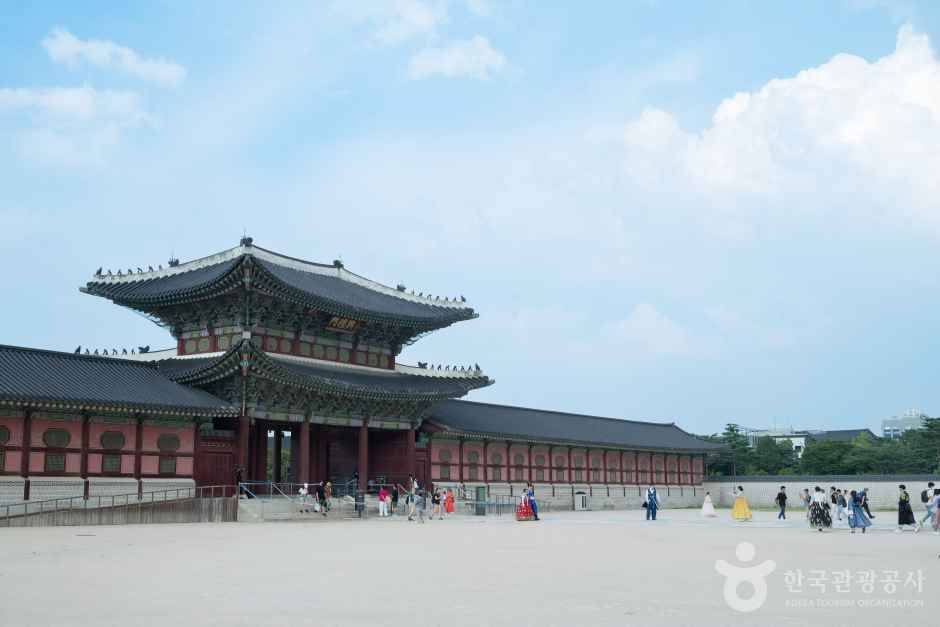
- Gyeongbokgung Palace — Free entry if you wear hanbok (traditional clothing). Hanbok rental shops around Anguk Station charge ₩10,000–15,000 for 2 hours, which is worth splitting with a friend. Without hanbok: ₩3,000 entry.
- Changdeokgung Palace — Same hanbok-free-entry deal. The Secret Garden tour costs extra (₩5,000), but the main palace grounds are enough.
- Deoksugung Palace — ₩1,000 entry (practically free). The guard-changing ceremony outside is free and worth watching.
- Bukchon Hanok Village — Free to walk through. Traditional Korean houses on hilly alleys. Go early morning to avoid crowds and be quiet — people actually live here.
Museums (All Free)
- National Museum of Korea — One of the best museums in Asia, completely free. Plan 2–3 hours minimum.
- War Memorial of Korea — Extensive military history museum near Samgakji Station. Free. Outdoor exhibits include tanks, planes, and a submarine.
- National Folk Museum — Inside Gyeongbokgung grounds. Free with palace entry or hanbok.
- Seoul Museum of Art (SeMA) — Free permanent exhibits.
Parks & Walks
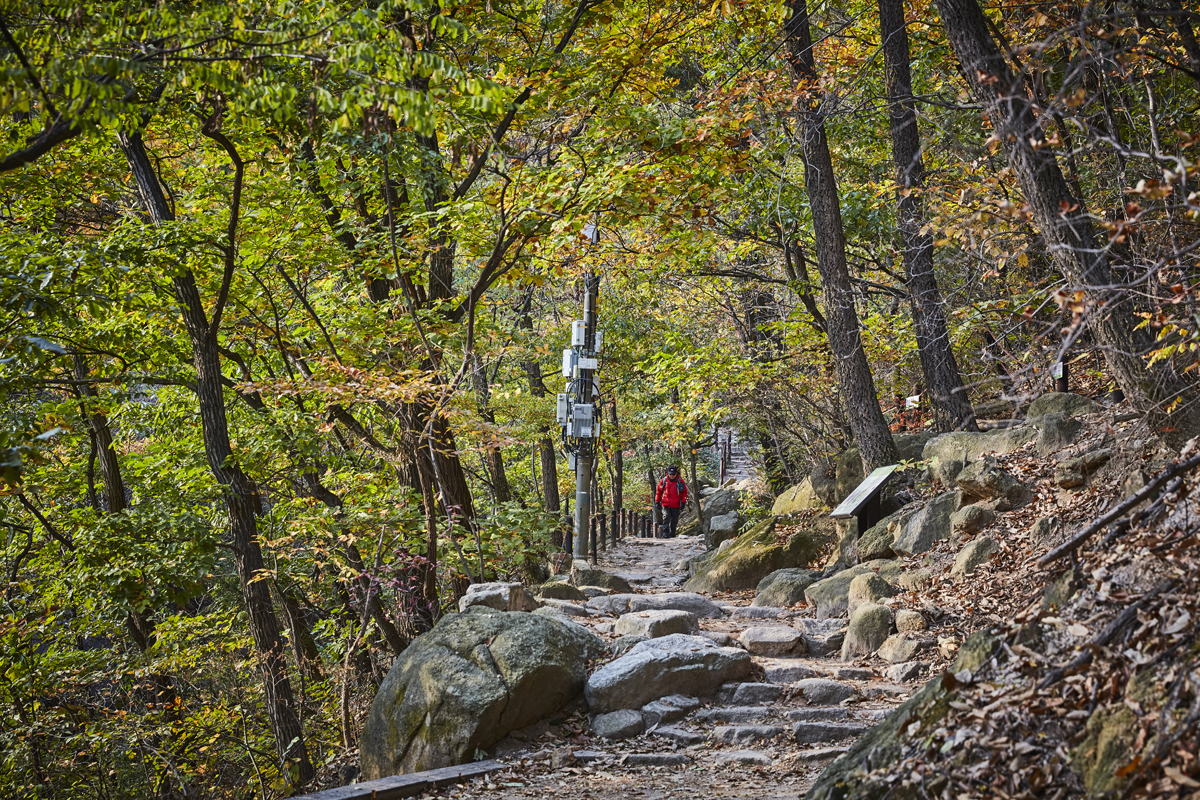
- Namsan Park — Hike up to the base of N Seoul Tower for panoramic views. The hike is free; skip the tower observation deck (₩16,000) unless you really want it.
- Han River Parks — Yeouido Hangang Park and Banpo Hangang Park are both free. Bring convenience store beer and snacks. The Banpo Bridge Rainbow Fountain runs at night (April–October) — free show.
- Seoul City Wall Hike — Walk sections of the 600-year-old fortress wall. The Naksan and Bugaksan sections have the best views.
- Cheonggyecheon Stream — A 10 km restored stream running through downtown Seoul. Walk it from Gwanghwamun to Dongdaemun.
Neighborhoods & Markets
- Hongdae busking — Free live music and dance performances every Friday and Saturday night in the main playground area.
- Ikseon-dong — Tiny alleyways packed with cafes and boutiques in a traditional hanok neighborhood. Free to wander, dangerous for your wallet if you actually go inside the cafes.
- Gwangjang Market — Free to browse. The atmosphere alone is worth the trip — vendors shouting, steam rising from food stalls, fabric shops stacked floor to ceiling.
- Namdaemun Market — Korea's oldest and largest traditional market. Free to explore.
- Mangwon Market — Less touristy than Gwangjang. More locals. Better for people-watching.
- Yeouido Cherry Blossom Festival — Free (April). One of the best cherry blossom viewing spots in Seoul.
Other Free Activities
- Temple stays — Some temples offer free short visits and meditation sessions (check Templestay.com).
- Noryangjin Fish Market — Free to walk through even if you don't buy anything. The energy at 5 AM is unreal.
- Starfield Library — Inside COEX Mall in Gangnam. Massive open library with floor-to-ceiling bookshelves. Free to sit and read.
Transport Savings
Seoul's subway is cheap, clean, and goes everywhere. Here's how to squeeze more out of your transport budget:
Get a T-money Card Immediately
Buy one at any convenience store for ₩2,500 (card cost) and load it with cash. Every subway and bus ride with T-money is ₩100 cheaper than paying cash. That adds up fast over a 2-week trip.
Free Bus-Subway Transfers
If you tap your T-money card on a bus and then swipe onto the subway (or vice versa) within 30 minutes, the transfer is free. This is huge. Plan routes that connect bus + subway and you'll cut transport costs significantly.
Walk When Possible
Seoul's neighborhoods are surprisingly compact. Hongdae to Sinchon is a 15-minute walk. Insadong to Bukchon is 10 minutes. Myeongdong to Namdaemun Market is 5 minutes. Check the map before tapping your T-money — you might not need that subway ride at all.
Intercity Travel
The KTX (bullet train) from Seoul to Busan is fast (2.5 hours) but expensive (₩59,800). Budget alternatives:
- Mugunghwa train — Same route, 5.5 hours, ₩28,600. Slower but half the price.
- Express bus — Seoul to Busan from ₩23,000. Book at kobus.co.kr.
- KTX early bird discounts — Book 2+ weeks ahead on letskorail.com for up to 30% off.
When ₩50,000/Day Doesn't Work
I'm not going to pretend this budget covers everything. Here's what you're giving up:
- Korean BBQ — Even a basic samgyeopsal (pork belly) restaurant costs ₩15,000–18,000 per person. That's your entire food budget for the day in one meal. Save it for a special occasion, not a Tuesday.
- Theme parks — Lotte World is ₩62,000. Everland is ₩58,000. These are full-day, full-budget experiences. Plan them as separate "splurge days."
- Taxis — Even a short taxi ride in Seoul is ₩5,000–8,000. At this budget, taxis don't exist for you. Subway, bus, or feet.
- Shopping — Myeongdong skincare hauls, Hongdae vintage shops, Gangnam boutiques — all of it is off-limits if you're serious about ₩50,000/day. Window shopping is free, though.
- Drinking — Soju is cheap (₩5,000–6,000 at a restaurant, ₩1,800 at a convenience store), but a proper night out with beer, fried chicken, and noraebang will run ₩25,000–40,000. Pick your nights carefully.
- Jeju Island — Flights are ₩50,000–80,000 one way. The island itself is expensive without a rental car. Doable on a budget, but it'll blow your daily average for a few days.
None of this means "don't do these things." It means plan for them as exceptions, not daily expenses. Budget ₩50,000/day for 10 days, then add a separate ₩100,000–150,000 for 2–3 splurge activities. That's honest budgeting.
Frequently Asked Questions
Can I use credit cards everywhere at this budget level?
Mostly, but not always. Subway machines take T-money and cash. Market stalls are cash-only. Convenience stores, restaurants, and hostels all take cards. Carry ₩30,000–50,000 in cash at all times as backup. ATMs at any CU, GS25, or 7-Eleven will work with international cards (look for the "Global ATM" sign).
Is ₩50,000/day realistic outside Seoul?
Yes — actually easier in most cases. Accommodation in Busan, Gyeongju, and Jeonju is often ₩2,000–5,000 cheaper than Seoul. Food prices are similar or lower. The main extra cost is intercity transport getting there.
What's the single biggest way to blow this budget?
Alcohol. A night at a hof (Korean pub) with friends will cost ₩20,000–30,000 before you realize it. Chicken and beer (chimaek) alone is ₩15,000–20,000. If you're serious about ₩50,000/day, drink convenience store soju by the river like a local. It's more fun anyway.
Budget Travel Essentials
Save money on the essentials — pre-book your SIM card and transport card before you fly.
Affiliate links — we may earn a small commission at no extra cost to you.
Related Guides
Related Guides