Chuseok 2026 (Sept 24-27): What Open for Visiting Foreigners
Chuseok in Korea can be either one of the most memorable times to visit or one of the most confusing. I have been in Korea over the holiday enough times to know both versions. If you expect normal city routines, you can end up staring at shuttered restaurants and sold-out trains. If you plan for it properly, though, Chuseok becomes a rare chance to see Korea at its most traditional: folk games, hanbok, palace walks, special foods, quieter business districts, and big family rituals happening all around you.
This guide is for foreigners visiting South Korea during Chuseok 2026, which falls around September 24 to September 27, 2026. I'll walk you through what the holiday actually is, what tends to close, what usually stays open, the best places to go, what foods to try, how to survive the transport crunch, and the questions visitors most often get wrong.
What Is Chuseok?
Chuseok is often described as Korean Thanksgiving, and that comparison is useful up to a point. It is a major harvest holiday centered on family, food, ancestral memorial rites, and returning to one's hometown. In practical travel terms, it is one of the biggest domestic movement periods of the year. People leave Seoul and other major cities to visit parents, grandparents, and family graves, which means roads clog, train tickets disappear, and local neighborhood businesses may shut for several days.
For 2026, the Chuseok holiday period travelers will care about is September 24 to September 27, 2026. Depending on how substitute holidays and employer schedules shake out, some Koreans may effectively travel for a longer stretch before or after those core dates. That matters because the travel chaos often starts before the official holiday and lingers after it.
Culturally, Chuseok is not a performance put on for tourists. It is a real family holiday. That is exactly why it can be so interesting to experience in Korea. You will notice quieter office districts, packed train stations, highway rest stops overflowing with travelers, gift sets stacked in department stores, and special seasonal foods everywhere. If you are the kind of traveler who likes seeing how a country actually functions during an important holiday, Chuseok is fascinating.
It is also worth adjusting expectations. This is not like visiting Korea during peak cherry blossom season, where everything is open and everyone is out for fun. Chuseok has a more mixed rhythm. Some places feel almost sleepy; others are jammed. Some attractions add traditional performances; some small businesses disappear for three days. The trick is to base your plan around places that are designed to serve visitors even during national holidays.
If you are still deciding whether late September is a good time to visit Korea at all, I would say yes, with conditions. The weather is usually pleasant, humidity is lower than midsummer, and you are just starting to edge toward early autumn travel. Pair this guide with our broader Korea festivals 2026 calendar and a realistic Korea itinerary so you do not build a plan that depends on tiny independent businesses being open on the exact holiday dates.
What Closes During Chuseok
The biggest mistake I see foreign visitors make is assuming "holiday" means malls, restaurants, and tourist areas become extra lively. During Chuseok, the opposite is often true in local neighborhoods. You should assume that many small independent businesses will close, and then be pleasantly surprised by anything that remains open.
Small Restaurants and Family-Run Eateries
This is the category most likely to disrupt your plans. Family-run Korean restaurants, neighborhood barbecue shops, tiny noodle spots, mom-and-pop cafes, and local bakeries often shut for at least part of Chuseok. In areas that rely heavily on office workers or local residents rather than tourists, closure rates can be high. I have walked through parts of Seoul during Chuseok where an entire lunch street looked switched off.
If there is a specific restaurant you care about, assume nothing. Check Instagram, Naver, Kakao Map reviews, or call ahead if possible. If you are staying in a residential district and expecting to freestyle every meal, you are taking a real risk.
Smaller Shops and Independent Retail
Independent boutiques, neighborhood beauty stores, stationery shops, and market stalls may also close. Traditional markets can be especially mixed: some sections stay lively for holiday food shopping, while others look half-abandoned depending on the district and the day. If shopping is a core priority, I would avoid relying on Chuseok itself for that part of the trip.
Museums and Minor Attractions With Limited Holiday Operations
Large flagship attractions often stay open, but smaller museums, local galleries, niche cultural spaces, and municipal attractions may close on one or more holiday dates. Even when they open, hours can be reduced. This is one of those times where a "just show up" strategy is weaker than normal.
Transport Capacity, Not Transport Existence
Trains, buses, and flights do not "close" during Chuseok. The real problem is that they become hard to get. For travelers, this feels almost like a closure because the practical result is the same: if you did not book in time, you may not be going anywhere.
KTX, intercity buses, express buses, and domestic flights can sell out around peak travel windows, especially on the outbound and return rush days. If you are trying to move between Seoul and Busan, Seoul and Gyeongju, or Seoul and Jeju without advance planning, you can easily get trapped into expensive or awkward alternatives. Read this guide alongside our Seoul to Busan transport guide if that route is part of your plan.
Some Business Districts Feel Unnaturally Empty
This is not exactly a closure, but it surprises visitors. Office-heavy parts of Seoul can feel weirdly quiet during Chuseok. In some neighborhoods that usually buzz with workers, lunch options become thin and the street energy disappears. I would not call that bad, but it changes how you should plan your day. If you want atmosphere, lean toward palace districts, tourist hubs, theme parks, traditional villages, or outdoor destinations rather than purely corporate neighborhoods.
My rule of thumb: if a place depends on locals following their ordinary weekday routine, expect reduced operations. If a place depends on domestic tourists or international visitors, it has a much better chance of functioning normally.
What Stays Open
The good news is that Chuseok is not a total shutdown. Korea is too travel-heavy and too convenience-oriented for that. Plenty still works well if you point yourself at the right categories.
Tourist Areas in Seoul and Major Cities
Areas that live off tourism usually remain serviceable. Think Myeongdong, Insadong, Hongdae, Bukchon, palace zones, major department store districts, and headline attractions in places like Busan, Gyeongju, and Jeju. Not every business will open, but enough usually do that you can eat, shop a little, and fill a day without trouble.
If this is your first Korea trip, I strongly recommend staying somewhere central and tourist-friendly during the holiday rather than in a remote residential district. That simple decision can make the difference between "everything is closed" and "this is actually easy."
Convenience Stores
Convenience stores are your safety net. GS25, CU, 7-Eleven, and emart24 branches are often the most reliable thing in the neighborhood during Chuseok. You can get coffee, snacks, instant meals, drinks, toiletries, ATM access, and sometimes decent emergency breakfast or late-night food when other options vanish.
I would never build a trip around convenience-store meals, but during Chuseok they are useful insurance. If you arrive late, land in a sleepy neighborhood, or discover your dinner plan has collapsed, convenience stores are the fallback that keeps the day moving.
Chain Cafes and Larger Franchises
Starbucks, Twosome Place, Mega Coffee, Compose Coffee, Ediya, Paris Baguette, and other national chains are generally more likely to open than one-off indie spots. The same goes for many chain restaurants and fast-food places in busy districts. They are not guaranteed, but they are significantly more dependable.
If you need a safe strategy for breakfast and coffee during Chuseok, chains are the pragmatic answer. It is not romantic advice, but it is correct.
Major Attractions
Large attractions with established ticketing, tourism demand, and holiday programming often remain open. Palaces, theme parks, major villages, outdoor gardens, observation points, and top-tier heritage destinations frequently operate through Chuseok, sometimes with extra traditional events. This is why Chuseok can still be an excellent time for sightseeing if you plan around the right list.
For city travelers, the palace and hanbok combination is especially good during the holiday. For family travelers, theme parks can be a surprisingly strong choice because they are built for domestic holiday demand. For travelers who want space, Jeju or a scenic base outside Seoul can be the better move.
Practical takeaway: during Chuseok, think in layers. Keep one "must-do" attraction each day, one chain-food fallback, and one convenience-store backup. That is how I plan holiday travel in Korea without unnecessary stress.
Best Things to Do During Chuseok
These are the activities I would actively recommend for foreigners during Chuseok rather than merely saying they are "still open." They fit the holiday well, they are resilient to closures, and they let you experience a more traditional or seasonal side of Korea.
Korean Folk Village in Yongin
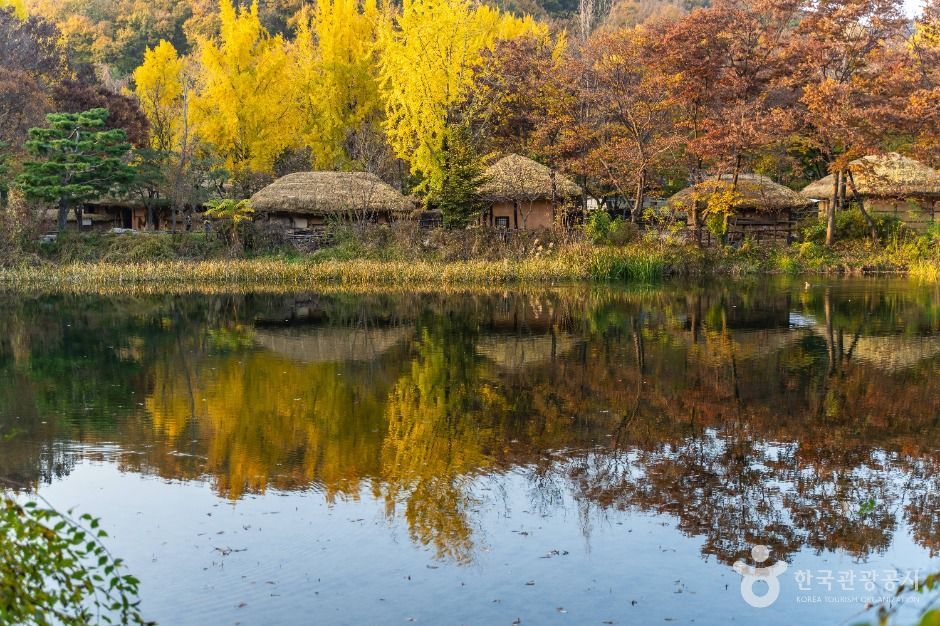
If I had to choose one day trip for Chuseok, Korean Folk Village would be near the top. It works especially well because it feels like a living museum rather than a static display. You get reconstructed Joseon-era houses, craft areas, traditional performances, market-style zones, and a setting that actually suits the holiday mood. During Chuseok, this kind of place makes far more sense than wandering random shopping streets hoping for luck.
What I like most here is that even first-time visitors can immediately understand what they are seeing. It is not an abstract history lesson. You can watch demonstrations, walk through traditional compounds, snack on classic street foods, and get a fuller sense of pre-modern Korean daily life.
Getting there: Subway Line 1 to Sanggal Station (상갈역), then free shuttle bus (15 minutes). Entry: ₩28,000 adults / ₩22,000 children (~$21 / $16 USD). Open 9:30 AM–6:00 PM (last entry 5:00 PM). During Chuseok, the village typically runs extended traditional performance programs.
Namsangol Hanok Village
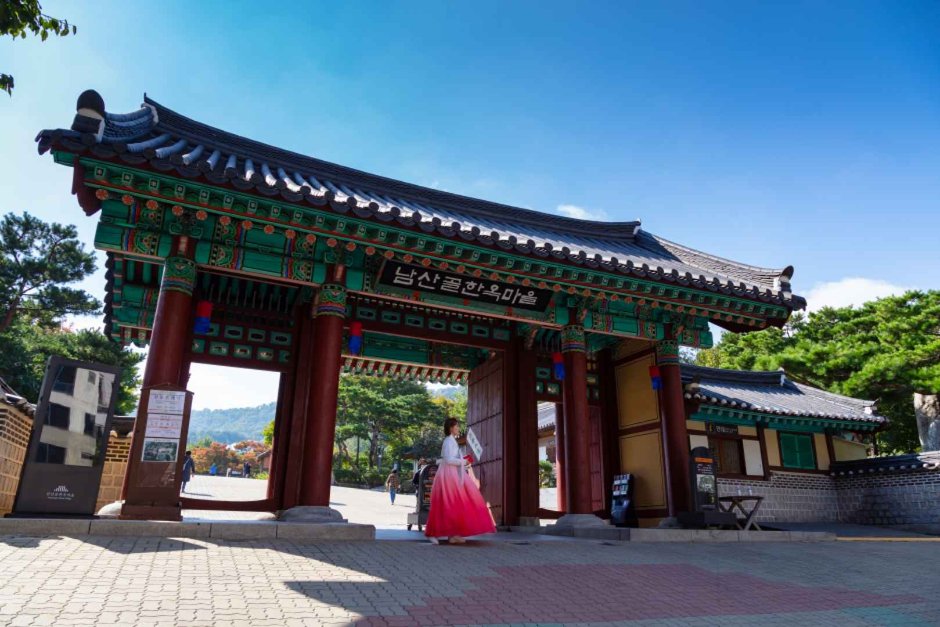
Namsangol Hanok Village is one of the easiest Chuseok-friendly choices in Seoul itself. It is central, accessible, and often hosts folk performances and cultural programs around major holidays. For visitors who do not want a long day trip, it offers a nice balance: traditional houses, relaxed walking, and a good chance of holiday atmosphere without much logistical pain.
I especially like recommending Namsangol for travelers who only have a few days in Seoul. You can combine it with nearby neighborhoods, N Seoul Tower, or a palace day without overcommitting the schedule.
Getting there: Subway Lines 3/4 to Chungmuro Station (충무로역), Exit 3 or 4 (5-minute walk). Free entry. Open 9:00 AM–9:00 PM (November–March closes at 8:00 PM). During Chuseok, the village typically offers folk games (yutnori, neolttwigi) and traditional music performances.
Browse Seoul Cultural Experiences
Wear Hanbok and Visit the Royal Palaces
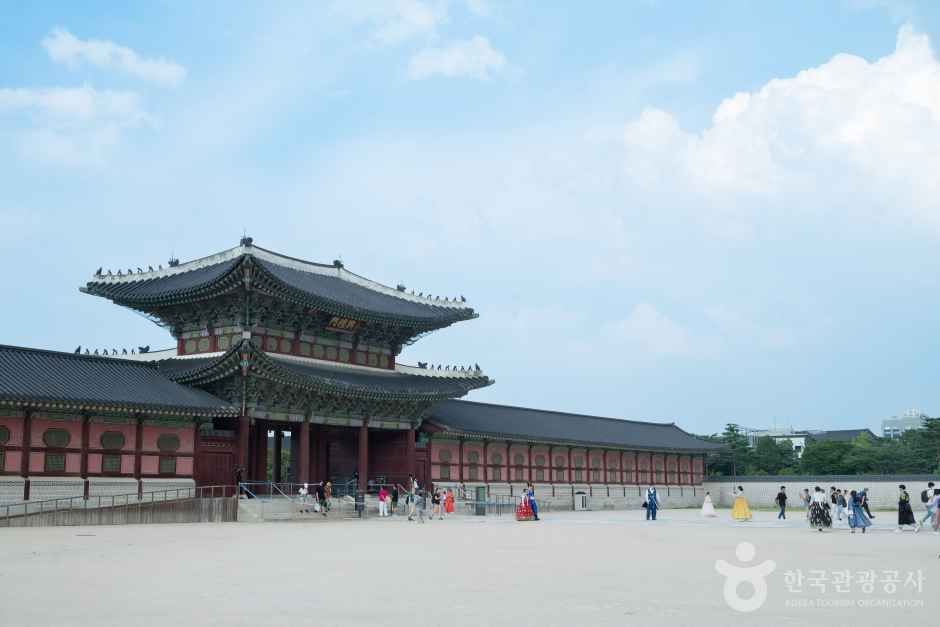
This is one of the best-value and most photogenic Chuseok activities in Seoul. If you rent hanbok, you can usually enter Gyeongbokgung, Changdeokgung, Changgyeonggung, and Deoksugung for free. The palaces feel especially appropriate during Chuseok because the holiday already pulls attention toward tradition, ritual, and Korean heritage.
Among the four, Gyeongbokgung is the big first-timer choice, Changdeokgung is the most elegant, Changgyeonggung is often a bit calmer, and Deoksugung is the easiest to combine with central Seoul. If you want the classic holiday-photo version of Seoul, this is it.
I would do this early in the day, ideally on a weekday-adjacent date if your trip allows it. Hanbok rentals around the palace districts are abundant, and this is one of the rare tourist activities in Seoul that actually becomes more fitting during a traditional holiday rather than less.
Book Hanbok Rental Book Changdeok Hanbok Rental Hanbok at N Seoul Tower
Garden of Morning Calm in Gyeonggi-do
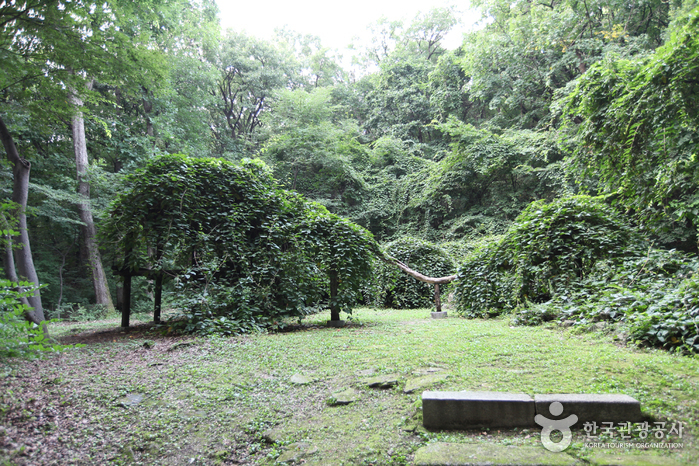
If you want something scenic but low-stress, the Garden of Morning Calm in Gyeonggi is a solid holiday outing. Late September is not peak autumn foliage yet, but you are moving into the early fall garden season, and the landscaped setting makes for an easy, photogenic day. This works well for couples, families, and anyone who wants a break from dense city conditions.
I would pair it with a broader Gapyeong-style day if transport and operating schedules cooperate, but it also works on its own as a calm reset. Chuseok travel does not always need to be "maximum cultural intensity." Sometimes the best move is simply going somewhere beautiful that can absorb crowds better than a tiny city street.
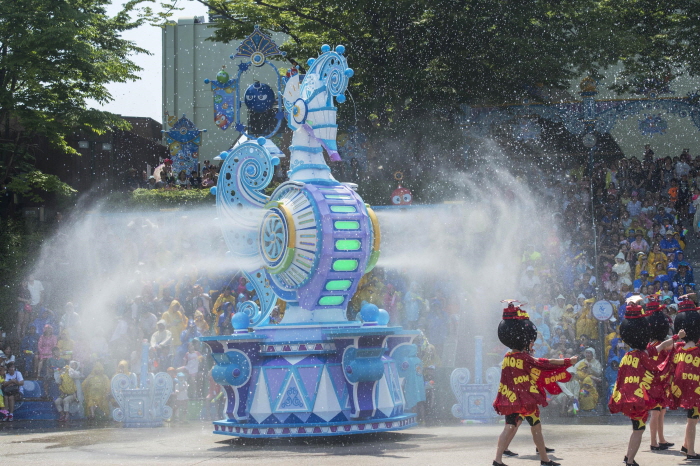
Lotte World and Everland
Theme parks are not the first thing some foreigners think of for Chuseok, but from a practical standpoint they are strong choices. Lotte World in Seoul and Everland in Yongin are both built to handle domestic holiday demand. They have food, restrooms, structured entertainment, weather backups, and enough scale that your day is not dependent on a dozen small businesses independently deciding to open.
Lotte World is easier if you want to stay in Seoul. Everland is bigger and feels more like a full-day commitment. I would choose them if you are traveling with kids, teenagers, or a group with mixed interests where "traditional culture all day" is not going to land well. If you are comparing city sightseeing value, also check our best Klook passes in Seoul guide before you book.
Book Lotte World Tickets Book Everland Tickets
Gyeongju UNESCO Sites
Gyeongju is one of my favorite Chuseok destinations for foreigners because the entire city already feels like a historical landscape. Bulguksa, Seokguram, Daereungwon, Cheomseongdae, Donggung Palace and Wolji, and the wider Silla heritage zone all match the mood of the holiday beautifully. You are leaning into history rather than fighting against closures.
If your Korea trip includes multiple cities, Gyeongju is a far smarter holiday base than many people realize. You get major sights, open space, and a distinctly Korean cultural atmosphere. Use our Gyeongju travel guide if you want to turn it into an overnight or two-night stop.
Browse Gyeongju Tours on Klook
Jeju Island Escape
If you are worried about Chuseok congestion in Seoul and on the mainland, Jeju Island can be an excellent escape. Yes, flights get busy, so this only works if you book early. But once you are there, the experience can feel far more relaxed than trying to navigate holiday movement between mainland cities.
Jeju suits travelers who want scenery, cafes, coastal drives, short hikes, and a little distance from the transport frenzy. It is also good if your trip style is naturally slower and you do not mind prioritizing nature over urban energy for several days. Our Jeju Island travel guide is the place to start if that option appeals to you.
Seoraksan Hiking With Early Autumn Color
Seoraksan is one of the best seasonal wild cards for Chuseok because late September can line up with the earliest autumn color beginning in Korea's higher elevations. You should not expect full blazing peak foliage yet, but you may catch the very start of mountain color depending on elevation and weather. More importantly, Seoraksan gives you scenery and purpose during a holiday period when urban routines are less reliable.
This is best for travelers who already wanted hiking in their Korea trip and are comfortable with some early starts and transport planning. It is not the easiest Chuseok option, but it can be one of the most rewarding if you want mountains instead of malls.
If you are still building your broader route, compare all of these options against your budget in our Korea travel budget guide. Chuseok can push transport and accommodation prices up in ways that change what is worth doing.
Chuseok Food Guide
One of the best parts of being in Korea during Chuseok is the food. Even if you do not attend a family celebration, you will see holiday dishes in bakeries, department-store food halls, supermarkets, and restaurants that stay open.
Songpyeon
Songpyeon is the iconic Chuseok food. These are half-moon-shaped rice cakes, usually filled with ingredients like sesame, sweetened beans, chestnut, or red bean, then steamed over pine needles. They have a soft, chewy texture and a gentle aroma that feels unmistakably seasonal in Korea. If you try only one holiday-specific food, make it this.
Japchae
Japchae is a celebratory glass-noodle dish tossed with vegetables, sesame oil, and often beef. It shows up year-round in Korea, but it is especially common on holiday tables. During Chuseok, it is one of those foods you will see prepared in bulk for family gatherings.
Jeon
Jeon refers to Korean savory pancakes or pan-fried battered slices, often made with zucchini, fish, meat, kimchi, or mixed ingredients. During Chuseok, jeon becomes a whole category of holiday table food rather than a single dish. If you walk into a supermarket food section before the holiday, you will often see trays and trays of it being prepared.
Galbi
Galbi, especially beef short ribs, is another dish associated with special occasions and family meals. Not every Chuseok table will look identical, of course, but galbi sits firmly in the "holiday food" mental category for many Koreans because it feels generous and celebratory.
If you want a more hands-on food experience during your trip, a cooking class can be a good complement to the holiday atmosphere, especially if your sightseeing day ends up needing a backup plan.
Simple food strategy for Chuseok: actively seek out department store food halls, larger supermarkets, open chain restaurants, and tourist-heavy dining streets. That combination gives you the best chance of tasting seasonal dishes without depending on a single tiny restaurant being open.
Transport Tips
This is the section that matters most if your Chuseok trip includes movement between cities.
Book KTX Early
KTX sells out weeks ahead during Chuseok. If you know you need intercity rail, do not wait. My practical recommendation is to treat one month in advance as the minimum safe target for booking once reservations open, especially for major routes and prime travel times.
If you are trying to go from Seoul to Busan, Seoul to Gyeongju, or Seoul to another major hometown destination around the exact holiday rush, even one month ahead can feel late for the most desirable slots. Be flexible on departure times if necessary.
Avoid the Main Travel Days
The worst days are usually the outbound rush just before the core holiday and the return rush at the end. If you can, avoid moving on the most obvious family travel dates. Build your trip so you are already in place before the rush starts, or move after the peak return day. That one decision can save hours of stress.
Flights to Jeju Need the Same Discipline
Do not assume flights are easier than trains. Jeju is one of the most popular holiday destinations in Korea, and flights can fill quickly. If Jeju is part of your Chuseok strategy, lock it in early and watch baggage rules carefully if you are hopping around Korea with luggage.
Consider Staying Put
My strongest Chuseok advice for first-time visitors is simple: move less. Base yourself in Seoul and do holiday-friendly day trips, or base yourself in one strong destination like Jeju or Gyeongju and enjoy it properly. Trying to thread together Seoul, Busan, Gyeongju, Jeju, and Sokcho inside one holiday window is how you turn a good trip into a transport puzzle.
Have a Backup for Every Intercity Leg
If a route is mission-critical, know your fallback. That might mean a bus instead of a train, a flight instead of KTX, or simply shifting the day of travel. I also recommend keeping hotel bookings aligned with the possibility that you may need one extra night in a city if transport options tighten unexpectedly.
| Situation | Best Move | Worst Move |
|---|---|---|
| Need Seoul to Busan during holiday peak | Book KTX as soon as reservations open | Assume same-week purchase will be fine |
| Want Jeju during Chuseok | Book flights and hotel early | Expect cheap last-minute fares |
| Unsure where to go | Stay in one base and day-trip lightly | Hop cities every day |
| Need meals on travel day | Use station food courts and convenience stores | Rely on tiny local restaurants en route |
FAQ
Is Chuseok a bad time to visit Korea?
No, but it is a bad time to improvise. If you book transport early, stay in practical locations, and focus on major attractions, Chuseok can be a very rewarding time to visit.
Are restaurants open during Chuseok?
Some are, some are not. Small family-run restaurants are the most likely to close. Tourist districts, chain cafes, chain restaurants, hotel dining, food halls, and convenience stores are much more reliable.
Are palaces open during Chuseok?
Major palaces are often among the better bets during the holiday, and hanbok entry is one of the strongest Chuseok-friendly activities in Seoul. Still, always check official notices close to your visit because holiday hours can vary.
Should I stay in Seoul or leave Seoul?
Both can work. Seoul is easier if you stay in a tourist-heavy district and build your days around palaces, hanok villages, and major attractions. Leaving Seoul works best if you book early and choose a destination that makes sense during the holiday, such as Gyeongju, Jeju, or a theme-park day in Yongin.
Is Chuseok good for first-time visitors?
Yes, if you are realistic. I would not recommend it for travelers who want Korea at its most frictionless, but I would recommend it for people who like seeing a country during a meaningful local holiday and do not mind planning properly.
What should I book first for Chuseok 2026?
Book long-distance transport first, then accommodation, then any activity where timing matters. KTX and Jeju flights are usually the most time-sensitive pieces.
For most foreigners, Chuseok is best approached as a heritage-and-planning holiday, not a spontaneous city-break holiday. If you do that, it can be excellent. I would choose palace visits, hanbok, a traditional village, one scenic day trip, one strong food plan, and as little intercity movement as possible. That is the version of Chuseok travel in Korea that consistently works.