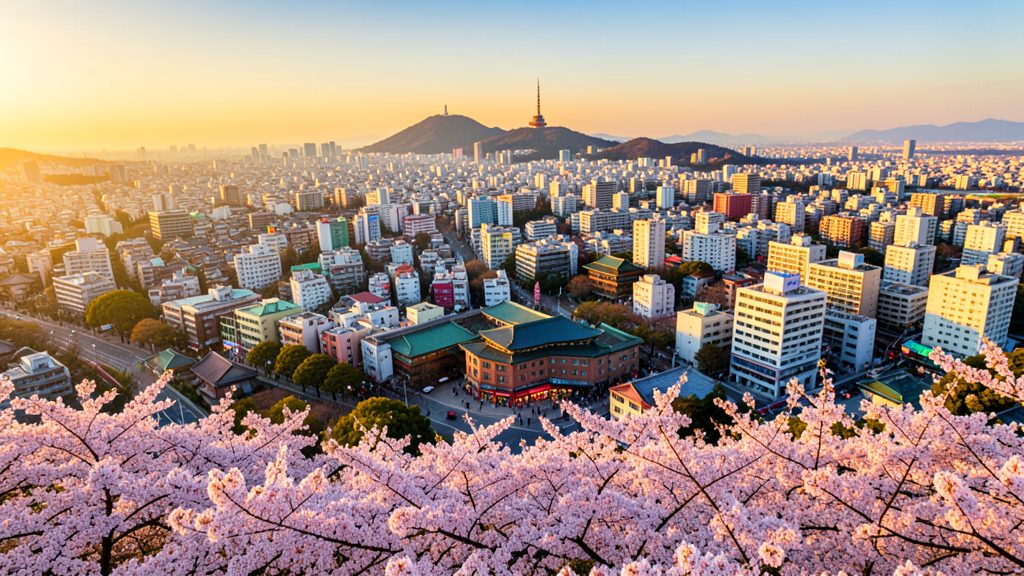
Korea Travel from Australia: The Complete Guide (2026)
South Korea is one of the easiest countries in Asia to visit from Australia. Direct flights from Sydney and Brisbane take under 11 hours, Australians don't need a visa for stays up to 90 days, and the country runs on card payments so thoroughly that you can go days without touching cash. If you've been thinking about a Korea trip, the barrier to entry is lower than you probably think.
This guide covers everything from an Australian perspective — flights in AUD, visa rules for Australian passports, daily budgets that make sense in our currency, and the practical details that most Korea travel guides written for Americans skip entirely.
Flights from Australia to Korea
Seoul's Incheon International Airport (ICN) is the main gateway. Direct flights operate from Sydney, Melbourne, and Brisbane. Perth doesn't have a direct route yet — you'll connect through Singapore, Kuala Lumpur, or another Asian hub.
Direct Flights
| Route | Airlines | Flight Time | Return Fare (AUD) | Frequency |
|---|---|---|---|---|
| Sydney → Seoul | Korean Air, Asiana, Jetstar, T'way Air | ~10h 40min | $600–$1,200 | ~26 flights/week |
| Brisbane → Seoul | Korean Air, Jetstar | ~9h 35min | $450–$700 | ~6 flights/week |
| Melbourne → Seoul | Asiana Airlines | ~10h 30min | $650–$1,000 | 3 flights/week |
Important note for 2026: Qantas discontinued its direct Sydney–Seoul service in mid-2025. Jetstar, its low-cost subsidiary, took over the route and now flies daily. Many guides still list Qantas as an option — it no longer is.
From Perth
There are no direct flights from Perth to Seoul. Your best options are one-stop connections through Singapore (Singapore Airlines or Scoot, ~13–15 hours total) or Kuala Lumpur (AirAsia X). Return fares typically run $500–$900 AUD depending on the carrier and how far ahead you book. Singapore Airlines via Changi is the most comfortable routing. Scoot is the cheapest, often under $600 return.
How to Get the Best Fares
- Book 8–12 weeks ahead for the best balance of price and availability
- Fly midweek — Tuesday and Wednesday departures are consistently cheaper
- Low-cost carriers are legitimate. Jetstar and T'way Air fly the same route as Korean Air. The seats are narrower and you'll pay for meals and bags, but the plane gets there at the same time
- Shoulder season wins: January–February and June–July flights are 30–50% cheaper than April (cherry blossom) and October (autumn foliage) peak
- Set fare alerts on Google Flights for your specific route
Visa Requirements for Australians
Australians do not need a visa to visit South Korea for up to 90 days. You can enter with just your passport — no application, no fee, no pre-approval.
K-ETA update for 2026: The K-ETA (Korea Electronic Travel Authorization) is currently waived for Australians until 31 December 2026. This temporary exemption has been in place since April 2023. You do not need to apply for a K-ETA before your trip. However, from 1 January 2027, Australians may need to apply online before travel (previously cost around $13 AUD). If you're planning a trip for late 2026, you're fine. If you're looking at 2027, check the Smartraveller Korea page for updates.
Passport requirements:
- At least 6 months validity from your planned return date
- At least 2 blank facing pages
- Standard Australian passport (not emergency travel documents)
Immigration at Incheon is fast. Automated gates are available for Australian passport holders — you can skip the manned counters entirely. Budget 15–30 minutes from plane to arrivals hall.
When to Go
Korea has four distinct seasons. The short answer: April–May (spring) and September–November (autumn) are the best times to visit. But each season has its appeal.
| Season | Months | What to Expect | Good For |
|---|---|---|---|
| Spring | Mar–May | 10–24°C, cherry blossoms in April, mild and clear | First-timers, photography, festivals |
| Summer | Jun–Aug | 24–33°C, monsoon rain Jun–Jul, humid | Budget travelers, beaches, mud festival |
| Autumn | Sep–Nov | 4–27°C, foliage peaks Oct, crisp air | Hiking, temples, photography |
| Winter | Dec–Feb | -5 to 5°C, cold and dry, snow in mountains | Skiing, ice festivals, cheapest flights |
Australian-specific tip: Korean winter is the opposite of what most Australians are used to. If you've never experienced -10°C temperatures, Korea in January will be a shock. Pack properly or visit in the shoulder months. For a deeper dive, see our month-by-month Korea guide.
Budget: What Korea Costs in AUD
Korea is mid-range by Asian standards — cheaper than Japan, more expensive than Vietnam or Thailand. At the current exchange rate (1 AUD ≈ 1,040 KRW as of March 2026), here's what to expect per person per day.
| Style | Daily Budget (AUD) | Accommodation | Food | Transport |
|---|---|---|---|---|
| Budget | $70–$100 | Hostel/guesthouse ($25–$40) | Street food, kimbap ($15–$25) | Subway + bus ($5–$8) |
| Mid-Range | $150–$220 | 3-star hotel ($80–$120) | Restaurants + cafes ($30–$50) | Subway + occasional taxi ($10–$20) |
| Comfortable | $300–$470 | 4–5 star hotel ($150–$250) | Fine dining, Korean BBQ ($50–$80) | Taxis, KTX trains ($30–$50) |
These don't include flights or major activities (DMZ tours, theme parks). A realistic 10-day mid-range trip for one person: roughly $1,500–$2,200 AUD excluding flights.
Where Australia gets an advantage: The AUD-to-KRW rate has been favourable through 2025–2026. A $15 AUD lunch in Seoul gets you a proper sit-down Korean meal — bibimbap, jjigae (stew), or a Korean BBQ lunch set — with banchan (side dishes) included. That same meal in Sydney would run $25–$30.
Money, Cards, and Currency
South Korea is one of the most cashless countries on earth. You can pay by card almost everywhere — restaurants, convenience stores, subway stations, even street food vendors in touristy areas. That said, a small amount of cash is useful for traditional markets and some taxis.
Best Ways to Pay
- Travel-friendly debit card (no FX fees). Cards like Wise, Up Bank, ING Orange, or 28 Degrees Mastercard charge zero foreign transaction fees. This is the single best money move for Australians in Korea. Visa and Mastercard are accepted everywhere.
- WOWPASS card. A tourist prepaid card that combines payment, T-money transit, and currency exchange in one card. Top it up with AUD cash at 230+ kiosks across Korea — the exchange rates are better than airport money changers. Free to issue (just need your passport). Works at restaurants, cafes, convenience stores, and on public transport.
- T-money card. Essential for public transport. Available at any convenience store for 2,500 KRW (~$2.50 AUD). Top up with cash and tap on/off at subway gates and bus readers. Also works for small purchases at GS25, CU, and 7-Eleven.
- Cash. Bring $200–$300 AUD to exchange on arrival. Myeongdong money changers in Seoul offer better rates than the airport, but airport exchange is fine for small amounts. You won't need much.
ATMs
Not all Korean ATMs accept foreign cards. Look for "Global ATM" signs or Visa/Mastercard logos. Your safest bets are convenience store ATMs (GS25 and CU — available 24/7) and KB Bank or Woori Bank branches. Expect fees of 3,000–5,000 KRW (~$3–$5 AUD) per withdrawal plus whatever your Australian bank charges. Withdraw larger amounts less often to minimise fees.
SIM Cards and Internet
Korea has some of the fastest mobile internet in the world. You'll want data from the moment you land — for maps, translation apps, and KakaoTalk (Korea's version of WhatsApp).
Your Three Options
- eSIM (recommended for most Australians). Buy before you fly, activate when you land. No queuing at airport counters. Your Australian number stays active on your phone's primary SIM — you'll still receive bank verification texts and iMessages. Klook and Airalo both offer Korea eSIMs from around $8–$50 AUD depending on data and duration. Browse Korea eSIMs on Klook →
- Physical SIM card at Incheon Airport. KT Olleh, SK Telecom, and LG U+ all have counters in the arrivals hall (both Terminal 1 and Terminal 2). Unlimited data SIMs start around $20 AUD for 3 days. KT Olleh is the only carrier that includes unlimited local calls and SMS in the base price — useful if you need to call restaurants or your Airbnb host. Activation takes 5–15 minutes.
- Pocket WiFi. Rent a portable hotspot from $3–$6 AUD/day. Best for couples or groups who can share one device. Pick up and return at Incheon Airport. Downside: it's another thing to charge and carry.
For a detailed comparison of every option with prices, see our Best Korea SIM Card for Australians guide.
Getting Around Korea
Seoul Subway
Seoul's subway system is world-class. It covers virtually every tourist destination, signs are in English and Korean, and a single ride costs 1,400 KRW (~$1.35 AUD) with a T-money card. It runs from approximately 5:30 AM to midnight. This will be your primary transport. For a full breakdown, see our Seoul subway guide.
KTX (High-Speed Rail)
Korea's bullet train connects Seoul to Busan in 2 hours 30 minutes, to Daegu in 1 hour 40 minutes, and to Gwangju in under 2 hours. Tickets start around $50–$60 AUD one way for Seoul–Busan. Book through the Korail app or at any train station. If you're visiting multiple cities, the KR Pass (Korea Rail Pass) offers unlimited KTX travel for 2–5 consecutive days — it pays for itself if you make at least two long-distance trips.
Intercity Buses
Cheaper than KTX and covering more destinations. Express buses run between every city and most large towns. Seoul's three main bus terminals (Express, Central, Dong Seoul) connect to everywhere. Fares are roughly half the KTX price. Seats are comfortable and journeys are punctual.
Taxis
Cheap by Australian standards. A 20-minute taxi in Seoul costs around 8,000–12,000 KRW ($8–$12 AUD). Taxis use meters, and drivers are generally honest — no need to negotiate. Most accept card payment. The Kakao T app is Korea's ride-hailing service (like Uber) and eliminates language barrier issues entirely.
Language Barrier
Korea is easier to navigate than you might expect without Korean. Seoul and Busan have English signage throughout public transport, tourist attractions, and major shopping areas. Restaurant menus in tourist districts usually have English and photos.
Essential apps:
- Papago (by Naver) — the best Korean-English translator, including camera translation for menus and signs
- Kakao Map or Naver Map — Google Maps works in Korea but local apps have better public transport directions and business listings
- KakaoTalk — Korea's universal messaging app. Some businesses only accept bookings through KakaoTalk
Outside Seoul, English levels drop significantly. Having Papago on your phone is non-negotiable for restaurant ordering in smaller cities. The camera translate feature — point your phone at a Korean menu and see instant English — works remarkably well.
Where to Stay
Seoul Neighborhoods for First-Timers
| Area | Best For | Budget/Night (AUD) |
|---|---|---|
| Myeongdong | Shopping, central location, first-timers | $80–$200 |
| Hongdae | Nightlife, cafes, young travellers, budget stays | $40–$120 |
| Insadong/Jongno | Palaces, traditional culture, hanok stays | $60–$180 |
| Gangnam | Upscale dining, K-beauty clinics, modern Seoul | $100–$300 |
| Itaewon/Yongsan | International food, expat scene, craft beer | $60–$150 |
Accommodation types:
- Hotels — same international standard you'd expect. Booking.com and Agoda have the best Korea coverage
- Hanok stays — traditional Korean wooden houses. Beautiful, but expect heated floors instead of beds and shared bathrooms in cheaper ones. See our hanok stays guide
- Guesthouses/hostels — plentiful in Hongdae and Myeongdong. Dorms from $25 AUD/night. Private rooms from $50 AUD
- Jjimjilbangs — Korean bathhouse-sleepover hybrids. Pay around $12–$15 AUD for access to saunas, sleeping rooms, and facilities. A legitimate budget accommodation option and a cultural experience in its own right
Food: What to Expect
Korean food is one of the best reasons to visit. You could eat three meals a day for a week and never repeat a dish. For Australians used to paying $20+ for a mediocre lunch, Korean food prices feel almost absurd.
What Things Cost
- Kimbap roll (Korean sushi roll): 3,000–4,000 KRW ($3–$4 AUD)
- Bibimbap at a local restaurant: 8,000–10,000 KRW ($8–$10 AUD)
- Korean BBQ for two (meat + sides + rice): 30,000–50,000 KRW ($30–$50 AUD)
- Street food meal (tteokbokki + odeng + hotteok): 5,000–8,000 KRW ($5–$8 AUD)
- Convenience store meal (triangle kimbap + ramyeon + drink): 4,000–6,000 KRW ($4–$6 AUD)
- Cafe latte: 4,500–6,000 KRW ($4.50–$6 AUD)
- Soju (in a restaurant): 5,000 KRW ($5 AUD)
Banchan (side dishes) are always free. Every sit-down Korean meal comes with an array of small dishes — kimchi, pickled radish, seasoned vegetables, tofu. They're refillable at no charge. This is not a special promotion; it's how Korean dining works.
For where to eat on a budget, see our cheap eats in Seoul guide.
Safety
South Korea is one of the safest countries in the world for tourists. Violent crime against foreigners is extremely rare. You can walk most neighborhoods alone at night without concern — including as a solo female traveller.
Practical safety notes:
- Petty theft is uncommon but use common sense in crowded tourist areas
- Scams are rare. Taxi meters are standard. Overcharging at restaurants is virtually unheard of
- North Korea: The security situation on the peninsula has been stable for decades. It has zero practical impact on tourism. Nobody in Seoul thinks about it daily
- Natural disasters: Typhoons occasionally affect southern Korea in August–September. Monsoon flooding can disrupt transport in July. Check weather forecasts during summer months
- Healthcare: Excellent. Hospital emergency rooms in Seoul have English-speaking staff. Travel insurance is essential — Australian Medicare does not cover you in Korea
- Emergency number: 112 (police), 119 (fire/ambulance), 1330 (Korea Tourism hotline, English available 24/7)
What to Pack
Korea-specific packing tips that Australian travellers often miss:
- Slip-on shoes. You remove shoes constantly — entering restaurants, temples, guesthouses, changing rooms. Lace-up boots become exhausting by day three
- Layers for spring/autumn. Seoul mornings can be 8°C and afternoons 22°C. A light packable jacket saves you
- Power adapter. Korea uses Type C and F plugs (European-style round pins). Australian plugs will not fit. Bring a universal adapter or buy one at Daiso (Korean dollar store) for 2,000 KRW
- Umbrella or rain jacket for summer. Monsoon season is no joke — sudden downpours are daily occurrences in July
- Modest clothing for temples. Shoulders and knees covered. Some temples offer loaner wraps but not all
- Sunscreen. Available everywhere in Korea (it's a skincare-obsessed country) but Australian brands have higher SPF if you prefer what you know
Suggested First-Trip Itinerary (10 Days)
For Australians visiting Korea for the first time, this hits the highlights without rushing.
| Day | Location | Highlights |
|---|---|---|
| 1 | Arrive Seoul | Incheon Airport → hotel, Myeongdong evening walk, pick up T-money |
| 2 | Seoul | Gyeongbokgung Palace, Bukchon Hanok Village, Insadong, Gwangjang Market |
| 3 | Seoul | DMZ tour (half day), Hongdae evening |
| 4 | Seoul | Namsan Tower, Itaewon lunch, Gangnam/COEX, Korean BBQ dinner |
| 5 | Seoul → Busan (KTX) | Morning KTX (2.5 hours), Gamcheon Culture Village, Jagalchi Fish Market |
| 6 | Busan | Haeundae Beach, Haedong Yonggungsa Temple, BIFF Square street food |
| 7 | Busan → Gyeongju | Day trip: Bulguksa Temple, Seokguram Grotto, royal tomb mounds |
| 8 | Busan → Seoul (KTX) | Morning in Busan, afternoon KTX back, Dongdaemun shopping/night market |
| 9 | Seoul | Free day — Lotte World, cooking class, or day trip to Nami Island |
| 10 | Depart Seoul | Last-minute shopping, Incheon Airport |
Estimated cost for this itinerary (mid-range, per person):
- Flights (Sydney return): $700–$900 AUD
- Accommodation (9 nights, 3-star): $720–$1,080 AUD
- Food: $300–$450 AUD
- Transport (subway + KTX): $150–$200 AUD
- Activities (DMZ, palaces, tower): $100–$150 AUD
- Total: roughly $2,000–$2,800 AUD per person
FAQ
Do I need a visa to visit Korea from Australia?
No. Australians can enter Korea visa-free for up to 90 days. The K-ETA requirement is waived until 31 December 2026.
Is Korea expensive compared to other Asian countries?
Mid-range. It's cheaper than Japan and significantly cheaper than Australia for food and transport. More expensive than Southeast Asia (Thailand, Vietnam, Indonesia). A mid-range traveller can comfortably spend $150–$220 AUD per day including accommodation.
Do I need to speak Korean?
No. Seoul and Busan are navigable in English. Download the Papago translation app for menus and conversations in smaller cities.
Is Korea safe for solo female travellers?
Yes. Korea consistently ranks among the safest countries in Asia for solo travel. Public transport runs late, streets are well-lit, and violent crime against tourists is extremely rare.
Can I use my Australian phone in Korea?
Your phone will work if it's unlocked. Buy a Korean eSIM before departure or pick up a SIM card at Incheon Airport. Roaming with your Australian carrier is the most expensive option — Telstra charges $10/day for international roaming.
What's the time difference between Australia and Korea?
Korea is UTC+9. That's the same as Japan. From AEST (Sydney/Melbourne), Korea is 1 hour behind. From AWST (Perth), Korea is 1 hour ahead. During Australian daylight saving time, add another hour difference.
Do I need travel insurance?
Yes. Australian Medicare does not cover you overseas. Korean healthcare is excellent but expensive without insurance. A standard travel insurance policy covering medical, cancellation, and luggage is strongly recommended.
Can I drink the tap water?
Tap water in Korea is technically safe to drink, but most Koreans and tourists drink filtered or bottled water. Bottled water is cheap — about 1,000 KRW ($1 AUD) from any convenience store.