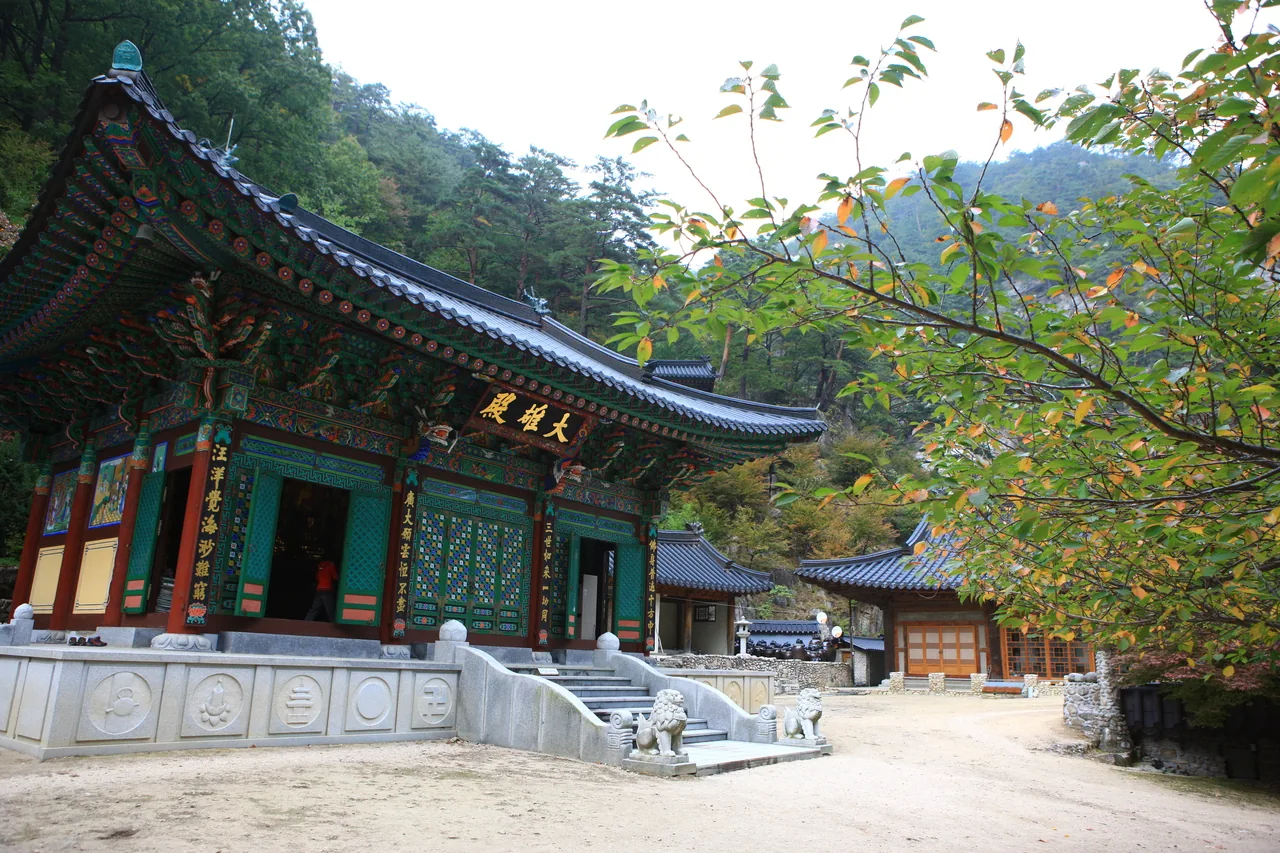
Korea Autumn Foliage 2026: When & Where to See Fall Colors (Complete Guide)
Autumn in South Korea is, without exaggeration, one of the most beautiful things you will ever see. The country's mountains — and there are mountains everywhere — ignite in layers of crimson, amber, and gold from late September through mid-November. Unlike cherry blossom season, which lasts about a week per location, fall foliage lingers for two to four weeks in each region, giving you a much wider window to plan around.
I have spent multiple autumns in Korea timing trips to peak color, getting it wrong, getting it right, and learning exactly what works. This guide covers the 2026 foliage forecast by region, the best spots from Seoul to Jeju, hiking routes, and practical tips so you arrive at the right place at the right time.
🍂 Book Autumn Experiences
When Do Leaves Change? 2026 Foliage Forecast by Region
Korea's autumn foliage follows a predictable pattern: it starts at the highest elevations in the north and sweeps south over roughly six weeks. The Korea Meteorological Administration tracks "first tinting" (when about 20% of leaves on a mountain have changed) and "peak color" (when 80% or more have turned). Here is the 2026 forecast:
| Region / Mountain | First Tinting (approx.) | Peak Color (approx.) | Notes |
|---|---|---|---|
| Seoraksan (Gangwon) | Sep 28 | Oct 17 – 22 | Always first on the mainland |
| Odaesan (Gangwon) | Oct 1 | Oct 19 – 24 | Quieter alternative to Seoraksan |
| Bukhansan (Seoul) | Oct 14 | Oct 28 – Nov 3 | Peak foliage inside Seoul |
| Nami Island / Gapyeong | Oct 12 | Oct 25 – Nov 1 | Iconic tree-lined paths |
| Naejangsan (Jeolla) | Oct 18 | Nov 1 – 8 | Possibly the most vivid reds in Korea |
| Gyeongju (Gyeongsang) | Oct 18 | Nov 1 – 7 | Temples framed by maples |
| Jeonju (Jeolla) | Oct 19 | Nov 2 – 8 | Hanok village + fall colors |
| Busan | Oct 22 | Nov 5 – 12 | Last major city to peak |
| Hallasan (Jeju) | Oct 16 (summit), Oct 25 (base) | Oct 25 – Nov 5 | Summit starts early, base trails later |
How to read this table: "First tinting" means leaves are starting to change but you are still seeing plenty of green. "Peak color" is when entire mountainsides look like they are on fire — this is what you want to aim for. Peak color lasts about two weeks before leaves start dropping.
The general pattern is simple: late September to mid-October for the northern mountains (Seoraksan, Odaesan), late October to early November for Seoul, Gapyeong, and the central regions, and early to mid-November for the south (Busan, Naejangsan). If you only have one week, late October is the sweet spot — Seoul, Nami Island, and Gyeongju will all be at or near peak.
One more thing: these dates shift by a few days each year depending on summer temperatures and early autumn rainfall. A hot, dry summer tends to push foliage later and produce less vivid colors. A cool, rainy September usually means earlier and more dramatic color. I will update this page as the Korean Meteorological Administration releases its official autumn forecast in September 2026.
Seoul Foliage Spots
You do not need to leave Seoul for stunning autumn color. The city is surrounded by mountains and packed with old palaces and parks that come alive in October and November. If you are basing yourself in the capital (and most visitors do — see our essential Korea travel tips for planning advice), these are the spots to hit.
Namsan Mountain
Namsan is the mountain in the center of Seoul with the iconic N Seoul Tower on top. In autumn, the entire mountain turns into a patchwork of red, orange, and yellow, visible from much of the city. There are several walking paths to the top, and the most scenic route for fall color is the northern trail from Myeongdong — it winds through dense maple forest and takes about 40 minutes to walk up.
The Namsan Cable Car (₩11,000 one-way, ₩14,000 round trip) is a good option if you want the views without the climb, but the line gets brutal on weekends. My recommendation: walk up the northern trail, take the cable car down. You get the foliage immersion on the way up and skip the knee pain on the way down.
Peak timing: Late October to early November. Best on a clear weekday morning.
Bukhansan National Park
Bukhansan is the big granite mountain on Seoul's northern edge, and it is one of the most visited national parks in the world. In autumn, the contrast between grey granite peaks and blazing red maple valleys is extraordinary. The most accessible route for foliage is the Bukhansanseong Trail from Bukhansanseong Station (Line 3) — it follows an old fortress wall through thick forest and offers multiple viewpoints without requiring a summit push.
For the full experience, the hike to Baegundae Peak (836m) takes about 3 hours round trip and rewards you with panoramic views over a sea of autumn color stretching to the horizon. Be warned: the final approach to the summit involves steep rock sections with metal handrails. Not dangerous, but bring proper shoes.
Peak timing: October 28 to November 5. Weekends here are extremely crowded — we are talking queues on the trail. Go on a Tuesday or Wednesday if you can.
Entry: Free. Open sunrise to sunset (you must start your descent by 2 PM for longer routes).
Changdeokgung Secret Garden (Huwon)
This is my favorite autumn spot in Seoul, period. The Secret Garden behind Changdeokgung Palace is a 78-acre woodland that has been preserved for over 600 years. It contains pavilions, ponds, and ancient trees arranged in a deliberately natural-looking landscape — and in autumn, the maples here produce some of the deepest reds you will find anywhere in the city.
Access is by guided tour only (₩5,000 on top of the ₩3,000 palace admission). Tours run every 30 minutes in peak season and last about 90 minutes. English tours are available but limited — check the Changdeokgung website for schedules and book online in advance. During peak foliage weeks, tours sell out fast.
The pond at Buyongji, with its Buyongjeong pavilion reflected in water surrounded by crimson maples, is one of the most photographed autumn scenes in Korea. If you only see one palace in Seoul, see this one in autumn. Check our Seoul subway guide for transit directions — take Line 3 to Anguk Station.
Peak timing: Late October to first week of November.
Olympic Park
Olympic Park in Songpa-gu is vast, free, and underrated for autumn foliage. The park has wide open lawns, a lake, sculptures, and — crucially — long avenues of ginkgo trees that turn electric yellow in late October. The contrast of bright yellow ginkgo leaves against a blue autumn sky is incredibly photogenic.
The ginkgo tree path near Gate 4 (Peace Gate entrance) is the main attraction. Walk the full loop around Mongchontoseong, the ancient earthen fortress inside the park, for a mix of ginkgo yellow, maple red, and the fortress mound green.
Peak timing: Ginkgo peak is slightly later than maples — aim for the first week of November.
Entry: Free, open 24 hours. Nearest subway: Olympic Park Station (Line 5) or Mongchontoseong Station (Line 8).
Seoul Forest
Seoul Forest in Seongdong-gu is Seoul's answer to Central Park, and it is wonderful in autumn. The Ecology Forest section has wild-feeling trails through tall deciduous trees, while the main paths offer wide, photogenic avenues perfect for a slow walk with coffee in hand. There is also a deer enclosure that the kids will love.
It is far less crowded than Namsan or the palaces, and the Seongsu-dong area nearby is packed with excellent cafes if you want to combine foliage viewing with Seoul's trendiest neighborhood.
Peak timing: Late October to early November.
Entry: Free. Seoul Forest Station (Bundang Line).
Haneul Park (Sky Park)
Haneul Park sits on top of a former landfill near the World Cup Stadium in Mapo-gu, and while it is more famous for its October silver grass (eoksae) fields, the views from the top over Seoul's autumn skyline are outstanding. In late October and early November, the silver grass turns golden, and the surrounding hillsides show full autumn color.
There are 291 steps to the top (or take the shuttle, ₩2,000). The annual Seoul Silver Grass Festival runs in mid-to-late October, and during this period the park stays open until late evening with lighting installations.
Combine this with a walk through Haneul Park's observation deck at sunset — the view of Seoul's skyline through golden grass and autumn trees is memorable.
Peak timing: Silver grass peaks mid-October. Full autumn foliage by late October.
Nami Island & Gapyeong
If you have seen any photograph of autumn in Korea, there is a good chance it was taken on Nami Island. The half-moon-shaped island in the middle of the Bukhan River has rows of towering metasequoia, ginkgo, pine, and maple trees planted in perfectly straight lines, creating dramatic tree-lined corridors that look almost surreal in autumn.
The Iconic Tree-Lined Paths
The star attraction is the Metasequoia Lane — a long avenue of dawn redwood trees that turn a warm copper-brown in autumn. It is the most photographed spot on the island and the image you have probably seen on Instagram. Equally stunning is the Ginkgo Lane, which turns a blinding yellow, and the Maple Lane, which goes deep red.
The beauty of Nami Island in autumn is that different tree species peak at slightly different times, so there is a staggered display. Visit in the last week of October and you will catch all three lanes near their peak simultaneously.
Best Timing
First tinting starts around October 12, but the real show begins October 20 to November 1. The absolute peak is usually the last few days of October. Go on a weekday if at all possible — Nami Island gets overwhelmed on autumn weekends, especially Saturdays, with both Korean domestic tourists and international tour groups. Arrive early (aim for the first ferry at 7:30 AM) to have the lanes to yourself for at least an hour before the crowds descend.
How to Get There
From Seoul, take the ITX-Cheongchun train from Yongsan or Cheongnyangni Station to Gapyeong Station. The ride takes about 60 to 70 minutes and costs around ₩4,800. From Gapyeong Station, take the shuttle bus (₩1,500) or a taxi (₩5,000) to the Nami Island ferry dock.
The ferry crossing costs ₩16,000 (round trip including island admission). Alternatively, you can take the zip-line across (₩44,000), which is a fun way to arrive but you still need the ferry back.
You can also combine Nami Island with other Gapyeong attractions: Petite France, the Garden of Morning Calm (which has its own excellent autumn display and an illumination festival at night), and the Gapyeong Rail Bike. The Gapyeong City Tour Bus (₩8,000 all-day pass) connects all of these. See our day trips from Seoul guide for the full Gapyeong itinerary.
Budget tip: Buy the Nami Island + Garden of Morning Calm combo ticket (around ₩22,000) for savings over buying separately.
Seoraksan National Park — Korea's Premier Foliage Destination
If Nami Island is the most photographed autumn spot, Seoraksan is the most dramatic. Located in the northeast corner of Gangwon Province, Seoraksan is a 1,708-meter granite massif with jagged peaks, deep valleys, Buddhist temples, and vast forests that produce the most spectacular autumn display in the country. This is where Korean autumn foliage begins every year, and it is where you should go if you want the full, overwhelming experience.
Why Seoraksan is #1
The combination of sharp elevation changes, diverse tree species, and dramatic rock formations creates color that is genuinely layered — green at the ridgeline, red in the middle, gold at the base, with grey granite towers punching through it all. No flat photo does it justice. You need to be standing in one of the valleys looking up to understand the scale.
Gwongeumseong Cable Car
The Gwongeumseong Cable Car is the easiest way to get above the treeline for panoramic views. It runs from near the Seoraksan entrance to Gwongeumseong Fortress at 700m elevation, and the 10-minute ride offers incredible views in every direction during peak foliage.
Tickets: ₩17,000 round trip for adults. During peak foliage season (mid to late October), wait times can exceed two hours on weekends. Get there when the park opens or go on a weekday. You can buy tickets online in advance through the Seorak Cable Car website, and I strongly recommend it — they sell out.
Hiking Routes for Foliage
- Cheonbuldong Valley Trail — This is the premier foliage hike at Seoraksan. The trail follows a stream through a valley flanked by towering peaks, with the valley floor carpeted in maples. The full trail to Daecheongbong (the summit) is a serious all-day hike (about 10 hours round trip), but you can walk the first 2 to 3 km into the valley for the best color and turn back. That shorter walk takes about 2 hours round trip and is manageable for most fitness levels.
- Biseondae Trail — A relatively easy 3.4 km trail (one-way) from the main entrance to Biseondae Rock along a clear stream. In autumn, the stream valley is flanked by maples and the reflection of red leaves in the water is stunning. Allow about 2 hours round trip.
- Ulsanbawi Rock Trail — A 3.8 km trail to the base of the iconic Ulsanbawi Rock formation. The trail passes through autumn forest and climbs 808 metal stairs to a viewpoint with 360-degree views. The foliage seen from the top is unforgettable. About 4 hours round trip, moderate difficulty.
Practical Details
Getting there: Take a bus from Seoul's Express Bus Terminal to Sokcho (about 2.5 hours, ₩17,000 to ₩22,000 depending on service class). From Sokcho, local bus #7 or 7-1 goes to the Seoraksan entrance (30 minutes, ₩1,800). Alternatively, drive — but parking is a nightmare during peak season.
Where to stay: Sokcho is the base town. Budget motels start around ₩50,000 per night, mid-range hotels ₩80,000 to ₩150,000. Book early for peak foliage weekends — accommodation sells out weeks in advance.
Park entry: Free (the entry fee was abolished in 2007 for national parks).
Peak timing: October 17 to 25 is historically the sweet spot. Seoraksan peaks the earliest of any major destination, so plan accordingly — by early November, the leaves at Seoraksan are mostly gone.
Gyeongju in Autumn
Gyeongju — the ancient capital of the Silla Kingdom — is magical at any time of year, but in autumn it becomes something else entirely. The combination of 1,000-year-old temples, royal tombs, and stone pagodas surrounded by blazing maples and ginkgo trees creates scenes that feel like they belong in a historical drama. If you are visiting Korea in autumn and want a destination that combines culture and foliage, Gyeongju is the answer. See our full Gyeongju travel guide for everything else about the city.
Bulguksa Temple
Bulguksa is a UNESCO World Heritage Site, one of the most important Buddhist temples in Korea, and arguably the most beautiful temple-plus-foliage combination in the country. The approach road is lined with maples that form a red tunnel in late October and early November. Inside the temple grounds, the ancient stone architecture framed by autumn color is deeply photogenic.
Visit early morning (the temple opens at 7 AM) to avoid the tour bus crowds. Admission is ₩6,000 for adults.
While you are at Bulguksa, take the short walk (or shuttle bus) up to Seokguram Grotto, another UNESCO site. The mountain path through autumn forest is beautiful, and the 8th-century stone Buddha inside the grotto is one of Asia's artistic masterpieces.
Gyerim Forest
Gyerim (literally "Rooster Forest") is a small, ancient woodland right in the center of Gyeongju's historic zone. According to legend, this is where the founder of the Gyeongju Kim clan was discovered in a golden box. The forest is full of towering old trees — many hundreds of years old — and in autumn they turn a spectacular gold and red. Because it is small and enclosed, the color feels concentrated and intimate.
Gyerim is free to enter and is walking distance from the Tumuli Park (Daereungwon) royal tombs and the Cheomseongdae Observatory. Combine all three in a morning walk: tombs, observatory, forest, all surrounded by autumn color.
Bomun Lake
The resort area around Bomun Lake has an 8 km cycling and walking path lined with cherry and maple trees. In spring it is all about cherry blossoms, but in autumn the maples steal the show. Rent a bicycle (₩5,000 per hour from stands near the lake) and ride the full loop — it takes about an hour at a leisurely pace and the reflections of autumn trees in the lake are gorgeous.
Peak timing: November 1 to 10 is the sweet spot for Gyeongju. Weekdays are significantly less crowded.
Getting there: KTX from Seoul to Singyeongju Station (about 2 hours, ₩28,000 to ₩53,000), then bus #50 or #51 to downtown Gyeongju (30 minutes). Or take a slower but cheaper Mugunghwa train to Gyeongju Station directly.
Jeonju Hanok Village in Autumn
Jeonju is one of my favorite autumn destinations precisely because most international tourists do not think of it as a foliage spot. They come for the hanok (traditional Korean houses), the bibimbap, and the cultural heritage — and then are surprised to find the entire village glowing with autumn color. If you want a less crowded alternative to Gyeongju or Nami Island, Jeonju delivers. Our Jeonju travel guide covers the full city.
Hanok Village + Fall Colors
The Jeonju Hanok Village contains over 700 traditional houses with curved tile roofs, and in autumn, the streets between them are lined with persimmon trees heavy with bright orange fruit, maples in full red, and ginkgo trees going gold. The visual combination of dark wood hanok, tile roofs, and autumn foliage is distinctly Korean in a way that no mountain vista can replicate.
The best streets for foliage are around Gyeonggijeon Shrine and the Omokdae Pavilion overlook. Walk up to Omokdae in late afternoon — the view over the hanok rooftops surrounded by autumn trees with mountains in the background is one of the best viewpoints in all of Korea.
Deoksejin & Maisan
If you have an extra day, rent a car (or join a tour) to Maisan Provincial Park, about 40 minutes east of Jeonju. Maisan ("Horse Ear Mountain") has two distinctive rock pillars surrounded by autumn forest, and the Tapsa Temple at its base — with hundreds of stone pagodas stacked by a single monk — is surreal. The autumn colors in the Maisan valley are vivid and the crowds are thin.
Peak timing: November 2 to 10 for Jeonju city. Maisan peaks a few days earlier due to its elevation.
Getting there: KTX from Seoul's Yongsan Station to Jeonju Station (about 1 hour 40 minutes, ₩33,000 to ₩46,000). From Jeonju Station, bus #12 or a taxi (₩5,000) to the Hanok Village.
Jeju Island — Hallasan Autumn
Jeju's autumn foliage operates on a different calendar from the mainland. Because Hallasan (1,950m) is the highest mountain in South Korea, its summit begins changing color in mid-October — around the same time as Seoraksan in the far north — while the coastal lowlands do not peak until early November. This vertical gradient means you can see multiple stages of autumn on a single Hallasan hike. Our Jeju Island travel guide has the full breakdown of the island.
Hallasan Hiking Routes
- Seongpanak Trail (9.6 km one-way to summit) — This is the most popular route and the best for autumn foliage. The lower sections pass through temperate forest that turns gold and red, and as you climb, the vegetation shifts to sub-alpine species with different colors. The full ascent takes about 4 to 5 hours. You must start before 12:00 PM (summit cutoff time varies by season — check the Hallasan National Park website).
- Eorimok Trail (6.8 km, does not reach the summit) — A gentler route that ends at Witse Oreum shelter at 1,700m. The autumn foliage along this trail is excellent, and you avoid the final steep push to the summit. About 3 hours up, 2 hours down.
- 1100 Altitude Wetland — If you do not want to hike at all, drive the 1100 Road (Route 1139) across the middle of Jeju. At the 1,100m elevation point, there is a wetland boardwalk trail surrounded by autumn forest. The drive itself through the mountains is spectacular in peak season.
Jeju Beyond Hallasan
Jeju's autumn is not just about the big mountain. The island's countless oreum (parasitic volcanic cones) are covered in silver grass that turns golden in October, creating a landscape unlike anything on the mainland. Saebyeol Oreum and Yongmeori Oreum are particularly photogenic in autumn.
The Bijarim Forest (a 2,800-tree nutmeg grove, one of the largest in the world) also takes on warm autumn tones and is a peaceful, uncrowded walk any time of season.
Peak timing: Hallasan summit: October 20 to 30. Base and lowlands: November 1 to 10. Silver grass on oreum: mid to late October.
Getting there: Fly from Gimpo (Seoul) to Jeju — flights take 1 hour 10 minutes and cost ₩50,000 to ₩120,000 one-way depending on how far ahead you book. During autumn peak, flights fill up fast, especially Friday evening and Monday morning.
Busan in Autumn
Busan is the last major city to reach peak foliage, which makes it a great option if you are visiting Korea in November and worried you have missed the show further north. The city's temples, coastal cliffs, and hillside villages all take on a different character surrounded by autumn color. For everything else about the city, see our Busan travel guide.
Beomeosa Temple
Beomeosa is Busan's most important Buddhist temple, located on the slopes of Geumjeongsan Mountain in the north of the city. The temple was founded in 678 AD and the grounds are surrounded by dense forest that turns brilliant red and orange in November. The main approach path through the forest is the highlight — it is lined with old maples and the walk from the bus stop to the temple takes about 20 minutes through peak-season color.
From Beomeosa, you can continue hiking up Geumjeongsan to the Geumjeong Fortress and the North Gate for panoramic views over Busan's autumn canopy. The round trip from the temple to the North Gate and back is about 3 hours.
Admission: Free. Take Line 1 to Beomeosa Station, then bus #90 to the temple entrance.
Taejongdae
Taejongdae is a coastal park on the southern tip of Yeongdo Island, known for its dramatic sea cliffs and lighthouse. In autumn, the forested inland sections of the park add warm colors to the coastal scenery. The Danubi Train (₩3,000) loops through the park, or you can walk the 4 km trail.
The combination of autumn forest and ocean views is uniquely Busan — you will not find this anywhere else in Korea. Best on a clear day when you can see all the way to the Japanese island of Tsushima.
Gamcheon Culture Village + Foliage
Gamcheon Culture Village — Busan's colorful hillside village — is not traditionally a foliage destination, but in autumn the trees scattered between the pastel-painted houses add warm tones to the already vibrant streetscape. It is a different kind of autumn beauty: urban, artistic, layered. Worth combining with your Busan foliage itinerary even if the trees are not the main draw.
Igidae Coastal Walk
For a less touristy autumn experience, walk the Igidae Coastal Trail from Oryukdo to Haeundae. This 5 km cliffside trail passes through stretches of autumn forest between ocean viewpoints. It takes about 2 to 3 hours and is one of the most scenic coastal walks in Korea — doubly so in autumn.
Peak timing: November 5 to 15 for Busan. Beomeosa temple area peaks a few days earlier than the coast due to elevation.
Practical Tips for Korea Autumn Foliage
What to Wear
Korean autumn weather is crisp and dry, but temperatures vary a lot depending on when and where you visit:
- Late September / early October (mountains): Daytime 10-18°C, nighttime can drop to 2-5°C at elevation. Bring a warm fleece or light down jacket, especially for Seoraksan.
- Mid to late October (Seoul, Gapyeong): Daytime 12-20°C, comfortable in layers. A medium-weight jacket and long pants are fine.
- November (Busan, Gyeongju, Jeonju): Daytime 10-17°C, evenings cool. Similar layering works.
Hiking shoes with ankle support are essential for Seoraksan, Hallasan, and Bukhansan. For flat walks (Nami Island, Gyeongju, Jeonju), comfortable sneakers are fine. Bring a compact umbrella — autumn rain is infrequent but not impossible.
Photography Tips
- Golden hour is everything. The warm low light of early morning and late afternoon makes autumn colors pop. Midday sun washes them out.
- Overcast days are not bad. Cloudy skies act as a giant diffuser and can actually make foliage colors more saturated. You lose the blue sky contrast but gain vivid reds.
- Look down. Fallen leaves on temple steps, on still water, on stone pathways — some of the best autumn shots are at your feet, not at eye level.
- Include scale. A person walking under a towering ginkgo avenue is far more compelling than a wall of yellow. Use people, temple buildings, or stone bridges as anchors.
- Bring a polarizing filter if you shoot with a dedicated camera. It cuts glare from waxy leaves and deepens sky blues.
Avoiding Crowds
Autumn is peak domestic tourism season in Korea. Koreans love foliage viewing (danpung nori, literally "maple play") and popular spots get seriously packed on weekends. Here is how to manage it:
- Go on weekdays. This is the single most impactful thing you can do. The difference between a Tuesday and a Saturday at Nami Island or Seoraksan is the difference between peaceful and miserable.
- Start early. Arrive when the park or island opens. Most Korean tourists are late risers on holidays, so 7 to 9 AM is your golden window.
- Choose lesser-known alternatives. Instead of Seoraksan, try Odaesan or Chiaksan. Instead of Nami Island on a weekend, go to the Garden of Morning Calm. Instead of Namsan, try the Inwangsan trail. You get 80% of the beauty with 20% of the crowds.
- Avoid Korean public holidays. Chuseok (Korean Thanksgiving, usually in September or October) creates huge travel surges. In 2026, Chuseok falls on October 4 to 6 — avoid traveling to foliage spots that weekend.
Weekday vs. Weekend
I cannot overstate this: visit foliage spots on weekdays. On a Saturday in late October, the Seoraksan cable car has a 2+ hour queue, Nami Island feels like a theme park, and Namsan trails are shoulder-to-shoulder. On a Wednesday, you will have space to breathe, trails to yourself, and much better photo opportunities. If your entire trip falls on a weekend, target lesser-known spots or go to Jeonju and Gyeongju, which are less overwhelmed than Seoraksan or Nami Island.
Frequently Asked Questions
When is the best time to see autumn foliage in Korea?
The foliage season spans late September to mid-November, moving from north to south. For most visitors, the last week of October is the best single week — Seoul, Nami Island, and the central regions are all at or near peak color. If you are heading to the northern mountains (Seoraksan), aim for mid to late October. For the southern cities (Busan, Gyeongju), the first two weeks of November are the sweet spot.
Is Seoraksan or Nami Island better for autumn foliage?
They offer very different experiences. Seoraksan is dramatic — jagged granite peaks, vast mountain valleys, serious hiking, and Korea's most intense autumn color. Nami Island is gentle — perfectly groomed tree-lined paths on a small river island, easy to walk, and extremely photogenic. If you have time for both, do both (they peak about a week apart). If you can only pick one, choose Seoraksan for nature and hiking, or Nami Island for photography and accessibility. Nami Island is a comfortable day trip from Seoul; Seoraksan requires at least an overnight.
Do I need to book accommodation in advance for autumn foliage season?
Yes, especially for Sokcho (the base town for Seoraksan) and Gyeongju during peak foliage weekends. Hotels and guesthouses near major foliage destinations book up weeks in advance for October and early November weekends. Seoul has enough hotel inventory that you will find something, but prices rise during peak season. Book at least 2 to 4 weeks ahead for non-Seoul destinations, and earlier for weekend stays.
Can I see autumn foliage without hiking?
Absolutely. Many of Korea's best autumn spots require no hiking at all. Nami Island is completely flat. Changdeokgung Secret Garden in Seoul is a gentle guided walk. Gyeongju and Jeonju are essentially city walks between temples and historic neighborhoods. Seoraksan's cable car gives you mountain-top views without climbing, and Jeju's 1100 Road lets you drive through autumn forest. Even Seoul's Olympic Park and Seoul Forest are flat, paved, and wheelchair-accessible. You have plenty of excellent options without any strenuous activity.
Plan Your Autumn Trip
Korea's autumn foliage window is generous compared to cherry blossom season, but the best spots still require some timing. If you are planning for late October, start booking Sokcho accommodation now — it sells out first. For a Seoul-based trip, combine Nami Island (day trip), Changdeokgung Secret Garden, and Namsan or Bukhansan for a full autumn experience without ever boarding a KTX.
First-time visitors: start with our essential things to know before visiting Korea, plan day trips with our Seoul day trips guide, and learn the transit system with our Seoul subway guide.
If you visited in spring for cherry blossom season and thought it could not get better — autumn Korea begs to differ.
This article was last updated on March 22, 2026. Forecast dates are based on Korea Meteorological Administration historical data and early projections. We will update this page with the official 2026 autumn foliage forecast when it is released in September.