Gangneung Danoje Festival 2026: UNESCO Heritage Guide
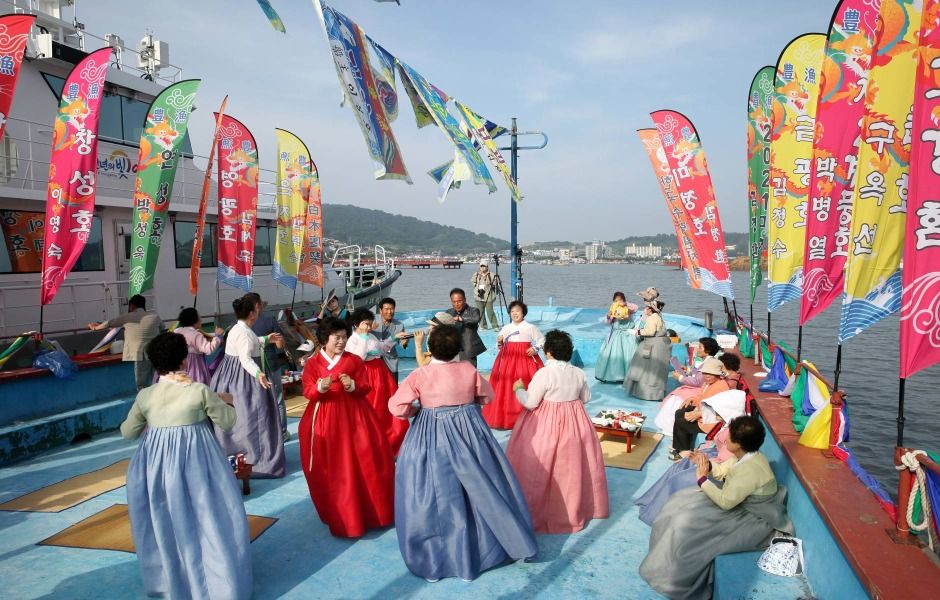
A 1,000-year-old shamanic festival that's so culturally significant, UNESCO gave it Intangible Cultural Heritage status. The Gangneung Danoje Festival (강릉단오제) is Korea's oldest and most authentic traditional festival — a month-long celebration of shamanic rituals, masked dance dramas, traditional wrestling, and folk performances that predates most of Korea's modern festivals by centuries.
While most Korean festivals are modern tourism events, Danoje is the real thing — a living tradition where gut (shamanic rituals) are performed by actual mudang (shamans), locals compete in ssireum (traditional wrestling), and the entire city of Gangneung participates in customs that have barely changed since the Joseon dynasty. It's not a theme park version of Korean culture. It IS Korean culture.
Plan Your Gangneung Trip
Gangneung is 2 hours from Seoul by KTX:
2026 Festival Dates
Danoje follows the lunar calendar. The main festival period centers on the 5th day of the 5th lunar month (단오, Dano). In 2026:
| Phase | Dates | What Happens |
|---|---|---|
| Ritual Period | ~May 10–25, 2026 | Shamanic rituals at Daegwallyeong shrine |
| Main Festival | ~May 21–25, 2026 | Public performances, markets, competitions |
| Dano Day | ~May 22, 2026 | Peak day — main rituals and ceremonies |
| Admission | Free for all events | |
Exact dates depend on the lunar calendar — confirm at danojefestival.or.kr (Korean) or call the Korea Tourism Hotline: +82-2-1330 (English, 24/7).
Why UNESCO Listed It
In 2005, UNESCO inscribed the Gangneung Danoje Festival as a Masterpiece of the Oral and Intangible Heritage of Humanity. The reasons:
- Over 1,000 years of continuous observance — documented since the Goryeo dynasty
- Living shamanic traditions performed by hereditary mudang (shamans)
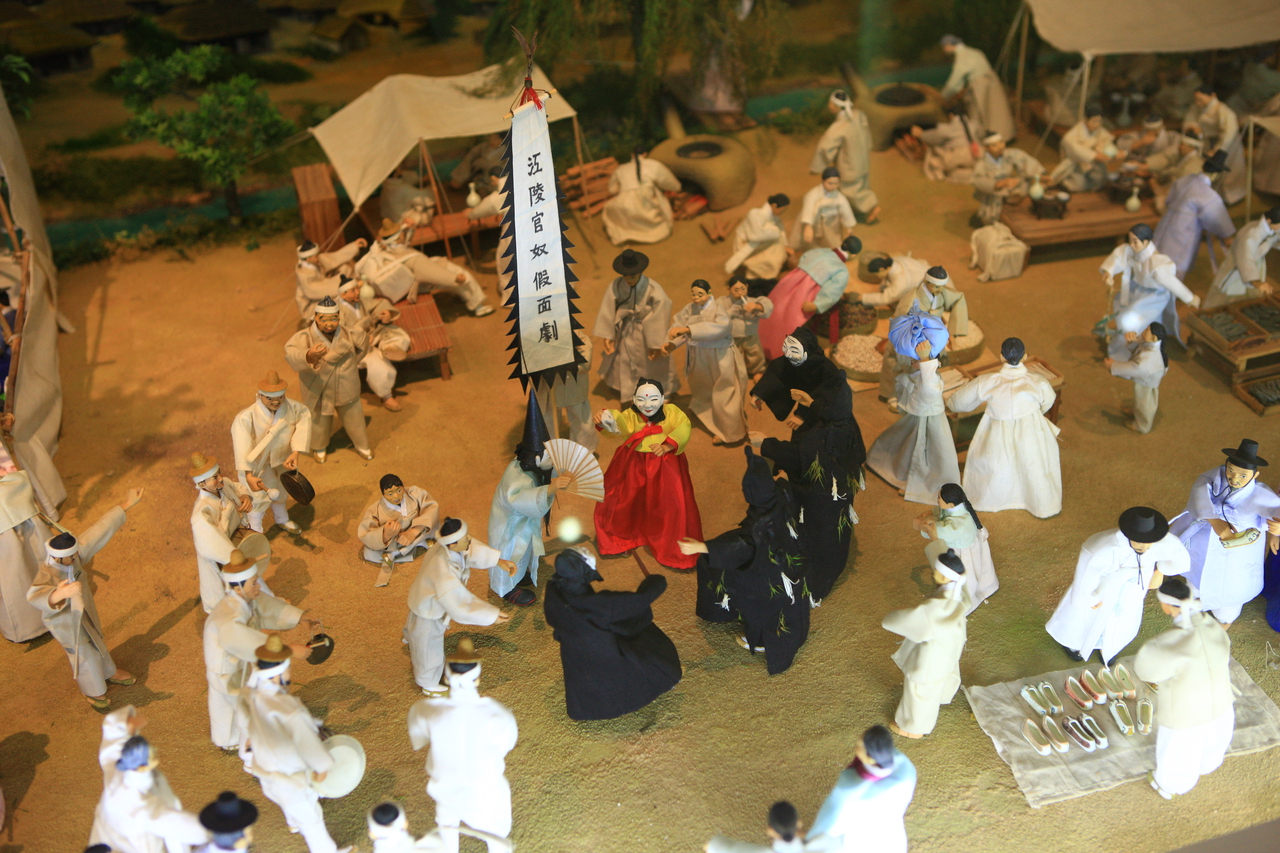
- Gwanno Mask Drama — a masked dance play unique to Gangneung, found nowhere else
- Community-driven — the entire city participates, not just performers
- Organic transmission — customs passed through generations without government staging
This is not a reconstructed or "revived" festival. The same rituals have been performed continuously for a millennium.
What to See & Experience
Gwanno Mask Drama (관노가면극)
Korea's only surviving mute masked dance drama. Performers in carved wooden masks act out a story of class conflict and romance through dance alone — no dialogue. The masks are designated cultural properties. Performed multiple times daily during the main festival.
Ssireum (씨름) — Traditional Wrestling
Korea's original sport (predating modern wrestling). Competitors grab each other's satba (cloth belt) and try to throw their opponent to the ground. Open tournaments during the festival — anyone can watch.
Swing Contest (그네뛰기)
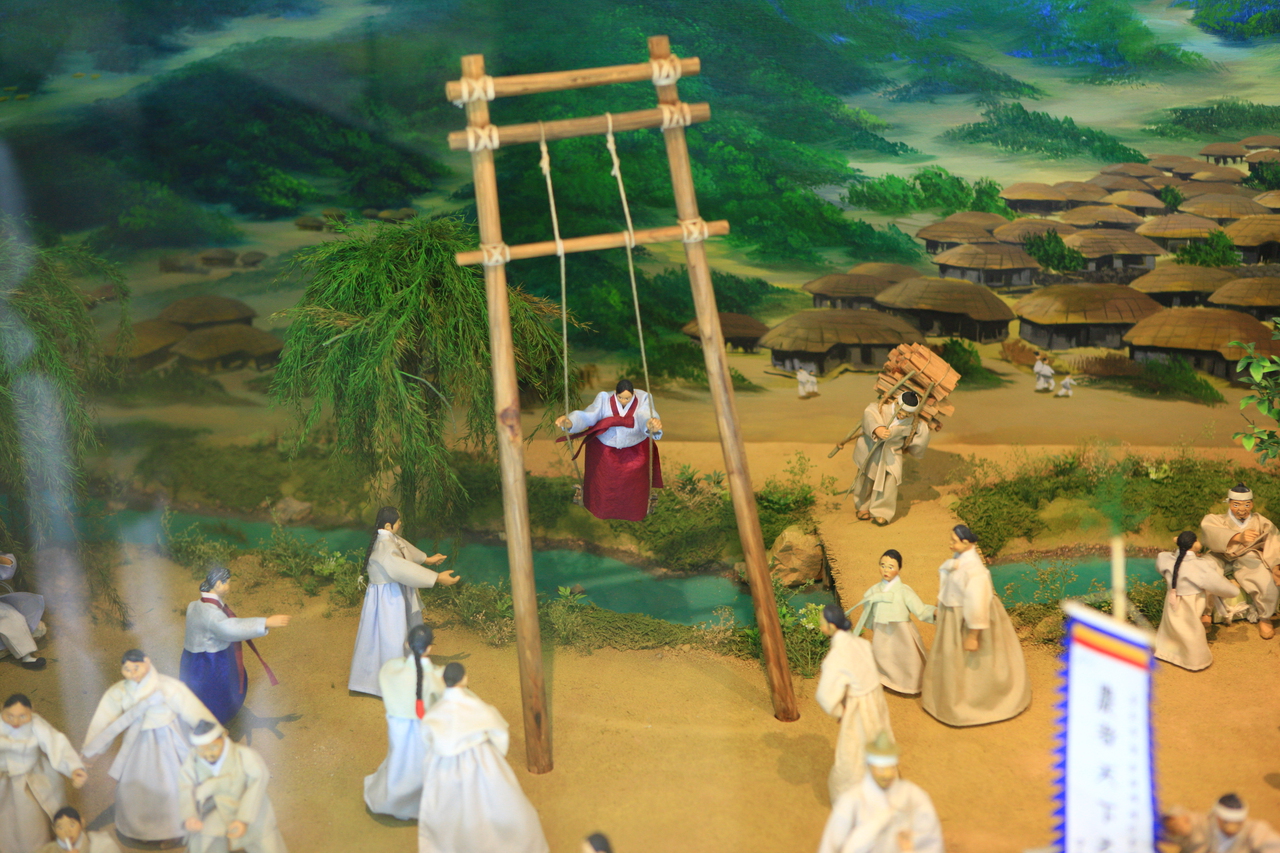
Women compete on traditional Korean swings — massive wooden A-frames with long ropes. Competitors swing as high as possible, and the height is measured. One of the most visually striking Dano traditions.
Changpo Hair Washing (창포머리감기)
Visitors can wash their hair with changpo (sweet flag iris) water — a Dano tradition believed to ward off evil spirits and promote health. Free, set up at the festival grounds.
Traditional Market
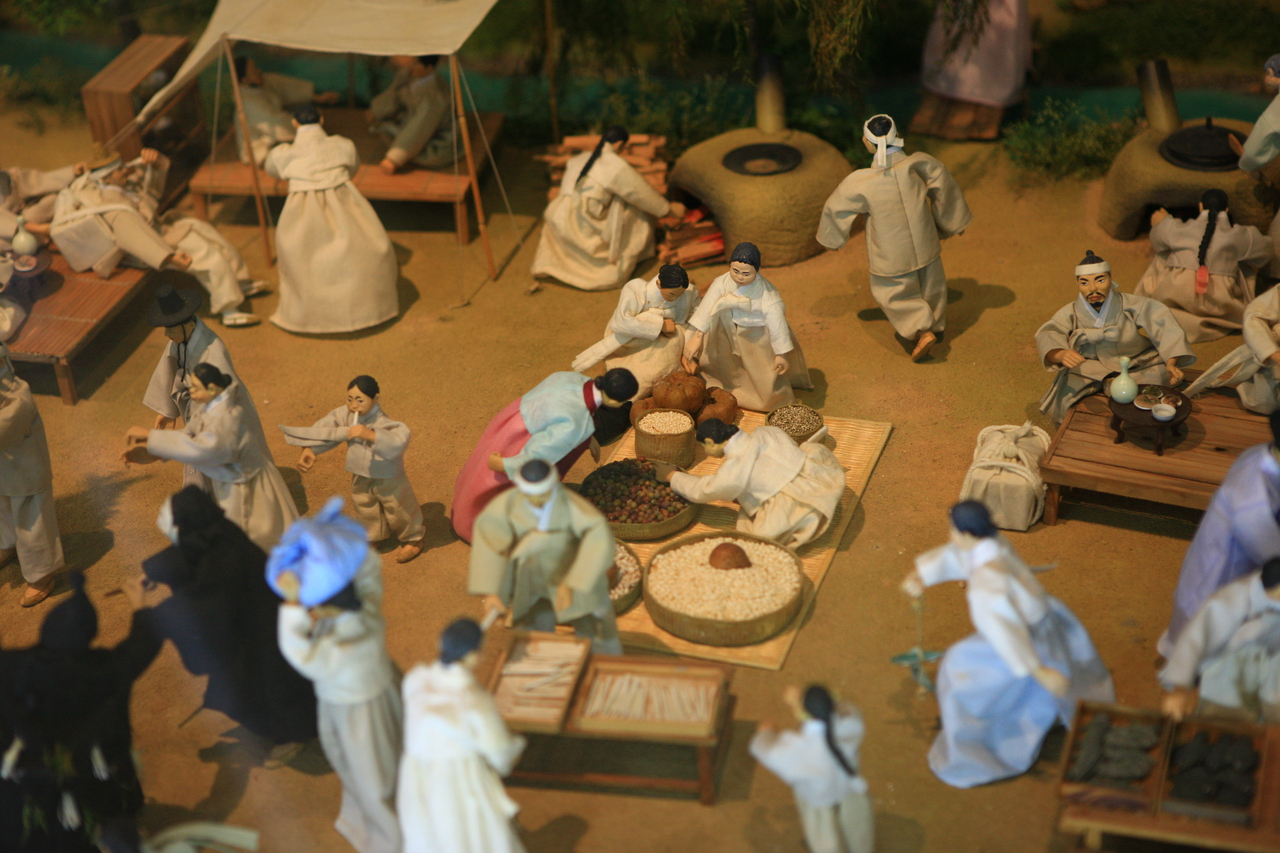
A massive open-air market selling local crafts, traditional foods, herbal medicines, and folk art. The Gangneung Jungang Market also runs special Danoje sections.
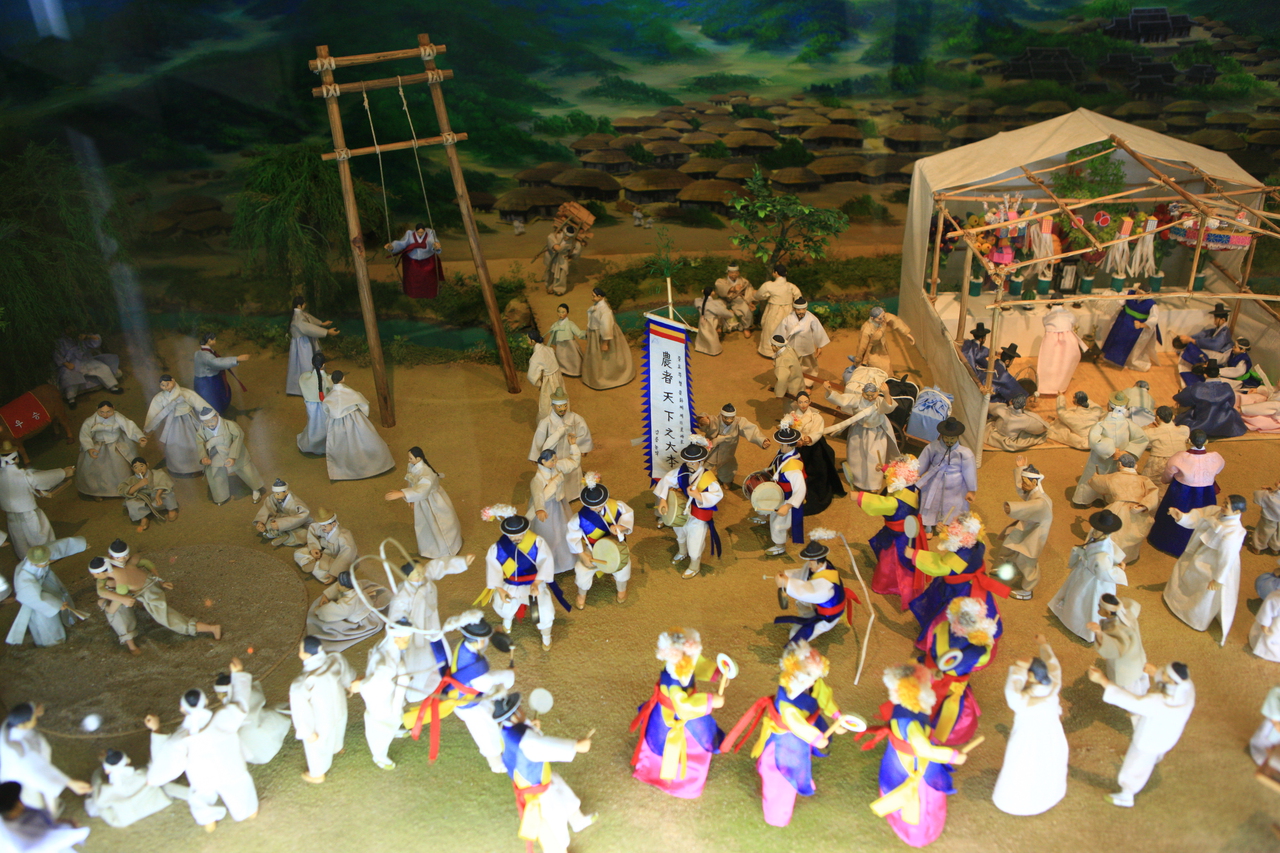
Shamanic Rituals (Gut, 굿)
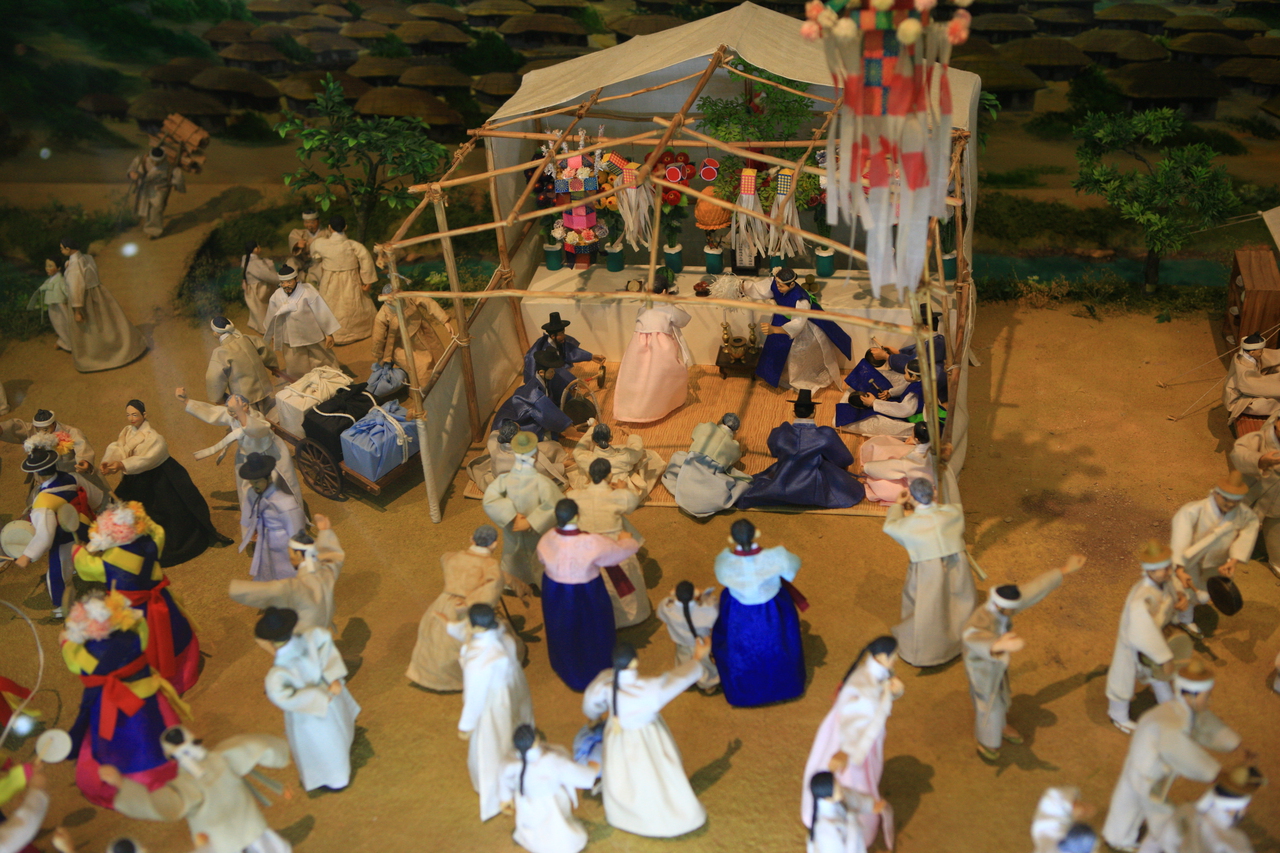
The spiritual core of Danoje. Over the festival's month-long ritual period, mudang (shamans) perform elaborate gut ceremonies:
- Daegwallyeong Sansin Gut — Mountain god ritual at the Daegwallyeong shrine. Shamans invoke the mountain spirit for the community's prosperity.
- Yeongsin Gut — Welcoming ceremony bringing the deities down from the mountain to the festival grounds.
- Songshin Gut — Farewell ceremony sending the deities back after the festival ends.
These are real religious ceremonies, not performances. Approach with the same respect you'd give any place of worship. Photography is generally allowed but ask first, and keep your distance during active rituals.
How to Get There
From Seoul (2 hours by KTX)
| Option | Route | Time | Cost |
|---|---|---|---|
| KTX (Best) | Seoul → Gangneung (direct) | ~2 hours | ₩27,600 |
| Express Bus | Seoul Dong Seoul → Gangneung | ~2.5 hours | ₩18,000-22,000 |
| Rental Car | Seoul → Yeongdong Expressway → Gangneung | ~2.5 hours | Toll: ~₩15,000 |
The KTX to Gangneung was built for the 2018 PyeongChang Winter Olympics. It's fast, comfortable, and the views through Daegwallyeong mountain pass are spectacular. Book tickets at letskorail.com.
Where to Stay
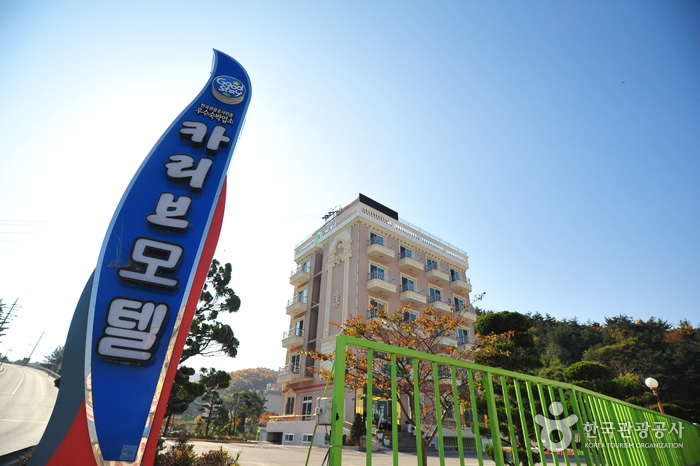
- Gangneung city center — Walking distance to festival grounds. Hotels ₩60,000-150,000/night.
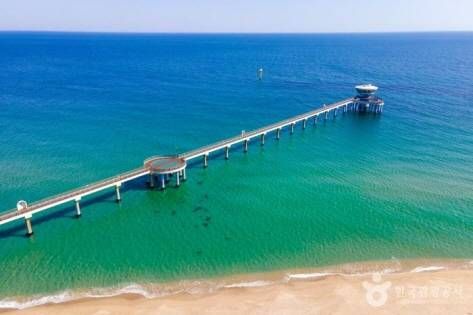
- Gyeongpo Beach area — 10 min from festival, beach views. Pensions ₩80,000-200,000/night.
- Gangneung Traditional Hanok — Stay in a Korean traditional house. Book early — limited availability. ₩100,000-180,000/night.
Insider Tips
- This is a slow festival — Don't rush. Sit down, watch a full shamanic ritual, eat at the market stalls, talk to locals. The beauty is in the pace.
- Dano Day is busiest — If you want crowds and maximum energy, go on Dano Day. If you want intimate experiences, go 1-2 days before.
- Visit the Danoje Exhibition Hall — Free museum next to the festival grounds explaining the history and meaning of each ritual. Go first to understand what you're watching.
- Try surichwi tteok (수리취떡) — Special rice cake made only for Dano, flavored with mugwort. Available at the festival market.
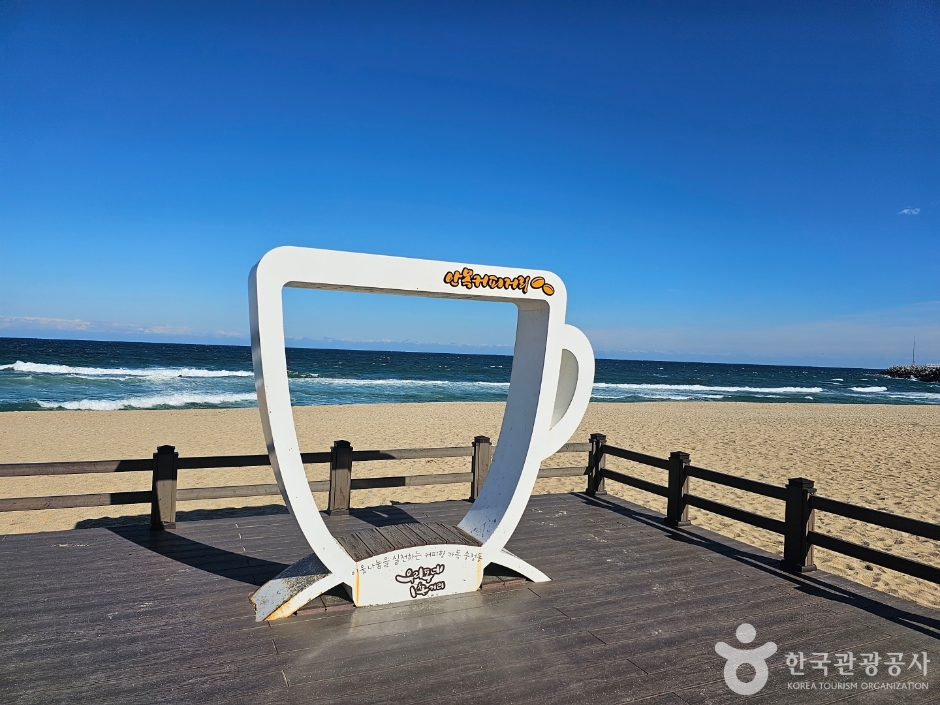
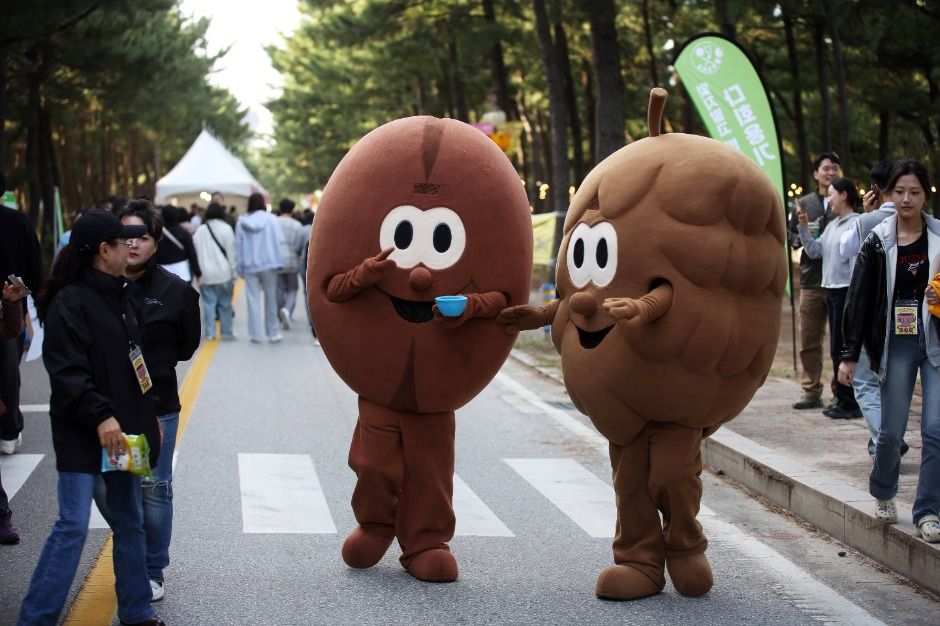
- Combine with Gangneung coffee street — Gangneung is Korea's coffee capital. Anmok Beach has dozens of specialty coffee shops. Perfect post-festival wind-down.
- Bring sun protection — The festival grounds are mostly outdoors with limited shade.
Combine with Nearby Attractions
- Gyeongpo Beach — Gangneung's main beach, 10 min from festival
- Anmok Coffee Street — 20+ specialty cafes along the ocean
- Ojukheon Museum — Birthplace of Shin Saimdang (₩50,000 bill portrait). 10 min from festival.
- Gangneung Travel Guide
- Full Korea Festival Calendar 2026
FAQ
Is the Gangneung Danoje Festival worth visiting as a tourist?
If you want to see authentic Korean traditional culture — not the K-pop, neon-lit version — this is arguably the single best festival in Korea. UNESCO doesn't hand out that designation lightly.
Do I need to understand Korean to enjoy it?
The visual spectacle (masked dances, shamanic costumes, wrestling, swings) speaks for itself. Some information boards have English. The Danoje Exhibition Hall has English displays. But having basic context (this guide!) helps enormously.
Is it appropriate for tourists to watch shamanic rituals?
Yes. The rituals are performed publicly and visitors are welcome. Just be respectful — no loud talking during ceremonies, don't cross into ritual spaces, and ask before photographing shamans up close.
Can I participate in activities?
Yes. The changpo hair washing, swing, and many craft activities are open to everyone. Ssireum (wrestling) tournaments sometimes have open brackets for amateurs.