Vegetarian & Vegan Food in Korea — Survival Guide (2026)
Let's be honest upfront: Korea is not easy for vegetarians. Meat, fish sauce, anchovy broth, and dried shrimp are woven into almost everything — including dishes that look completely vegetable-based. Kimchi usually contains fish sauce or shrimp paste. That innocent-looking vegetable soup? Almost certainly has anchovy stock.
But it's absolutely doable if you know what to look for, where to eat, and how to communicate your needs. This guide is for strict vegetarians and vegans — not "I'll pick the meat out" vegetarians.
The Hidden Animal Products Problem
These common Korean dishes look vegetarian but usually aren't:
| Dish | Looks Like | Actually Contains |
|---|---|---|
| Kimchi (김치) | Fermented vegetables | Fish sauce (젓갈) or shrimp paste in 95% of recipes |
| Sundubu jjigae (순두부찌개) | Tofu stew | Anchovy/kelp broth, often with seafood |
| Bibimbap (비빔밥) | Mixed rice + vegetables | Often has beef, egg, and fish sauce in the gochujang |
| Japchae (잡채) | Glass noodles + vegetables | Usually has beef strips and soy sauce with bonito |
| Tteokbokki (떡볶이) | Spicy rice cakes | Fish cake (어묵) pieces mixed in, anchovy broth base |
| Banchan (side dishes) | Vegetable sides | Many are seasoned with fish sauce, dried shrimp, or anchovy |
What You CAN Eat
Reliably Vegetarian/Vegan
- Temple food (사찰음식) — 100% vegan, no garlic or onion. Korea's Buddhist temples have a centuries-old plant-based cuisine. This is the gold standard.
- Kimbap — vegetable version (야채김밥) — specify "gogi eopsi" (without meat). Most gimbap shops can make a veggie version.
- Bibimbap — specify no meat — "gogi eopshi bibimbap juseyo" (비빔밥 고기 없이 주세요). The vegetables and egg (if you eat eggs) are fine. Ask for the gochujang on the side to check ingredients.
- Kongnamul gukbap (콩나물국밥) — bean sprout rice soup. Often vegan-friendly, but confirm the broth.
- Jeon/Pajeon — vegetable pancakes. Usually vegetarian (egg + flour + vegetables). Confirm no seafood.
- Fresh tofu (순두부) — plain soft tofu, often available as a side dish.
- Convenience store rice + vegetable sides — triangle kimbap in vegetable flavors, plain rice, seaweed snacks.
The Temple Food Solution
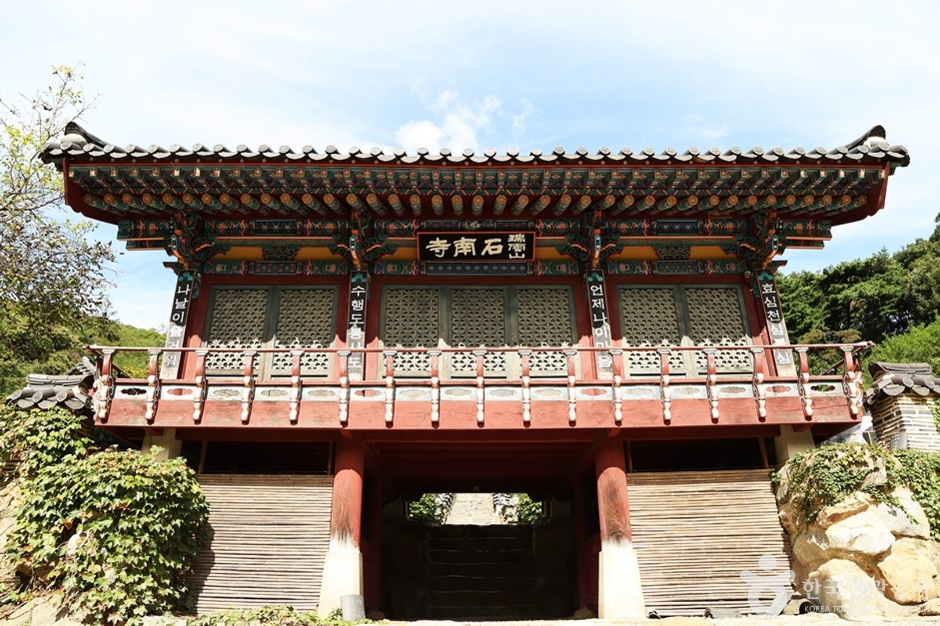
Temple food (사찰음식, sachal eumsik) is your best friend in Korea. Buddhist temple cuisine is entirely plant-based — no meat, no fish, no eggs, no dairy, and traditionally no garlic, onions, or chives (the five pungent roots). It's also delicious — Korea's most refined cuisine, not a compromise.
Where to find temple food:
- Temple stay programs — overnight stays at Buddhist temples include all-vegan meals. Available at major temples: Jogyesa (Seoul), Beomeosa (Busan), Haeinsa (Hapcheon). Book at templestay.com.
- Temple food restaurants in Seoul — Balwoo Gongyang (near Jogyesa Temple, Michelin-starred), Sanchon (Insadong), Gosang (Bukchon). Expect ₩15,000-40,000 per person.
- Temple food cooking classes — learn to make temple food yourself. Available through Seoul cooking classes.
Essential Korean Phrases for Vegetarians
| Korean | Romanization | Meaning |
|---|---|---|
| 저는 채식주의자예요 | jeoneun chaesikjuuijayeyo | I am vegetarian |
| 고기 안 먹어요 | gogi an meogeoyo | I don't eat meat |
| 해산물도 안 먹어요 | haesanmuldo an meogeoyo | I don't eat seafood either |
| 생선/멸치 들어가요? | saengseon/myeolchi deureogayo? | Does it contain fish/anchovy? |
| 고기 없이 해주세요 | gogi eopshi haejuseyo | Please make it without meat |
| 비건이에요 | bigeoniyeyo | I am vegan |
Pro tip: Save these phrases on your phone and show them to the restaurant staff. Written Korean is more effective than spoken — especially at older, more traditional restaurants. The Papago app (Naver's translator) is excellent for real-time translation.
Vegan-Friendly Restaurant Chains
- Loving Hut — international vegan chain with Seoul locations. All-vegan menu, Korean and Western dishes. ₩8,000-15,000.
- Plant Cafe — vegan cafes in Itaewon and Yeonnam-dong. Good brunch options.
- Subway — yes, the sandwich chain. The Veggie Delite is reliably vegan. Available everywhere.
- Convenience stores — vegetable triangle kimbap, plain rice, seaweed, nuts, fruit. See our convenience store meals guide.
Finding vegetarian restaurants: Search "비건" (vegan) or "채식" (vegetarian) on Naver Map. Seoul has 50+ dedicated vegetarian/vegan restaurants. Busan and other cities have fewer — plan ahead.
By Meal Type — What to Order
Breakfast
Easiest meal. Convenience store: vegetable kimbap + banana milk (or soy milk). Bakeries: bread is usually vegan or vegetarian (Paris Baguette, Tous les Jours). Hotel breakfast buffets always have rice, vegetables, and fruit.
Lunch
Temple food restaurant, vegetable bibimbap (confirm broth), or a dedicated vegetarian restaurant. Gimbap shops can make vegetable kimbap on request.
Dinner
This is the hardest meal. Korean dinner culture revolves around shared meat dishes (BBQ, fried chicken, stews). Your best options: temple food restaurant, international restaurants (Indian, Thai, Italian — these have reliable vegetarian options), or self-catering from a grocery store/convenience store.
Frequently Asked Questions
Is Korean BBQ possible for vegetarians?
Some Korean BBQ restaurants offer grilled mushrooms, tofu, and vegetables alongside the meat. You can order just the non-meat items, but the grill will have been used for meat previously. If cross-contamination is a concern, this won't work.
Can I find vegan kimchi?
Yes — vegan kimchi (without fish sauce) exists, especially at health food stores and vegan restaurants. It's labelled "비건 김치." You won't find it at regular restaurants, but you can buy jars at supermarkets.
How do I handle Korean hospitality around food?
Koreans may be confused by vegetarianism — it's still relatively uncommon among older generations. Be polite, firm, and specific. "I don't eat meat or fish" is clearer than "I'm vegetarian" (which some Koreans interpret as "no red meat but fish is okay"). Younger Koreans in Seoul will understand immediately.
Is temple stay worth it for the food alone?
Absolutely. Even if you're not Buddhist or spiritual, a temple stay is one of Korea's most unique experiences. The food is extraordinary — multi-course meals prepared with centuries of tradition. Expect ₩50,000-80,000 for a one-night temple stay including all meals.
Book Temple Food Experiences
Try Korea's finest plant-based cuisine through a cooking class or temple stay.
Affiliate links — we may earn a small commission at no extra cost to you.
Related Guides
- Korean Restaurant Prices Guide
- Essential Korean Phrases
- Cheap Eats in Seoul
- Convenience Store Meals Guide
Restaurant recommendations current as of March 2026. Menus and ingredients change — always confirm with staff before ordering.