Muslim-Friendly Korea Travel Guide 2026: Everything You Need to Know
Korea is not a Muslim-majority country, but it is rapidly becoming one of Asia's most welcoming destinations for Muslim travelers. Since the Korea Tourism Organization launched its Muslim-friendly tourism push in 2016, the infrastructure has expanded considerably — there are now over 270 halal-certified restaurants, prayer rooms at major airports and tourist sites, and an entire neighborhood (Itaewon) that caters comfortably to Islamic dietary and religious needs. That said, honest expectations matter. Pork and alcohol are deeply embedded in Korean food culture, and navigating Korea as a Muslim traveler requires a little more planning than, say, visiting Malaysia or Turkey. This guide covers everything you need to know — no sugarcoating, no hand-holding, just practical information for experienced travelers.
Is Korea Muslim-Friendly? An Honest Assessment
The short answer: Korea is increasingly Muslim-friendly, but it requires more active planning than a trip to Southeast Asia or the Middle East. Korean society is genuinely curious and welcoming toward foreign visitors — there is no hostility toward Muslims or Islamic dress. But Korean food culture is built around pork and fermented foods that may contain alcohol, and this is the main practical challenge.
Here is what has genuinely improved in recent years:
- Halal-certified restaurants have grown from a handful to over 270 across Korea, with the highest concentration in Seoul
- Prayer rooms are now available at Incheon Airport, Gimpo Airport, COEX convention center, Seoul Station, and several tourist attractions
- Major hotel chains increasingly provide Qibla direction markers and prayer mats on request
- Korean Tourism Organization maintains a dedicated Muslim travel app and halal food map
- Korean awareness of halal requirements has increased — many restaurant staff now understand what halal means, even if their kitchen is not certified
And here is what remains genuinely challenging:
- Pork is everywhere in Korean cuisine — in broths, sauces, side dishes, and as a primary ingredient. Even "safe-looking" dishes like kimchi are often fermented with fish paste (jeotgal) that contains shellfish or is otherwise non-halal
- Cross-contamination is common in Korean restaurants that are not halal-certified, even if the main dish appears safe
- Alcohol in cooking — many Korean dishes use soju, makgeolli, or cooking wine
- Language barrier — outside tourist areas, English menus are limited, and halal-specific requests can be hard to communicate
- Prayer times outside tourist centers — away from Itaewon and major airports, designated prayer spaces are rare
The conclusion: Korea is very doable as a Muslim traveler, and tens of thousands of Malaysian, Indonesian, Middle Eastern, and Indian Muslim visitors travel here annually without issue. But it rewards preparation. Use the resources in this guide, and you will have a smooth and deeply rewarding trip.
Prayer Facilities in Korea
Seoul Central Mosque — Itaewon
The Seoul Central Mosque (서울중앙성원) is the landmark of Muslim life in Korea and the largest mosque in the country. Completed in 1976 with funding from the Islamic Development Bank, it sits on a hill in Itaewon overlooking the neighborhood's main street. The white domed building with its twin minarets is genuinely striking — one of the most architecturally distinctive buildings in Seoul.
The mosque is open to non-Muslim visitors outside prayer times, which makes it a meaningful cultural stop even for those who are not Muslim themselves. For Muslim travelers, it is the most reliable and comfortable place to pray in Seoul. The facilities include separate prayer halls for men and women, ablution (wudu) facilities, and a small library. Friday Jumu'ah prayer is well-attended, with sermons available in Arabic and Korean.
| Address | 40 Usadan-ro 10-gil, Yongsan-gu, Seoul |
| Nearest subway | Noksapyeong Station (Line 6, Exit 2) — 10-minute walk uphill |
| Open | Daily, approximately Fajr to Isha prayer times |
| Dress code | Modest dress required; women should cover hair (scarves available at entrance) |
Around the mosque, you will find the highest concentration of halal restaurants in Korea — everything from Malaysian and Indonesian cuisine to Middle Eastern shawarma to halal Korean BBQ. The Itaewon mosque neighborhood is essentially Korea's Muslim quarter, and spending at least one day here is worthwhile for any Muslim traveler.
Prayer Rooms at Incheon International Airport
Incheon Airport has prayer rooms (무슬림 기도실) in both Terminal 1 and Terminal 2, and they are well-maintained and clearly signed. In Terminal 1, there are prayer rooms on Level 3 (departure level) near gates 28 and 132. In Terminal 2, prayer rooms are located near gates 252 and 270. All prayer rooms have Qibla direction markers and are separated by gender. Wudu facilities are available adjacent to each room.
Incheon also has a halal-certified restaurant (Marhaba) in Terminal 1, and several other restaurants that can accommodate halal requests. The airport's Muslim services are among the best in Northeast Asia.
Prayer Rooms at Tourist Sites and Transport Hubs
Beyond the airport, prayer rooms have been established at an increasing number of locations:
- Seoul Station — prayer room available near the main concourse
- COEX Mall, Gangnam — prayer room on Level B1
- Lotte World Tower, Jamsil — prayer room available
- Gimpo Airport — prayer room in domestic terminal
- Myeongdong tourist area — a prayer room has been established near the main shopping street
- Dongdaemun Design Plaza (DDP) — prayer room available inside
For prayer times and the latest locations, the Korea Muslim Federation maintains an updated map at kmf.or.kr. The KTO Muslim-friendly travel app (available on iOS and Android) also shows prayer rooms with GPS navigation.
Portable Prayer Mat Tips
Bring a compact travel prayer mat. Korean floors are generally very clean — ondol-heated floors are common in homes and some traditional restaurants — but having your own mat gives you flexibility to pray anywhere: hotel rooms, parks, quiet corners of tourist attractions, or rest areas on highways. A lightweight foldable mat takes almost no space in your bag and removes any anxiety about finding a designated room during prayer times.
Halal Food in Korea
Navigating halal food in Korea is one of the most important parts of trip planning. The situation is genuinely better than it was five years ago, but it still requires more thought than in many other Asian destinations.
We have put together a dedicated halal food guide covering certified restaurants by neighborhood, what Korean dishes are naturally safer to eat, how to read food labels, and what to order (and avoid) at convenience stores. See our full guide: Halal Food in Seoul: The Complete Guide for Muslim Travelers.
The key points to know before you visit:
- Halal-certified restaurants have been inspected and certified — typically by the Korea Muslim Federation or a recognized international body. These are the safest options
- Muslim-friendly restaurants do not serve pork or alcohol but may not be formally certified. They require a judgment call
- Seafood and vegetarian options are widely available and generally safe, though cross-contamination in non-certified kitchens is always a consideration
- Itaewon has the highest density of halal restaurants in Korea — plan at least one day here for the food alone
Accommodation Tips
Hotels with Muslim-Friendly Amenities
Major international hotel chains in Seoul (Marriott, Hilton, Hyatt, Lotte, Shilla) will provide prayer mats and Qibla direction markers on request — simply contact the hotel before arrival or ask at check-in. Some of the larger hotels near Itaewon and in the Gangnam area have pre-installed Qibla markers in rooms as a standard feature.
When booking any hotel in Korea, it is worth emailing directly to confirm:
- Prayer mat availability
- Qibla direction in your room (or ask for a room facing the appropriate direction)
- Whether halal breakfast options are available (some hotels in Itaewon now offer this)
- Whether the minibar contains alcohol — you can request it removed
Itaewon Area Guesthouses
Staying in or near Itaewon is the most convenient choice for Muslim travelers, particularly for first-time visitors to Korea. The neighborhood hosts the Seoul Central Mosque, the highest concentration of halal restaurants in the country, and a generally international, cosmopolitan atmosphere where Islamic dress draws no attention whatsoever.
Several guesthouses and smaller hotels in the Itaewon and Hanam-dong area are specifically catered to Muslim travelers, with halal breakfast options, prayer mats as standard, and staff who understand Islamic requirements. Search for "Muslim-friendly guesthouse Itaewon" on Booking.com or Agoda — filter for properties that list halal food or prayer facilities in their amenities.
Practical Booking Tips
- Book early for peak seasons (cherry blossom April, autumn October, summer July–August) — Muslim-friendly accommodation options are more limited in volume
- Confirm your room type has a bathtub or shower suitable for full body washing if required for religious practice
- If staying outside Itaewon, research the nearest halal restaurant before you arrive — not having a plan at dinner time in an unfamiliar neighborhood is stressful
- Hanok guesthouses (traditional Korean houses) offer a unique cultural experience and generally have private room setups suitable for prayer; dietary requirements need to be arranged in advance as some include Korean breakfast
Find Muslim-friendly accommodation in Korea
Search for hotels near Itaewon (Seoul Central Mosque area) or filter for properties with prayer facilities. Free cancellation on most bookings.
Clothing and Cultural Tips
Hijab in Korea
Wearing hijab in Korea is entirely without issue. Korean society is curious and respectful toward international visitors, and Islamic dress is well recognized in urban areas — particularly Seoul. You will not attract hostility, unwanted comments, or bureaucratic problems. In Itaewon and around Gyeongbokgung Palace (where many international tourists congregate), hijab is a completely unremarkable sight.
In more rural areas or smaller cities, you may attract some curious glances — but these are born of unfamiliarity, not hostility. Korea is one of the safest countries in the world for solo travel, including for Muslim women.
Hanbok Rental with Hijab
This is one of the most frequently asked questions from Muslim women traveling to Korea, and the answer is yes — hanbok works beautifully with hijab. The traditional Korean dress consists of a long skirt (chima) and a jacket (jeogori) with loose, full sleeves. Many hanbok rental shops near Gyeongbokgung and Changdeokgung palaces are experienced with Muslim customers and will help you choose colors and styles that complement a hijab. Wearing hanbok with a matching or coordinated hijab makes for stunning palace photography and is warmly received by Koreans who see it as a respectful engagement with their culture.
Hanbok rental costs ₩15,000–₩25,000 (~$11–$18 USD) for two hours. And as a bonus: wearing hanbok gets you free admission to all five of Seoul's royal palaces.
Jjimjilbang (Korean Sauna/Bathhouse)
Traditional Korean jjimjilbangs (찜질방) are one of the most culturally distinctive experiences in Korea. These large public bathhouses feature hot and cold pools, saunas, steam rooms, sleeping areas, and restaurants — and they are open 24 hours. The bathing areas are strictly gender-separated, which makes them generally compatible with Islamic modesty requirements.
Important to understand: the bathing areas of jjimjilbangs are communal and nudity is standard within the gender-separated sections. If this is not comfortable, you can still use the mixed-gender common areas (where loose shorts and a t-shirt uniform are provided), the dry saunas, the sleeping rooms, and the food area without entering the bathing section. Many Muslim travelers enjoy jjimjilbangs in this way and find them a genuinely restorative experience. The food stalls inside typically sell sikhye (sweet rice drink), hard-boiled eggs, and ramyeon — confirm ingredients, as some items may contain pork-based stock.
Best Neighborhoods for Muslim Travelers
Itaewon — The Muslim-Friendly Hub
Itaewon is the starting point and anchor for any Muslim traveler's Seoul visit. The neighborhood grew up around the US military base at Yongsan, which made it historically the most international area in Seoul. Today it is home to the Seoul Central Mosque, the highest density of halal restaurants in Korea, Arabic, Indonesian, and Malaysian restaurants, African food, Indian curry houses, and every type of international cuisine. The Hwangnidan-gil and Usadan-ro streets climbing the hill toward the mosque are lined with halal options.
Itaewon has a lively, mixed atmosphere — there are also bars and clubs here, which is worth knowing if that environment is not preferred. The halal restaurant strip and mosque area are distinct from the nightlife strip and easy to navigate separately.
Myeongdong — Shopping with Some Halal Options
Myeongdong is Seoul's premier shopping district — cosmetics, fashion, street food, and tourist crowds in a compact area. It is less Muslim-friendly than Itaewon in terms of food, but there is a prayer room nearby and an increasing number of halal-labeled street food stalls catering to the growing Southeast Asian and Middle Eastern visitor market. The cosmetics shopping here is world-class and a major draw for many Muslim travelers from Malaysia and Indonesia.
For street food: look for stalls clearly labeled "halal" — these are usually selling fish cake (eomuk), corn dogs with halal certification, or tteokbokki (spicy rice cakes) made without pork-based broth. Be cautious with stalls that are not clearly labeled, as many traditional Korean street foods use pork or lard in ways that are not obvious.
Hongdae — Nightlife Area with Halal Food Options
Hongdae is the university and arts district, known for its vibrant street performances, indie culture, and nightlife. It is not primarily a Muslim-friendly area, but there are halal restaurants scattered through the neighborhood — several Indonesian and Middle Eastern options have opened to serve the area's international student population. Hongdae is worth visiting for its energy and unique street scene; just plan your meals in advance using the KTO halal map before heading here.
Insadong and Bukchon Hanok Village
These two adjacent neighborhoods — Insadong with its traditional crafts and tea houses, Bukchon with its preserved hanok streetscapes — are excellent for cultural sightseeing and less centered on food. Halal options are limited but available, and the areas are very walkable. Good for a half-day combined with Gyeongbokgung Palace.
Muslim-Friendly Activities in Korea
Palace Visits
Seoul's five royal palaces — Gyeongbokgung, Changdeokgung, Deoksugung, Changgyeonggung, and Gyeonghuigung — are among the finest historical sites in Northeast Asia and are highly compatible with Muslim travel. Modest dress is actually preferred at these sites, making Islamic dress entirely appropriate. The palaces are outdoor complexes requiring comfortable walking shoes; most visits last 1.5–3 hours. Admission is ₩3,000 per palace, or ₩10,000 for an integrated ticket covering all four paid palaces plus Jongmyo Shrine.
See our Seoul Palace Guide for full details on each palace, including opening times and what not to miss.
Temple Stays
Buddhist temple stays (templestay) are one of Korea's most unique travel experiences — and more compatible with Muslim travel than many visitors expect. The Templestay program, run by the Jogye Order of Korean Buddhism, offers overnight experiences at traditional mountain monasteries including meditation, tea ceremonies, and a guided temple tour.
Temple stay programs can accommodate dietary requirements including halal, though this must be arranged in advance — contact the specific temple's Templestay coordinator well before arrival. Meals are vegetarian (Buddhist temple food avoids meat, fish, and the five pungent roots including onion and garlic), which may not meet all halal requirements but is free from pork and alcohol. The spiritual environment is respectful and non-proselytizing — Buddhist temples in Korea genuinely welcome international guests of all faiths.
Traditional Markets
Korea's traditional markets are fascinating cultural spaces — chaotic, loud, and full of things you have never seen before. For Muslim travelers, markets require some caution around food but are excellent for crafts, textiles, kitchenware, and atmosphere.
At markets like Gwangjang Market, Namdaemun, or Noryangjin Fish Market, stick to clearly identifiable seafood (fresh fish, shellfish — if permissible under your madhab) or fruit. Avoid street food of uncertain composition. Gwangjang Market in particular has a famous bindaetteok (mung bean pancake) stall area — these are pork-free and vegetarian, though the surrounding stalls are not, so cross-contamination is possible. When in doubt, fruits, nuts, and packaged certified-halal snacks from a convenience store are always safe fallbacks.
Cherry Blossom Festivals
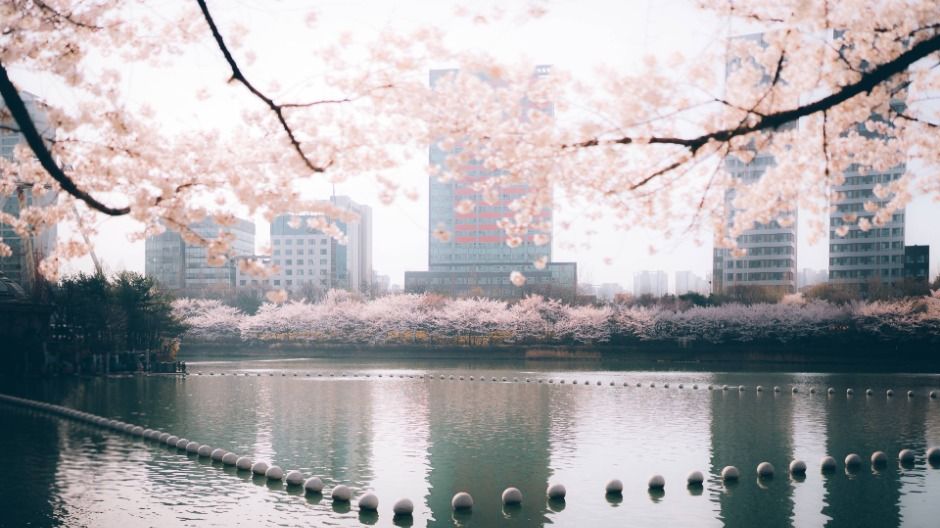
Cherry blossom season (late March to mid-April) is the most popular time to visit Korea, and the festivals are entirely compatible with Muslim travel. The main cherry blossom spots — Yeouido Hangang Park, Changgyeonggung Palace, Seokchon Lake, and the Jinhae Gunhangje Festival — are outdoor public spaces where halal picnic food from Itaewon restaurants or convenience stores can be brought in. Many travelers from Malaysia and Indonesia specifically plan their Korea trip around blossom season; it is a genuinely stunning experience and one of the easiest contexts for Muslim travelers to enjoy Korea at its most beautiful.
See our Korea Festivals 2026 Guide for cherry blossom festival dates and locations.
DMZ Tours
The Demilitarized Zone tour is one of Korea's most compelling experiences and is fully accessible to Muslim travelers. Tours are half-day or full-day, operated by licensed agencies, and involve no food challenges (bring your own snacks if needed for the journey). See our DMZ Tours Guide for a comparison of the best operators.
Practical Tips
Korea Tourism Organization Muslim Guide and App
The Korea Tourism Organization (KTO) has invested significantly in Muslim travel resources. The KTO Muslim-Friendly Travel app is available on iOS and Android and provides:
- GPS-mapped halal restaurants across Korea with certification status
- Prayer room locations updated in real time
- Mosque locations and prayer time schedules
- Muslim-friendly accommodation listings
- Korean phrases for dietary requests
Download it before your trip. The Korea Muslim Federation website (kmf.or.kr) is also a useful reference for mosque locations and halal certification queries.
Halal-Certified vs. Muslim-Friendly: Understanding the Difference
In Korea, these two terms mean different things, and the distinction matters:
- Halal-certified — the restaurant or product has been formally inspected and certified by a recognized body (typically the Korea Muslim Federation, KMF, or an international equivalent). The kitchen, ingredients, and preparation process have all been verified. This is the gold standard
- Muslim-friendly — the establishment does not use pork or alcohol and makes an effort to accommodate Muslim diners, but has not undergone formal certification. This is a reasonable option for many travelers but requires a degree of personal judgment
- "No pork, no lard" — a common sign you'll see on some Korean restaurant menus. This is a step toward accommodation but does not address alcohol in cooking, cross-contamination, or other halal requirements
Your own comfort level with these distinctions will vary based on personal practice. The key is knowing what the labels mean so you can make informed decisions.
Useful Korean Phrases for Muslim Travelers
| Situation | Korean | Romanization |
|---|---|---|
| Do you have halal food? | 할랄 음식이 있나요? | Hallal eumsigi innayo? |
| I don't eat pork | 저는 돼지고기를 먹지 않아요 | Jeoneun dwaejigogireul meokji anayo |
| Does this contain pork? | 이것에 돼지고기가 들어 있나요? | Igeose dwaejigogiga deureo innayo? |
| I don't drink alcohol | 저는 술을 마시지 않아요 | Jeoneun sureul masiji anayo |
| Where is the prayer room? | 기도실이 어디 있나요? | Gidosiri eodi innayo? |
| Where is the mosque? | 이슬람 성원이 어디 있나요? | Iseullam seongwoni eodi innayo? |
Showing the Korean text on your phone screen is often more effective than attempting pronunciation, particularly with older restaurant staff. Screenshots of these phrases saved to your camera roll is a practical travel hack.
Connectivity and Navigation
Get a Korean SIM card or pocket Wi-Fi at Incheon Airport on arrival — you'll need constant access to the KTO Muslim app, Naver Map, and halal restaurant databases. See our Korea SIM Card and Wi-Fi Guide for comparison of the best options. Use Naver Map (not Google Maps — Google Maps navigation doesn't work properly in Korea) for all transit and walking directions.
Beyond Seoul: Busan and Jeju
Busan
Busan, Korea's second city and largest port, has a small but growing Muslim community centered around Seomyeon and the university districts. There is a mosque in Busan — the Busan Mosque (부산이슬람교) in Dangam-dong — and a handful of halal-certified restaurants, though the options are significantly more limited than Seoul. The Korea Muslim Federation Busan branch can provide updated restaurant and prayer room information.
Busan's main draws — Haeundae Beach, Jagalchi Fish Market, Gamcheon Culture Village, and the stunning coastal views — are all entirely accessible and rewarding for Muslim travelers. The fresh seafood at Jagalchi is excellent if shellfish and seafood are permissible for you. Plan accommodation in advance and research halal food options before arrival rather than relying on finding them spontaneously.
Jeju Island
Jeju is becoming an increasingly popular destination for Muslim travelers from Southeast Asia and the Middle East, and the island has responded with expanded halal options — particularly in Jeju City. There is a prayer room at Jeju International Airport, and Jeju City has several halal-certified restaurants including some Korean-Muslim fusion options.
The island's natural attractions — Hallasan Mountain, Seongsan Ilchulbong (Sunrise Peak), Manjanggul Lava Tube, the coastal Olle trails — are all outdoor experiences with no food complications. Jeju is also known for its black pork (heukdwaeji), which is obviously not relevant to Muslim travelers, but its tangerine products, green tea from Osulloc, and seafood offerings provide plenty of alternatives. A three-to-four-day Jeju itinerary is well worth including if you have two weeks in Korea.
Frequently Asked Questions
Can I find halal food easily outside Seoul?
In major cities (Busan, Daegu, Gyeongju, Jeju), halal options exist but are more limited. In smaller towns and rural areas, they are very rare. If you are planning a road trip or travel outside the main tourist circuit, carry emergency food supplies — packaged halal snacks, dates, nuts, canned goods — and plan your halal meals around your planned stops using the KTO app before you leave each city.
Is kimchi halal?
Traditional kimchi contains jeotgal (fermented salted seafood), usually salted shrimp (saeujeot) or anchovy paste, which is generally considered non-halal by many scholars due to the fermentation process and potential cross-contamination. Some kimchi is made without jeotgal (vegan kimchi), which is increasingly available. Always ask specifically. Do not assume kimchi is safe.
Are Korean convenience stores useful for halal snacks?
Yes — Korean convenience stores (CU, GS25, 7-Eleven, Emart24) stock a range of items that are generally safe: fresh fruit, packaged nuts, banana milk, orange juice, some packaged bread (check for lard in ingredients), and imported packaged snacks with halal certification. Some stores in Itaewon now stock explicitly halal-labeled items. Instant ramen from convenience stores generally contains pork-based flavoring — read the label carefully or avoid.
Is Korea safe for Muslim women traveling solo?
Korea is consistently ranked among the safest countries in the world for solo female travelers. There is no hostility toward hijab or Islamic dress. The public transport system is safe, well-lit, and reliable. Most tourist areas have 24-hour activity and never feel isolated. Muslim women travel solo in Korea routinely — from Malaysia, Indonesia, the UAE, and beyond — and report very positive experiences.
Do Korean spas (jjimjilbang) allow non-Korean visitors in hijab?
Yes. There is no dress restriction in the common areas of jjimjilbangs. The bathing areas are gender-separated and if you choose to use them, you would be with other women only. Many Muslim women use jjimjilbangs in both common and bathing areas without issue; others prefer to use only the saunas and common sleeping areas. Both approaches are fine — Korean jjimjilbang staff are accustomed to international visitors with varying comfort levels.
Is alcohol served in all Korean restaurants?
Most sit-down Korean restaurants serve soju and beer alongside food. However, you are never required to order alcohol, and non-alcoholic beverages (water, barley tea, sikhye, soft drinks) are always available and often provided free. Simply decline when offered. The presence of alcohol on a menu does not mean it is in the food — though some dishes do use it in cooking, which is a separate consideration from halal certification.
What is the best time of year to visit Korea as a Muslim traveler?
Any season works. Spring (March–May) for cherry blossoms and mild weather is the most popular. Autumn (September–November) for fall foliage is equally spectacular and slightly less crowded. Summer (June–August) is hot and humid but excellent for beaches and festivals. Winter (December–February) is cold but beautiful, with ski resorts active and crowds significantly lower. Ramadan travel to Korea is manageable — prayer times shift seasonally, and Iftar can be organized around halal restaurant availability in Itaewon.
Plan Your Full Korea Trip
This guide covers the essentials — but there is much more to explore. Two guides every Muslim traveler to Korea should read next:
- Halal Food in Seoul: The Complete Guide — certified restaurants by neighborhood, what to order, what to avoid, and how to navigate Korean menus as a Muslim traveler
- Korea Festivals 2026 — cherry blossom season, Chuseok, summer festivals, and every major event with dates and locations
This guide was written by Team Korea Insider and last updated March 2026. We aim to provide accurate, practical information for Muslim travelers — if you have corrections or updated information about halal facilities in Korea, please contact us.
Related Guides