Korea Packing List — What to Bring (and What to Skip) in 2026
Korea's weather goes from genuinely brutal cold (-10°C in January) to oppressively hot and humid (35°C+ in August). What you pack depends entirely on when you go. Get it wrong and you'll be miserable — wearing a light jacket in December or hauling a suitcase full of thick sweaters through July.
The good news: Korea has incredible convenience stores on every corner, cheap clothing at Uniqlo and Daiso, and world-class skincare products everywhere. Pack light and buy what you need there. You'll save luggage space and probably end up with better stuff than what you brought from home.
This guide covers exactly what to bring, what to skip, and what changes by season.
Universal Essentials (Every Season)
These go in your bag no matter when you visit.
- Passport — obvious, but people forget. Check the expiry date is at least 6 months out.
- Phone charger + USB-C cable — Korea uses 220V with round-pin Type C/F outlets. Most hotels and cafes have USB ports, but bring a cable regardless.
- Travel adapter — Korea uses Type C/F round-pin plugs at 220V. Your US/UK/AU plug won't fit. Bring one or buy at Daiso for ~₩3,000.
- Comfortable walking shoes — Seoul is hills, stairs, and subway. You'll walk 15,000-25,000 steps daily. Break your shoes in before the trip, not during it.
- Light daypack or crossbody bag — you need hands free for subway cards, phones, and food. A small bag that sits flat against your body works best in crowded areas.
- Zip-lock bags — more useful than you'd think. Wet umbrellas, leftover snacks, keeping your phone dry in monsoon rain, separating dirty laundry. Bring a handful of various sizes.
- Prescription medications — bring enough for your entire trip plus a few extra days. Carry a copy of your prescription or a doctor's letter, especially for anything controlled. Korean pharmacies won't fill foreign prescriptions.
- Portable battery pack — 10,000mAh minimum. You'll be using Naver Map, Kakao T, Papago, and your camera all day. Your phone will die by 3pm without a backup.
Seasonal Packing: What Changes by Month
Spring (March - May)
Spring is Korea's most popular season — cherry blossoms in late March/April, comfortable temperatures, and clear skies. But mornings and evenings are still cold, especially in March.
- Layers — a t-shirt under a light sweater or hoodie works perfectly. Mornings can be 5°C, afternoons 18°C.
- Light jacket — windbreaker or denim jacket. You'll need it for evening walks along the Han River or Cheonggyecheon.
- Umbrella or light rain jacket — spring showers are common but brief. A compact umbrella is fine for this season.
- Sunglasses — the yellow dust (hwangsa) season peaks in March-April. On bad days you'll want eye protection.
- Allergy medication — if you're sensitive to pollen, spring in Korea will test you. Cherry blossoms and yellow dust hit at the same time.
Summer (June - August)
Korean summers are intense. We're talking 30-35°C with 80-90% humidity, plus a serious monsoon season (장마, jangma) from late June through mid-July. This is the season that catches most visitors off guard.
- Lightest clothes you own — cotton or moisture-wicking fabrics. Loose, breathable. You will sweat through anything else within an hour.
- Rain jacket (NOT just an umbrella) — monsoon rain comes sideways with wind. An umbrella alone won't cut it. A lightweight packable rain jacket is essential.
- Waterproof bag/pouch — for your phone and electronics during downpours.
- Sunscreen — SPF 50+. Or buy Korean sunscreen when you arrive — it's world-class and lighter than Western brands.
- Portable fan — the small USB or battery-powered handheld fans that Koreans carry everywhere. Buy one at any convenience store for ₩5,000-10,000, or bring your own.
- Quick-dry towel — you'll want to wipe sweat constantly. Koreans carry small towels (수건) for exactly this reason.
- Sandals or breathable shoes — closed-toe shoes in 35°C humidity is miserable. But keep them practical — you're still walking a lot.
Autumn (September - November)
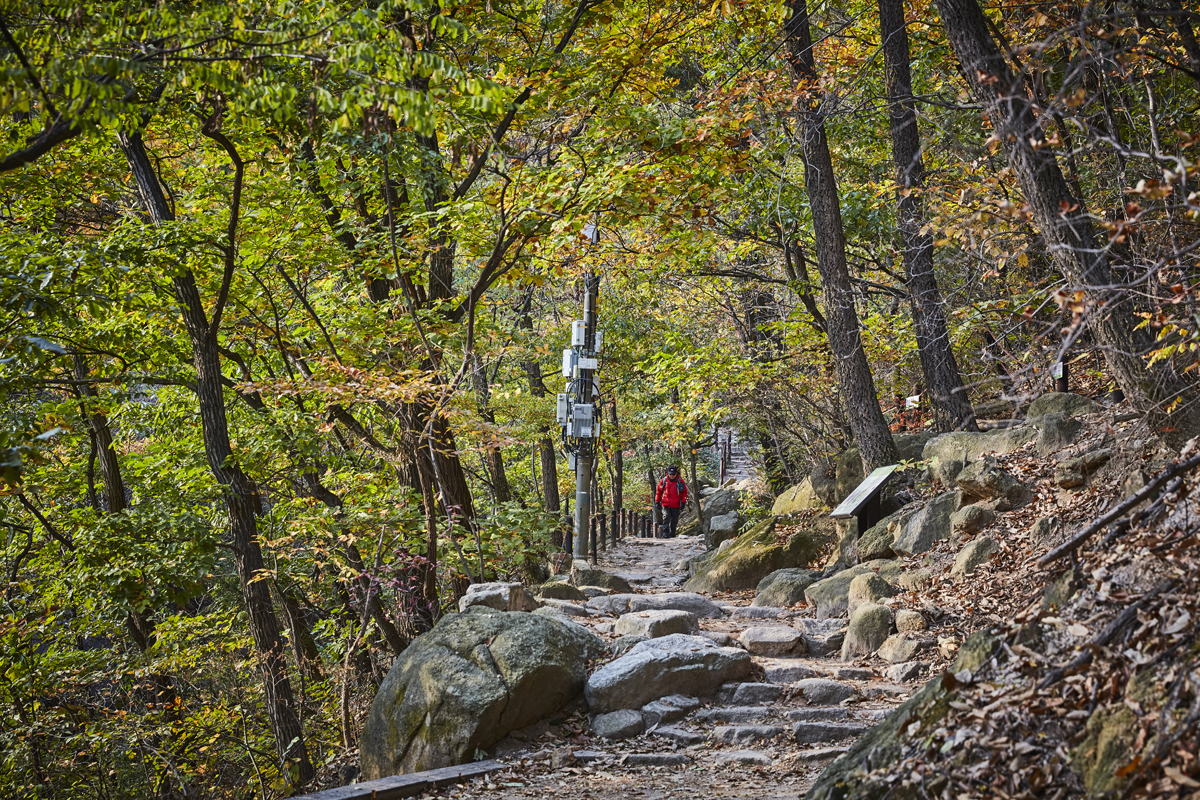
The best weather in Korea. Clear skies, 10-20°C, gorgeous foliage from mid-October. Packing is easy — just think layers.
- Layers again — t-shirt + sweater + windbreaker covers most days.
- Light sweater or fleece — evenings cool down fast, especially in November.
- Windbreaker or light jacket — essential for temple visits and mountain areas where it's cooler.
- Scarf — useful from late October onward, especially if you're heading to Seoraksan or other mountain areas.
Winter (December - February)
Korean winters are properly cold. Seoul regularly hits -10°C in January. The air is dry, the wind is biting, and you'll be outside more than you think (markets, palaces, street food). Don't underestimate this.
- Heavy winter coat — a proper padded coat (롱패딩, long padding). If you don't own one, buy a cheap one at Uniqlo or the underground shopping areas in Seoul for ₩50,000-80,000.
- Thermal base layers — Heattech or equivalent. Top and bottom. Non-negotiable below 0°C.
- Warm hat, gloves, scarf — your ears and fingers will suffer without them. Cheap ones available at Daiso for ₩1,000-3,000 each.
- Insulated waterproof boots — sidewalks get icy. Good grip matters more than style.
- Heat packs (핫팩) — available at every GS25, CU, and 7-Eleven for ₩1,000 each. Koreans buy these by the box. Stick one in each pocket and one in your shoes. Don't bother packing these — buy them when you arrive.
- Lip balm and moisturiser — the air is extremely dry. Your lips will crack within 48 hours without protection.
Electronics
Korea is one of the most connected countries on earth. Here's what to bring and set up.
- eSIM or physical SIM card — pre-order before your flight so you have data the moment you land. Essential for navigation and translation. Full SIM card guide →
- Portable charger — 10,000mAh minimum, 20,000mAh if you're a heavy phone user. USB-C output preferred. You can also rent portable chargers from stations around Seoul, but having your own is more reliable.
- Travel adapter (Type C/F, 220V) — or buy one at Daiso or the airport for ₩3,000. Some hotels provide universal adapters at the front desk — ask when you check in.
- Download these apps before you go:
- Naver Map — Google Maps doesn't work properly in Korea. Naver Map is what everyone uses. Naver Map setup guide →
- Kakao T — for taxis. Works like Uber but actually reliable in Korea.
- Papago — Naver's translation app. Better than Google Translate for Korean.
- WOWPASS app — manage your prepaid tourist payment card.
What NOT to Pack (Buy in Korea Instead)
Seriously — leave these at home and save the luggage space. Korea does all of this better and cheaper.
- Toiletries and skincare — Korea is literally the skincare capital of the world. Innisfree, Olive Young, and Daiso have everything you need for a fraction of what you'd pay at home. Face wash, moisturiser, sunscreen, sheet masks — buy it all there. It's better quality too.
- Umbrellas — ₩2,000 at any convenience store. Every single one stocks them when it rains. Don't waste luggage space.
- Heat packs — ₩1,000 at GS25 or CU. Available everywhere in winter, including vending machines at subway stations.
- Snacks — Korean convenience store food is genuinely excellent. Triangle kimbap, cup ramyeon, fried chicken, sandwiches — all for ₩1,000-3,000. Whatever you'd bring from home won't compete. Convenience store food guide →
- Too many clothes — if you need an extra layer, Uniqlo is everywhere. Market shopping areas sell basics for ₩5,000-10,000. Daiso sells socks, gloves, and basics for ₩1,000-3,000. Don't pack for every scenario — pack light and adapt.
- Full-size towels — hotels provide them, and you can buy a quick-dry towel at Daiso if needed.
Korea-Specific Items People Forget
These aren't in any standard packing list, but you'll wish you had them.
- Slip-on shoes or a shoe horn — you remove your shoes constantly in Korea. Restaurants with floor seating, temples, hanok guesthouses, fitting rooms, some museums. Lace-up boots become a nightmare. Slip-on shoes or at least shoes you can get in and out of quickly will save you daily frustration.
- Small towel — if you're visiting a jjimjilbang (Korean bathhouse/spa), not all of them provide towels, or they charge extra. A compact microfibre towel takes up almost no space.
- Cash — ₩50,000-100,000 — Korea is increasingly cashless, and WOWPASS covers most situations. But traditional markets, small street food stalls, some older restaurants, and taxi drivers occasionally only take cash. Withdraw from ATMs at convenience stores (Global ATM) or exchange at the airport. Full payment guide →
- Motion sickness medication — if you're prone to it. Korean taxi drivers and intercity buses can be... spirited. Mountain roads to temples are winding.
- Ear plugs — Korean hotels and guesthouses can have thin walls. City noise is constant. If you're a light sleeper, these are essential.
Pre-Order Before You Fly
Get your SIM card, transport card, and payment card sorted before landing.
Affiliate links — we may earn a small commission at no extra cost to you.
Printable Packing Checklist
Documents & Money
- Passport (6+ months validity)
- Flight confirmation / boarding pass
- Hotel booking confirmations
- Travel insurance documents
- Cash (₩50,000-100,000)
- Prescription letter for medications
Electronics
- Phone + USB-C charger
- Portable battery (10,000mAh+)
- Travel adapter (Type C/F, 220V)
- eSIM / SIM card (pre-ordered)
- Earphones / headphones
Clothing (adjust for season)
- 3-5 tops (layers for spring/autumn)
- 2-3 bottoms
- Comfortable walking shoes
- Slip-on shoes or shoe horn
- Light jacket or windbreaker
- Season-specific: rain jacket (summer) / heavy coat + thermals (winter)
- Underwear and socks (5-7 days)
Accessories & Misc
- Daypack or crossbody bag
- Zip-lock bags (assorted sizes)
- Small microfibre towel
- Sunglasses
- Prescription medications
- Ear plugs
- Motion sickness medication
Apps to Download
- Naver Map
- Kakao T
- Papago
- WOWPASS
Frequently Asked Questions
Can I buy everything I need in Korea instead of packing it?
Almost. Korea has convenience stores (GS25, CU, 7-Eleven) on literally every block, plus Daiso (the ₩1,000-5,000 everything store), Olive Young (skincare and toiletries), and Uniqlo in every major shopping area. The only things you genuinely can't replace easily are prescription medications, your passport, and shoes in larger Western sizes (above Korean 280mm / US 11).
Do I need a travel adapter or can I charge via USB?
Most modern Korean hotels have USB ports built into the bedside outlets or desk. But you'll still want a travel adapter for hair dryers, laptops, or charging in cafes and airports. Korea uses Type C/F round-pin plugs at 220V — the same as most of Europe. If you're coming from the US, UK, or Australia, your plugs won't fit without an adapter. Buy one before you go or grab one at Daiso for ₩3,000.
How much luggage space should I leave empty for shopping?
A lot. Most visitors to Korea end up buying skincare, snacks, clothing, and souvenirs. Leave at least 30-40% of your suitcase empty, or bring a foldable duffel bag as a backup. If you're seriously shopping (Myeongdong, Gangnam, Hongdae), consider shipping a box home via Korea Post — it's surprisingly affordable for surface mail (2-3 months) at around ₩20,000-30,000 for a medium box.