Korea Chuseok 2026 Guide: Dates, Closures, and What to Do
Visiting Korea during Chuseok is one of those experiences that can go two ways. If you plan around the holiday properly, you will witness one of Asia's most genuine cultural events — folk performances, ancestral ceremonies, traditional food, and a kind of collective movement across the country that feels nothing like an ordinary weekend. If you plan as if it were a normal week, you may find restaurants shuttered, trains sold out, and a quiet neighborhood street where you expected a bustling market.
This guide covers everything a foreign visitor needs to know about Chuseok 2026: the exact dates, what closes and what stays open, the best activities for non-Korean guests, how to handle food and transport, and how to get the most out of being in Korea during this period.
🎟️ Book Cultural Experiences for Chuseok
Chuseok 2026 Dates
In 2026, Chuseok — the 15th day of the 8th month of the lunar calendar — falls on Friday, September 25. The official public holiday period runs from Thursday, September 24 through Saturday, September 26. This means most Korean workers and students will have at least Thursday through Saturday off.
Whether September 27 (Sunday) becomes a substitute holiday depends on how the Korean government applies substitute holiday rules for that year's calendar. These decisions are typically confirmed in the official government holiday announcement. Before finalizing your travel plans around specific business or attraction openings, verify the current schedule with the Korea Tourism Organization or the official Korean government holiday calendar — individual businesses and attractions may follow different opening policies regardless of the formal public holiday count.
In practical terms, the busiest travel days are the day before the holiday begins (September 23) and the day after it ends (September 27–28). If you are moving between cities by KTX or intercity bus, these are the windows most likely to be sold out. Plan and book transport well in advance.
What Is Chuseok?
Chuseok is Korea's harvest festival and one of the two most important national holidays of the year (the other is Seollal, the Lunar New Year). Families travel back to their hometowns, conduct ancestral memorial ceremonies (charye), share food, wear hanbok, play traditional games, and visit family graves. The cultural weight of the holiday is significant — it is not primarily a tourist event, and the experience for visitors is one of observing and occasionally participating in something real rather than staged.
For the traveler who is flexible and plans well, Chuseok is a genuinely special time to be in Korea. For the traveler who needs everything to be open and running normally, it is challenging. The key is to lean into what the holiday makes possible rather than fighting what it closes.
What Closes During Chuseok
The short version: small independent businesses close at high rates, and transport capacity becomes scarce. Here is what to expect in more detail.
Small restaurants and family-run eateries are the highest-risk category. Neighborhood barbecue shops, tiny noodle restaurants, local cafes, and family-run specialty stores may close for part or all of the holiday period. In areas that rely on office workers or local residents rather than tourists, closure rates can be high. Do not assume a restaurant you found on Naver will be open without checking their holiday notice.
Local markets and independent shops are similarly unpredictable. Some traditional market sections that sell holiday food gifts will actually be busier than usual in the days before Chuseok, then shut on the holiday itself. Check each specific market or shop.
Smaller museums and minor attractions may reduce hours or close on one or more holiday dates. Large government-operated attractions (national museums, major palaces) typically stay open and often add special Chuseok programming. Smaller privately-run cultural spaces are less predictable.
Transport capacity is not closed but is functionally unavailable if you have not booked early. KTX tickets for popular routes such as Seoul to Busan, Seoul to Gyeongju, and Seoul to Jeju air connections often sell out days or weeks before the holiday peak. Book the moment you know your dates.
What Stays Open and Thrives
The palaces are a highlight of Chuseok for visitors. Gyeongbokgung, Changdeokgung, Deoksugung, and other royal palaces in Seoul typically offer free admission over the Chuseok holiday period and add special traditional performances — folk music, dance, and martial arts demonstrations that are not part of the normal daily schedule. This is one of the best arguments for being in Seoul during the holiday rather than avoiding it.
National Folk Museum of Korea (inside Gyeongbokgung grounds) and the National Museum of Korea add special Chuseok programming and are specifically designed to be interesting for foreign visitors during the holiday period. The National Museum of Korea typically offers free admission to its permanent collection year-round.
Korean Folk Village in Yongin (about an hour from Seoul) is one of the best places to spend Chuseok as a foreign visitor. The open-air museum village hosts special holiday performances, folk game demonstrations, traditional food stalls, and Chuseok ceremony reenactments during the holiday period. It operates specifically to preserve and demonstrate the kind of traditional holiday culture that is no longer common in Korean cities. Book tickets in advance on Klook or at the gate.
Convenience stores (CU, GS25, 7-Eleven, Emart24) are open 24 hours as always. This is not a small thing — in neighborhoods where restaurants have closed, convenience stores become genuine meal solutions with hot food counters, ramen, gimbap, and instant rice.
Best Activities for Visitors During Chuseok
Structure your Chuseok days around the activities and venues that specifically benefit from the holiday. The palace performances are free and excellent. The Korean Folk Village is at its most interesting. The tourist districts of Seoul — Myeongdong, Insadong, Bukchon — remain functional and are less crowded with office workers than on a typical weekday, giving a different quality of experience.
Hanbok rental is particularly meaningful during Chuseok. Wearing traditional dress at the palace grounds during the holiday season creates photographs that are genuinely connected to the cultural moment rather than tourist recreation. Many Koreans also wear hanbok during Chuseok, so you will fit into rather than stand out from the holiday landscape.
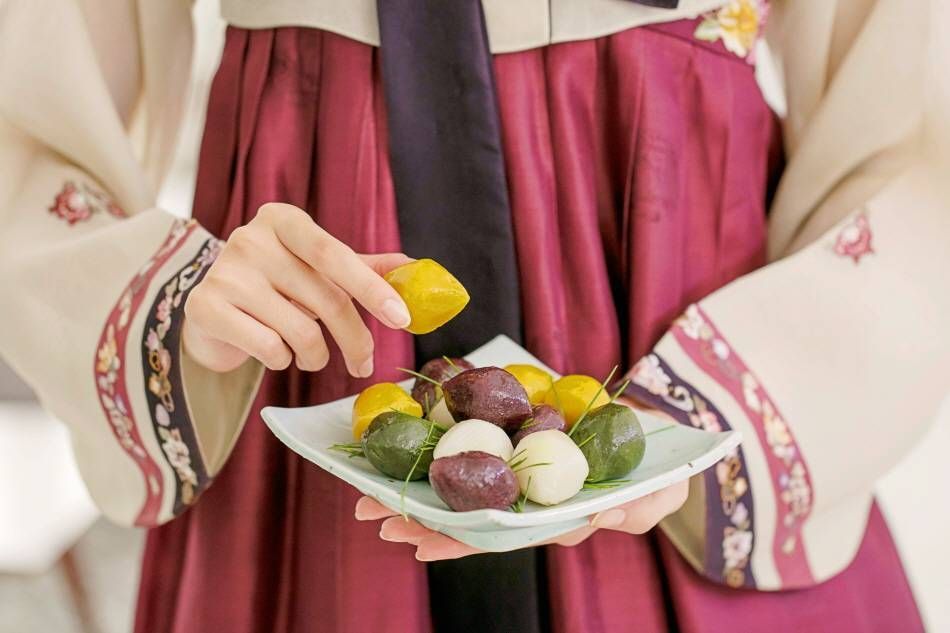
Songpyeon-making classes appear as special offerings during the Chuseok period at cultural centers and some community programs. Songpyeon are the small half-moon rice cakes stuffed with sesame, red bean, or chestnut that are the definitive food of Chuseok. Making them is a traditional family activity and something that most Korean adults associate strongly with the holiday.
Chuseok Food Guide
Even if most restaurants in a neighborhood are closed, Chuseok food culture gives visitors plenty to work with. Songpyeon are the must-try item — you will find them in convenience stores, bakeries, and traditional markets throughout the holiday period. Department store basement food halls (the famous Korean sikhpoom-gwan) typically have elaborate Chuseok gift set displays and ready-to-eat holiday food available.
The traditional Chuseok spread includes japchae (glass noodles with vegetables), jeon (pan-fried savory pancakes), hangwa (traditional confections), and various fruit and nut dishes, alongside the main ancestral ceremony food. Some traditional Korean restaurants that do stay open during the holiday will offer special Chuseok menus.
Transport Tips for Chuseok 2026
Book KTX and intercity bus tickets as soon as they open for the holiday period — typically 30 days in advance through the Korail website or app. For Seoul Metro and city buses, there is no capacity issue. Domestic flights to Jeju sell out at high speed; book these immediately. Taxis are available throughout the holiday but may be harder to hail in residential areas where fewer people are out. Kakao T (the dominant taxi app in Korea) works reliably and is the recommended method for non-Korean speakers.
| Date | Day | Holiday Status | Notes for Travelers |
|---|---|---|---|
| September 23 | Wednesday | Normal workday | Expect outbound travel rush; book transport early |
| September 24 | Thursday | Public holiday | Holiday begins; palaces open with special programming |
| September 25 | Friday | Chuseok (public holiday) | Core holiday day; Korean Folk Village recommended |
| September 26 | Saturday | Public holiday | Continued holiday; palace free entry typically continues |
| September 27 | Sunday | Verify with official calendar | May be substitute holiday — confirm before planning |
| September 28 | Monday | Normal workday | Return travel rush; most businesses resume |
Note: 2026 calendars vary by source. Verify all dates with the official Korean government holiday calendar before finalizing travel plans, particularly for any business-dependent activities.
Related Guides
- Chuseok Korea Guide — evergreen guide to what Chuseok means and how to navigate it
- Korea Festivals 2026 — full year festival and holiday calendar
- Korean Language Basics — key phrases for travelers
- Things to Know Before Visiting Korea — essential first-timer tips
- Korea Itinerary — 7, 10 and 14-day trip plans
- Korea Bucket List — top experiences across the country