Jeju Island in Summer 2026: Beaches, Waterfalls, Diving & Where to Stay
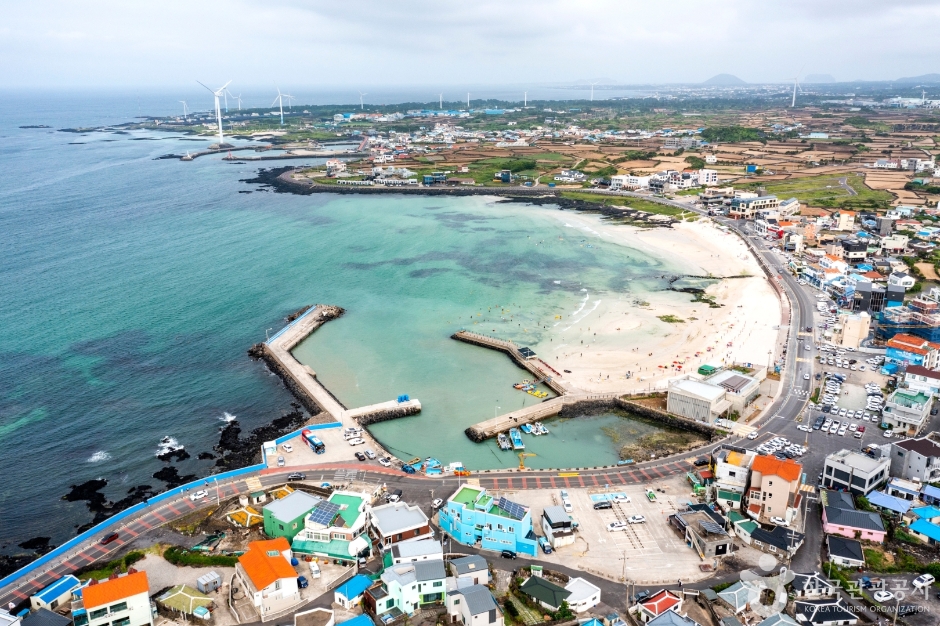
Jeju in summer is Korea's tropical escape. Emerald waters warm enough to swim in, waterfalls thundering at full monsoon power, volcanic coastlines, and sunsets that look photoshopped. Korea's largest island — a UNESCO World Heritage site — is at its most dramatic between June and August. It's also peak season, so planning ahead is essential.
This guide covers everything: best beaches, waterfalls, diving spots, Hallasan summer hiking, and where to stay and eat.
Book Your Jeju Summer Trip
Jeju resorts and beach hotels sell out fast. Lock in early:
Summer Weather on Jeju
| Month | Avg Temp | Rain | Sea Temp | Notes |
|---|---|---|---|---|
| June | 22–27°C | Monsoon starts late June | 20–22°C | Best month — warm, less crowded, waterfalls building |
| July | 26–31°C | Heavy (monsoon peak) | 23–25°C | Waterfalls spectacular, but rain daily. Book indoor backup plans. |
| August | 27–32°C | Moderate, humid | 25–27°C | Peak beach season. Hottest, most crowded, best swimming water. |
Typhoon risk: Jeju is more exposed than the mainland. Late August/September sees occasional typhoons. Flights may be cancelled for 1–2 days. Always have flexible plans for late August.
Best Beaches on Jeju
1. Woljeongri Beach (월정리)
Jeju's most photographed beach. Shallow emerald water, white sand, and a strip of pastel cafes. The water barely reaches your waist for 100 metres out — perfect for wading, not deep swimming. Best for photos, couples, and lazy afternoons.
📍 East coast, 30 min from Jeju City
2. Hamdeok Beach (함덕)
Best for swimming. Crystal-clear, calm, shallow water. A volcanic rock outcrop creates a natural pool perfect for kids. Locals prefer this over the tourist beaches. Good snorkelling on the rocky side.
📍 Northeast coast, 20 min from Jeju City
3. Jungmun Saekdal Beach (중문색달)
Best for surfing. Dark volcanic sand meets turquoise water. Consistent summer waves attract surfers. The Jungmun resort area has Jeju's best hotels. Nearby Jusangjeolli columnar cliffs are a must-see.
📍 South coast, 50 min from Jeju Airport
4. Hyeopjae Beach (협재)
Most scenic. White sand, turquoise water, and Biyangdo Island on the horizon. Less crowded than Woljeongri. Adjacent Geumneung Beach is even quieter — walk between them.
📍 West coast, 40 min from Jeju City
5. Udo Island Beaches (우도)
Day trip paradise. A tiny island off Jeju's east coast with coral sand beaches and absurdly clear water. Rent an electric scooter and circle the island in 2 hours. The peanut ice cream is legendary.
📍 15 min ferry from Seongsan port
Waterfalls at Peak Flow
Jeju's waterfalls are best in summer — monsoon rains feed them to full power. Some are barely a trickle in winter but become thundering cascades in July.
| Waterfall | Why Visit | Entry |
|---|---|---|
| Cheonjiyeon (천지연) | Most famous — lit up at night in summer. Subtropical forest walk to the falls. | 2,500 KRW |
| Jeongbang (정방) | Only waterfall in Asia that falls directly into the ocean. Dramatic. | 2,000 KRW |
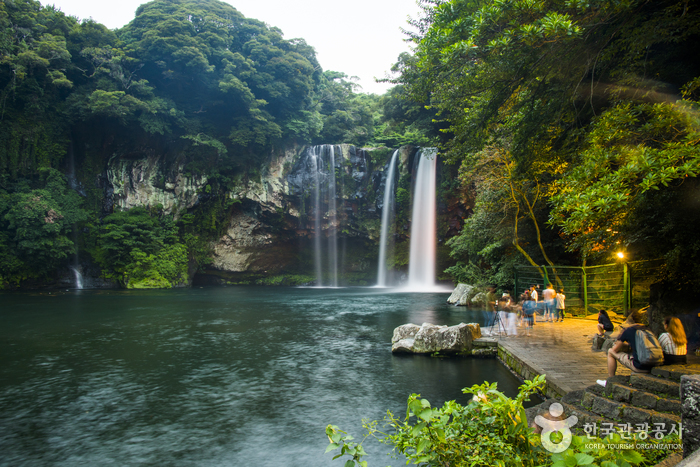
| Cheonjeyeon (천제연) | Three-tier falls connected by forest trails. The arch bridge is iconic. | 2,500 KRW |
| Eongtto (엉또) | Hidden gem — only flows after heavy rain. If it's flowing, it's spectacular. | Free |
See our full list at Korea Waterfalls Guide.
Book a Jeju Waterfall Tour
Guided tours hit multiple waterfalls in one day — includes transport between sites.
Diving, Snorkelling & Water Sports
Jeju's volcanic coastline creates outstanding diving and snorkelling — visibility up to 20 metres in summer.
Snorkelling
- Hamdeok Beach — rocky side has coral and small fish. Beginner-friendly.
- Hwanseon Beach — less known, good visibility, sea urchins and anemones.
- Udo Island — clearest water around Jeju. Rent snorkelling gear on the island.
Scuba Diving
- Seogwipo — Jeju's diving capital. Soft corals, tropical fish, and underwater volcanic formations.
- Munseom Island — advanced diving spot with dramatic underwater cliff walls.
- Water temperature: 23–27°C in summer — wetsuit recommended but not a drysuit.
Other Water Sports
- Kayaking — transparent kayak tours along the volcanic coast are popular
- SUP (Stand Up Paddleboarding) — available at most beaches
- Surfing — Jungmun has the most consistent waves
- Jet skiing & banana boats — available at Hamdeok and Jungmun
Book Water Activities
Summer slots fill up fast — especially weekends. Book at least a few days ahead.
Hiking Hallasan in Summer
Hallasan (한라산, 1,950m) is Korea's highest mountain and Jeju's centrepiece. Summer hiking is rewarding but demands respect.
Summer Hiking Tips
- Start early. Gates open at 05:00. Start by 06:00 to avoid midday heat and afternoon thunderstorms.
- Bring 2+ litres of water. No water refill points above the trailhead.
- Rain gear is mandatory. Mountain weather changes fast — even if it's sunny at the bottom, it can rain at the summit.
- Trail closures: Heavy rain or typhoon warnings close trails. Check the Hallasan National Park website morning-of.
- Seongpanak Trail (9.6 km, 4.5h up) is the easier route. Gwaneumsa Trail (8.7 km, 5h up) is steeper but more scenic.
Summer Food on Jeju
| Dish | What | Where |
|---|---|---|
| Heuk-dwaeji (흑돼지) | Jeju black pork BBQ — fattier, more flavourful than mainland pork | Black Pork Street, Jeju City |
| Haemul-ttukbaegi (해물뚝배기) | Spicy seafood hot pot with fresh Jeju catch | Any coastal restaurant |
| Abalone porridge (전복죽) | Creamy, rich — Jeju abalone is world-famous | Seogwipo restaurants |
| Hallabong (한라봉) | Jeju's iconic citrus fruit — sweet, seedless. Also in juice, ice cream, everything. | Markets, cafes, roadside stalls |
| Udo peanut ice cream | Made from Udo Island's peanuts — uniquely nutty and creamy | Udo Island |
| Patbingsu | Shaved ice — Jeju versions use hallabong or green tea | O'sulloc Tea Museum, any cafe |
Where to Stay
| Area | Best For | Budget (per night) |
|---|---|---|
| Jeju City | Airport access, food, nightlife, base camp | 50,000–200,000 KRW |
| Seogwipo | Waterfalls, south coast scenery, calmer vibe | 60,000–250,000 KRW |
| Jungmun | Resort area, best hotels, surfing beach | 150,000–500,000 KRW |
| Woljeongri/Gujwa | East coast beaches, cafes, trendy stays | 80,000–200,000 KRW |
| Hallim/Hyeopjae | West coast beaches, quieter, scenic | 60,000–180,000 KRW |
See our full breakdown at Where to Stay on Jeju.
Book Jeju Hotels
Summer is Jeju's busiest season. Book 4–6 weeks ahead for the best options.
Getting There
Flights from Seoul
- Gimpo → Jeju: 1 hour, flights every 10–15 min (busiest domestic route in the world)
- Cost: 50,000–100,000 KRW one way (book early for cheaper fares)
- Airlines: Korean Air, Asiana, Jeju Air, T'way, Jin Air
Getting Around Jeju
- Rental car is strongly recommended. Jeju has no subway and buses are slow. International driving permits are accepted.
- Electric scooter/bike — popular for shorter trips, especially around Woljeongri and Udo
- Tour buses — guided day tours cover major attractions if you don't want to drive
Book Jeju Transport
5-Day Summer Jeju Itinerary
Day 1: East Coast
- Morning: Fly in, pick up rental car. Drive to Seongsan Sunrise Peak (even without sunrise, it's worth the climb)
- Afternoon: Ferry to Udo Island — beach, peanut ice cream, scooter loop
- Evening: Woljeongri Beach sunset + cafe strip
Day 2: South Coast — Waterfalls & Cliffs
- Morning: Cheonjeyeon Waterfall (3 tiers, forest walk)
- Midday: Jusangjeolli Cliffs — columnar joints meeting the sea
- Afternoon: Jungmun Beach — surf or swim
- Evening: Cheonjiyeon Waterfall (lit up at night in summer)
Day 3: Hallasan Hike
- 05:30: Start Seongpanak Trail. Bring 2L water, rain gear, snacks.
- 10:30: Summit — crater lake views
- 14:00: Back at trailhead. Reward yourself with black pork BBQ.
- Evening: Rest, jjimjilbang, early sleep
Day 4: West Coast
- Morning: Hyeopjae Beach — swim in turquoise water
- Midday: O'sulloc Tea Museum — green tea everything
- Afternoon: Hallim Park or Spirited Garden
- Evening: Sunset at Hyeopjae, seafood dinner
Day 5: Jeju City + Departure
- Morning: Dongmun Market — street food breakfast
- Midday: Pick up souvenirs — hallabong chocolate, Jeju cosmetics, peanut snacks
- Afternoon: Fly out
Practical Tips
- Rent a car. Seriously. Jeju is 73 km across, buses take forever, and the best spots aren't on bus routes. International driving permit required.
- Book flights early. Seoul–Jeju is cheap but summer fares spike. Book 4+ weeks ahead.
- Monsoon rain is real. July brings heavy rain. Have indoor backup plans: museums, cafes, Aqua Planet, Nexon Computer Museum.
- Sunscreen. Jeju sun is intense. Korean sunscreen from any Olive Young on the island.
- Hallabong season ends in June. For fresh citrus, come in May–early June. But hallabong products (juice, chocolate) are available year-round.
- Cash for markets. Dongmun Market and small restaurants are often cash only.
FAQ
Is summer the best time to visit Jeju?
For beaches and water activities — yes. For hiking and comfortable weather — spring (April–May) or autumn (October–November) is better. Summer is the most crowded and expensive.
How many days do I need on Jeju?
4–5 days is ideal to cover all four coasts and Hallasan. 3 days is doable but rushed.
Jeju or Busan for summer?
Jeju for nature, diving, waterfalls, and relaxation. Busan for nightlife, food markets, and city-beach culture. With 7+ days, do both.
Can I visit Jeju without a car?
Yes, but it's harder. Tour buses and taxis work but limit flexibility. If you don't drive, book guided day tours through Klook or GetYourGuide.
Plan Your Jeju Summer
Book early for summer — especially accommodation and rental cars:
Last updated: March 2026.