Best Activities in Busan 2026: Haeundae, Gamcheon, and Markets
Busan is South Korea's second city and its biggest surprise. Visitors who come expecting a scaled-down Seoul find something completely different: a port city built between mountains and sea, with a distinct food culture, a film festival pedigree, colorful hillside villages, and beaches you can actually swim in. The pace is slower than Seoul, the seafood is extraordinary, and most of the headline attractions are tightly clustered in a way that makes it easy to cover a lot in a short time.
Whether you have a weekend layover from Seoul or a dedicated Busan stay, this guide covers the best activities in Busan for 2026 — what to prioritize, what to combine into half-day circuits, and what to skip.
🎟️ Book Busan Activities and Tours
1. Haeundae and Gwangalli Beach
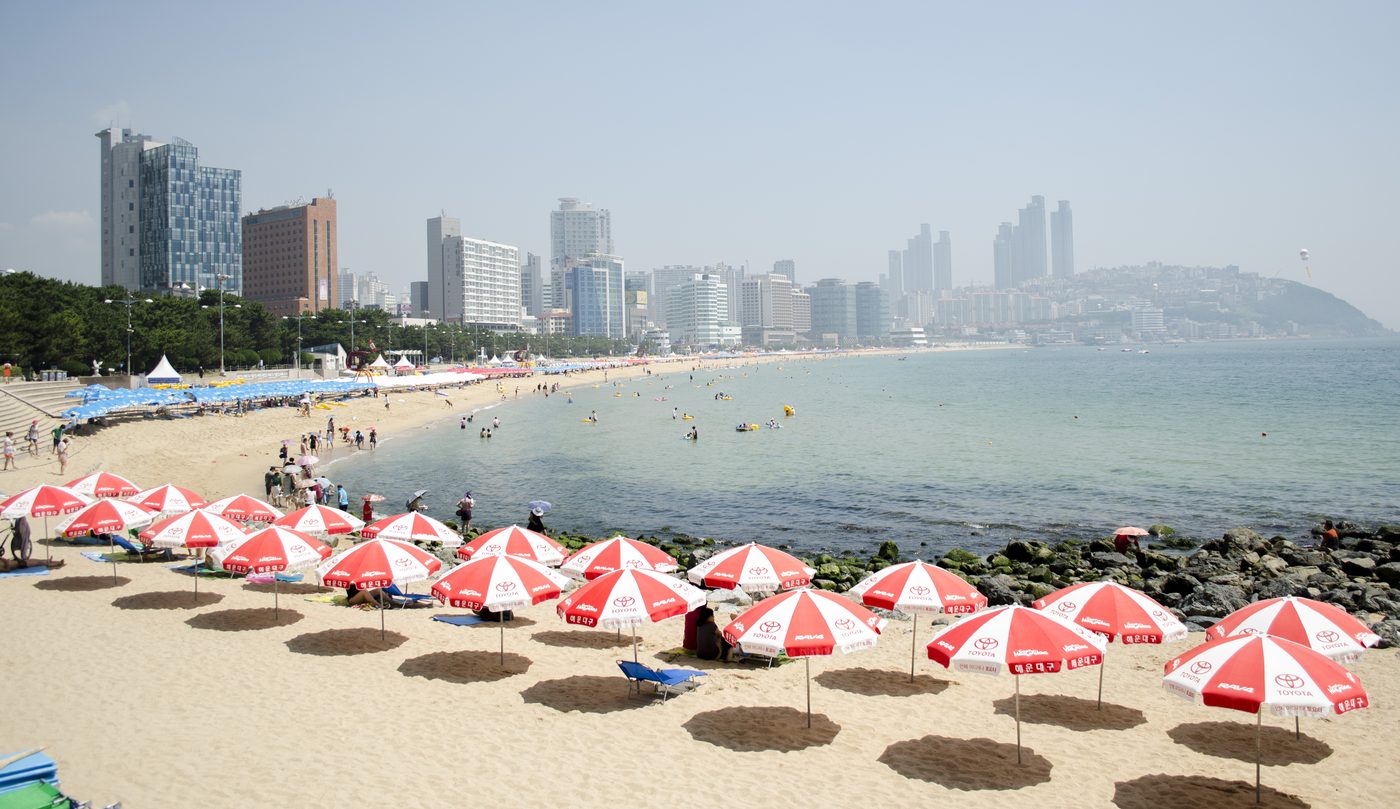
Haeundae Beach in Busan with skyline backdrop. Photo: Wikimedia Commons, CC BY 2.0.
Busan's two most famous beaches are within 15 minutes of each other and have distinct characters. Haeundae is the more famous — a long, wide stretch of sand with a backdrop of high-rise hotels, excellent restaurants along the Haeundae beach road, and the BIFF Square nearby. It is the busiest beach in Korea in summer, which means it is genuinely electric in July and August and pleasantly uncrowded the rest of the year. Gwangalli, a 20-minute walk east, is narrower and backed by bars and cafes rather than hotels. The view of Gwangandaegyo Bridge lit up at night from Gwangalli is one of Busan's best urban vistas — best appreciated from a bar table on the beachfront road with a beer in hand.
2. Gamcheon Culture Village
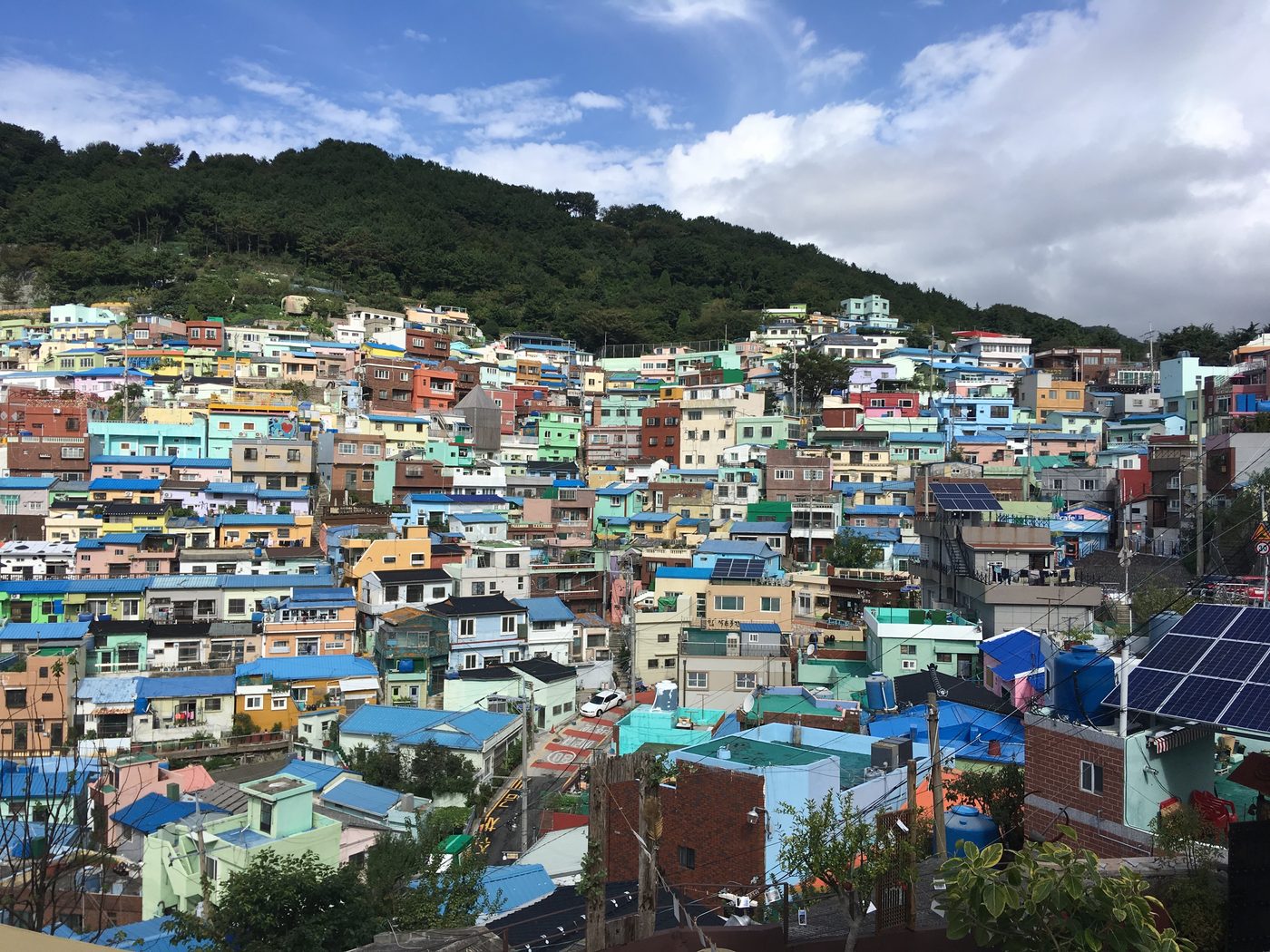
Colorful houses of Gamcheon Culture Village on a Busan hillside. Photo: Wikimedia Commons, CC BY-SA 4.0.
Gamcheon Culture Village is built into a steep hillside in the western part of the city and is one of the most photogenic neighborhoods in Korea. What was once a densely packed informal settlement was transformed through a community art project into a maze of painted staircases, murals, tiny galleries, and cafe-studios. The best strategy is to pick up a map at the entrance (available for a small fee with a stamp-collecting trail) and wander without a fixed route — some of the best views and installations are on dead-end paths. The village gets very crowded on weekends. Arriving before 10am on a weekday gives you the best light and the fewest people.
3. Jagalchi Fish Market
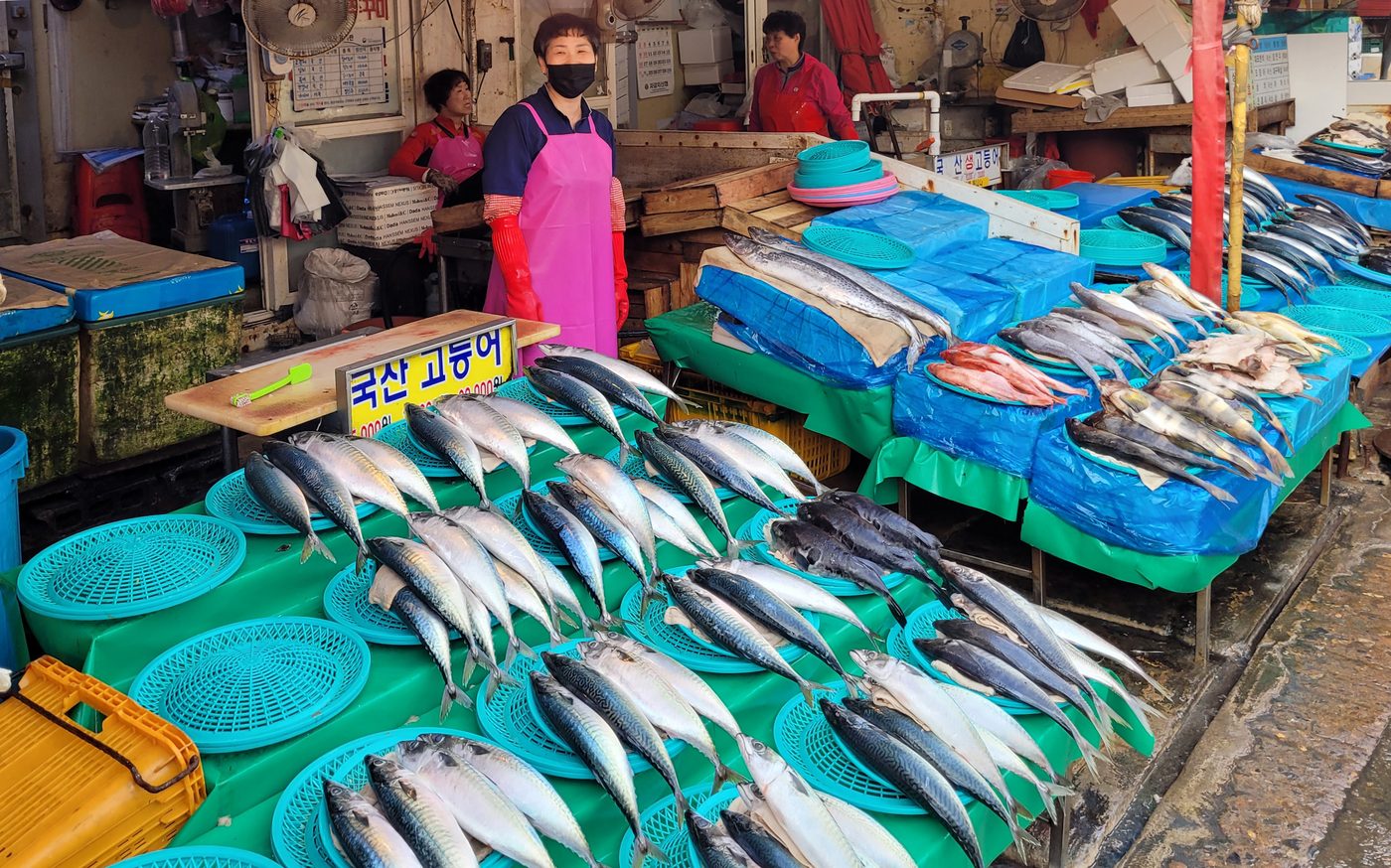
Jagalchi Fish Market vendors and stalls in Busan. Photo: Wikimedia Commons, CC0 (Public Domain).
Jagalchi is Busan's most famous market and one of the largest seafood markets in Korea. The ground floor indoor section has tanks stacked with live fish, crabs, shellfish, and sea cucumber. The outdoor stalls along the waterfront handle the messier and more atmospheric side of the trade. Most visitors come to eat: the second floor of the main building has restaurants where vendors will cook your market purchase to order — raw hoe (sliced raw fish), steamed crab, or grilled items. This is a genuinely local experience that rewards coming hungry and being willing to point at things you cannot name. Best visited for a late lunch when the morning crowds thin and the vendors are still well-stocked.
4. Taejongdae and the Danubi Train
Taejongdae is a forested coastal park on the southern tip of Yeongdo Island, a 30-minute bus ride from the city center. The cliffs here drop directly into the sea, and the walking paths through pine forest lead to viewpoints looking back toward the Busan port and across to the open ocean. The Danubi Train — a small electric tram — loops the park for visitors who prefer not to walk the full circuit. The Taejongsa temple inside the park and the rocky shore section accessible by a steep staircase are the highlights. This is one of Busan's most underrated half-days and feels nothing like the rest of the city.
5. Songdo Beach Cable Car
The Songdo cable car runs from the western end of Songdo Beach across the cliff tops to Amnam Park and gives you sweeping views of the coastline, the sea, and the city behind it. The glass-bottomed gondola option is the one worth booking — looking straight down at the ocean through the floor is genuinely vertiginous. The ride is about eight minutes each way. Songdo Beach itself, directly below, has a pleasant promenade and is one of the less crowded beaches in Busan despite being very close to the city center. Combine the cable car with a walk along the Songdo Skywalk, a curved glass walkway extending out over the sea from the cliff.
6. Huinnyeoul Culture Village
Huinnyeoul (also spelled Huin Nyeoul) is a smaller and quieter alternative to Gamcheon — another hillside village regenerated through art and community effort, this time on the slopes above the port area in Yeongdo. The name translates roughly as "white waterfall" and refers to the steep whitewashed alley that runs down the hillside. The atmosphere is more intimate than Gamcheon and the crowds are noticeably thinner. The sea views from the top of the village are excellent. This is worth an hour or two for visitors who enjoyed Gamcheon and want something less commercialized.
7. Bosu-dong Book Alley
Bosu-dong Book Alley is a narrow street in central Busan that has been lined with secondhand bookstores since the Korean War, when refugees set up stalls selling books to support themselves. Today it is a designated cultural heritage zone with dozens of shops selling used Korean books, old magazines, vintage maps, and the occasional English-language find. Even if you cannot read Korean, the aesthetic of the alley — weathered book spines stacked floor to ceiling behind glass — is striking, and the experience of browsing is genuine rather than performed. It is five minutes from Jagalchi Market and makes a logical combination.
8. Haedong Yonggungsa Temple
Haedong Yonggungsa is one of the few major Buddhist temples in Korea built directly on the coastline — the complex sits on rocky outcroppings with waves breaking beneath it. It is located on the northeastern edge of Busan near Gijang, about 30 minutes from Haeundae by bus. The approach involves walking down a slope through shrine gates and past stone carvings, and the main hall sits at the water's edge with a 12 zodiac stone path leading to it. Haedong Yonggungsa is busiest on the first day of the lunar new year and during Chuseok but is worth visiting any day of the week. Entrance is free.
9. Busan Aquarium (SEA LIFE Busan)
SEA LIFE Busan is located directly beneath Haeundae Beach and is an accessible indoor option when weather turns. The aquarium has a 80-meter glass tunnel where sharks and rays pass overhead, penguin exhibits, and touch pools for children. It is not as large or as dramatically designed as Aqua Planet Jeju, but its location adjacent to the beach means it integrates naturally into a Haeundae day. Book tickets in advance on Klook to skip the queue and usually get a slightly reduced rate. The facility is best suited to families with children or as a rainy-day alternative.
Busan Activities at a Glance
| Activity | Area | Best Time | Entry |
|---|---|---|---|
| Haeundae Beach | Haeundae | Anytime; summer for swimming | Free |
| Gwangalli Night View | Gwangalli | Evening | Free |
| Gamcheon Village | West Busan | Weekday morning | Free (stamp trail approx. ₩2,000) |
| Jagalchi Market | Jung-gu | Lunch | Free to enter; pay for food |
| Taejongdae | Yeongdo | Morning | Free; Danubi Train approx. ₩3,000 |
| Songdo Cable Car | Seo-gu | Clear days | Approx. ₩15,000 (subject to change) |
| Haedong Yonggungsa | Gijang | Early morning | Free |
| SEA LIFE Busan | Haeundae | Rainy days | Approx. ₩25,000–₩30,000 (subject to change) |
Related Guides
- Busan Travel Guide — complete planning guide
- Things to Do in Busan — extended activity list
- Where to Stay in Busan — best neighborhoods and hotels
- Where to Stay in Haeundae — beach district hotel guide
- Seoul vs Busan — which city should you visit first?
- Seoul to Busan — KTX, bus, and flight options compared