How to Get Around Korea — Transport Guide for Tourists (2026)
Korea has one of the best public transport systems in the world — fast, cheap, clean, and easy to navigate in English. This guide covers everything a foreign visitor needs.
Quick Links
👉 Budgeting for your trip? The Korea travel budget guide breaks down exactly what transport will cost you day-to-day.
🔑 T-money Card — Get This First
The T-money card is a rechargeable transit card that works on ALL subways, city buses, and some taxis across Korea. It's the single most important thing to get when you arrive.
| Where to buy | Any convenience store (CU, GS25, 7-Eleven) or subway station kiosk |
| Card cost | ₩2,500–5,000 (~$2–4) |
| How to recharge | Convenience stores or subway station machines (English available) |
| Works on | All subways, city buses, some taxis, convenience store payments |
| Discount | ₩100 off per subway/bus ride vs cash. Free transfers between subway↔bus within 30 min |
💡 Pro tip: Recharge ₩20,000–30,000 at a time. Most subway rides cost ₩1,250–1,550. Unused balance is refundable at convenience stores (minus ₩500 fee).
👉 For a full walkthrough — top-up spots, balance checks, and getting a refund — see the complete T-money card guide.
🚇 Subway — Best Way to Get Around Cities
Seoul's subway has 23 lines, 700+ stations, all with English signage, announcements, and maps. It's the fastest and cheapest way to get around Seoul, Busan, Daegu, Daejeon, and Gwangju.
| Hours | 5:30am – midnight (last trains vary by line) |
| Cost | ₩1,250 base (T-money) / ₩1,350 (single ticket) + ₩100 per additional zone |
| Payment | T-money card or single-ride token (₩500 deposit, refundable) |
| English | All signs, maps, announcements, and ticket machines in English |
| Apps | Naver Map or KakaoMap for route planning (both work in English) |
⚠️ Important: Seoul subway closes around midnight. If you miss the last train, take a taxi (Kakao T) or a late-night bus (N-bus, runs until 3am on major routes).
New to Naver Map? The Naver Map step-by-step guide shows you how to set it to English and plan routes like a local.
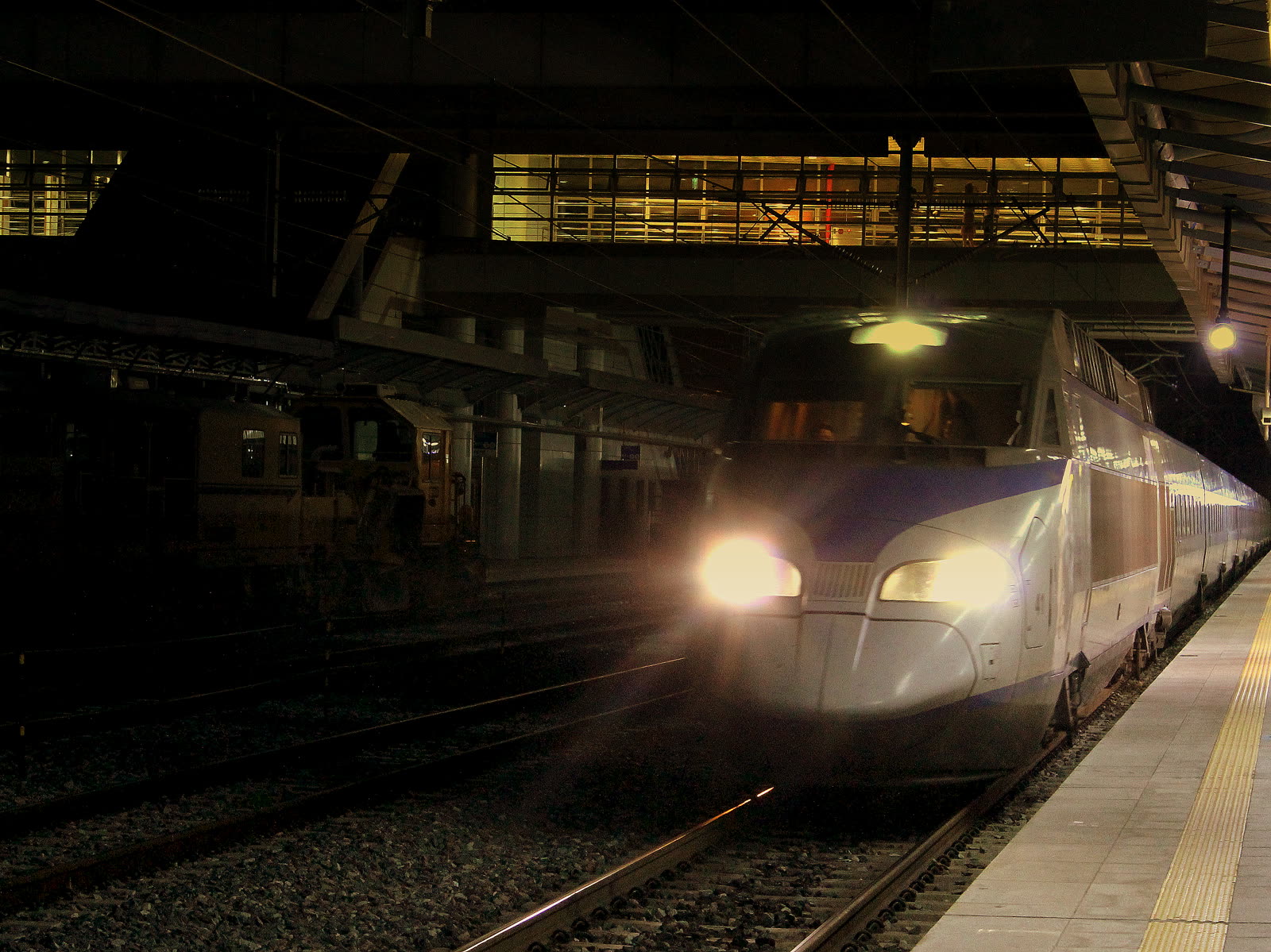
🚄 KTX Bullet Train — Seoul ↔ Busan in 2.5 Hours
The KTX is Korea's bullet train connecting major cities at 300km/h. Essential for trips outside Seoul.
| Seoul → Busan | 2h 30min | ₩59,800 (~$44) |
| Seoul → Gangneung | 1h 50min | ₩27,600 (~$20) |
| Seoul → Gyeongju | 2h 10min | ₩51,800 (~$38) |
| Seoul → Jeonju | 1h 30min | ₩25,000 (~$19) |
| Seoul → Daegu | 1h 40min | ₩43,500 (~$32) |
Book tickets:
💡 Save money: The Korail Pass (unlimited KTX for 2–5 days) is often cheaper than individual tickets if you're visiting 2+ cities. Available for foreigners only — buy on Klook before arriving.
👉 Planning the most popular route? See Seoul to Busan by KTX — routes, tips, and booking. Or browse the best day trips from Seoul reachable by KTX and express bus.
🚕 Taxi & Kakao T
Kakao T (카카오택시) is Korea's #1 taxi app — used by 90%+ of taxi rides. Works like Uber but is the local standard.
| App | Kakao T — download from App Store / Play Store. Available in English. Accepts international credit cards. |
| Base fare | ₩4,800 (~$3.50) for first 1.6km, then ₩100 per 131m |
| Late night | 20% surcharge midnight–4am |
| Payment | Card in app, or cash/card in taxi |
| Tip | Not expected in Korea (don't tip) |
| Alternatives | i.M Taxi (English), UT (for premium). Uber exists but is very limited. |
🚕 Street taxis: You can also flag taxis on the street. Orange/silver = regular. Black = premium (more expensive). All have meters. If a driver refuses to use the meter, get out and find another taxi.
📱 Don't speak Korean? Open Kakao T → set destination on the map → the driver sees it in Korean. Or show the Korean name from this website to the driver. No conversation needed.
Want zero transport stress for a full day out? A private taxi tour in Gangwon covers multiple sites with a driver — no transfers, no timetables.
🚌 City & Express Buses
City buses cover routes the subway doesn't reach. All accept T-money. Express buses connect cities that KTX doesn't serve.
| City bus cost | ₩1,200 (T-money) — free transfer from subway within 30 min |
| How to ride | Tap T-money at front door (board) and back door (exit) |
| English | Bus stop announcements in English on most Seoul routes. Naver Map shows real-time bus arrivals. |
| Express bus | Seoul ↔ smaller cities. Book at kobus.co.kr (English) |
| N-Bus (night) | Seoul night buses run midnight–3am on major routes (N prefix) |
✈️ Airport Transfers
Getting from Incheon Airport to Seoul — five options compared below. For the full breakdown including booking tips, see Incheon Airport to Seoul: all 5 ways. Heading the other direction? Seoul airport access guide has you covered.
| AREX (Airport Express) | 43 min to Seoul Station | ₩9,500 (~$7) | Fastest & cheapest |
| Airport Bus | 60–90 min to major hotels | ₩15,000–17,000 (~$11–13) | Direct to hotel area |
| Taxi | 60–90 min | ₩65,000–80,000 (~$48–59) | Most convenient for groups |
| Private Transfer | Pre-booked car | Fixed price | Best for late arrivals |
💡 First thing at the airport: 1) Buy a T-money card at the convenience store (arrivals hall) 2) Get a SIM card or eSIM for data 3) Take the AREX to Seoul Station. Total cost: under ₩30,000 (~$22).
Essential Apps for Getting Around Korea
| Naver Map | Best for subway/bus routes, walking directions, real-time arrivals. Works in English. |
| Kakao T | Taxi booking. English interface. International cards accepted. |
| KakaoMap | Alternative to Naver Map. Some prefer the interface. |
| Korail Talk | Book KTX tickets. English available. |
Note: Google Maps works for subway but is unreliable for bus routes and walking directions in Korea. Use Naver Map instead.
Ready to plan your trip?
Now that you know how to get around, put it all together — our 3-day Seoul itinerary maps out the best route through the city using every mode of transport in this guide.
Transport information current as of March 2026. Fares may change — check official sources for latest prices.